
Blood sugar responds to how much carbohydrate lands at once, not just how much you eat in a day. Three meals with roughly the same carb count are far easier to manage than one tiny lunch and one huge dinner — especially if you take insulin or a sulfonylurea.
Why it's different
Why a diabetic meal plan is different
A generic weight-loss meal plan optimizes one number: calories. A diabetic meal plan has to manage timing, carb load and food pairing at the same time — and it has to be predictable enough that your medication or insulin works the way it's dosed.
45–60 g carbs per meal is a common starting range for many adults — your care team sets yours
25–30 g fiber a day slows glucose absorption and is the target most guidelines recommend
~15 min a post-meal walk can measurably blunt the glucose rise after eating
Fifty grams of carbs from lentils and vegetables produces a slower, lower glucose rise than fifty grams from white bread or juice. Fiber, intact grains and legumes flatten the curve; refined starches and sugary drinks spike it.
Adding protein, fat or fiber to a carb slows digestion and blunts the spike. That's why a diabetic plan puts eggs with toast, chicken with rice, and nuts with fruit — never carbs alone.
For type 2 diabetes, losing even 5–10% of body weight improves insulin sensitivity and often lowers A1c. A modest deficit (300–500 kcal) is enough; aggressive cutting raises hypoglycemia risk if you're on glucose-lowering medication.
What it looks like
A sample day on a diabetic meal plan
Around 1,700 calories with carbs held near 45 g per meal and 15–20 g per snack. Adjust the portions to your own targets — the structure is what matters.
Example day on the plan
~1,700 calories40–50 g carbs / meal110 g+ protein / day28 g fiber / day
7:30 AM Veggie omelette + whole-grain toast3 eggs, spinach, peppers, 1 slice whole-grain toast, ½ avocado 420 kcal
10:30 AM Greek yogurt + berries¾ cup plain Greek yogurt, ½ cup raspberries, 1 tbsp chia 190 kcal
1:00 PM Chicken, lentil & veg bowl120 g chicken, ½ cup lentils, roasted broccoli, olive oil 480 kcal
4:00 PM Apple + almonds1 small apple, 20 almonds 200 kcal
7:00 PM Salmon, quinoa & greens140 g salmon, ½ cup quinoa, big salad, lemon dressing 460 kcal
Smart swaps
White rice (1 cup) Quinoa or ½ cup rice + extra vegRoughly the same volume with more fiber and a slower glucose rise.
Orange juice A whole orangeThe fiber in the fruit slows the sugar; the juice is a spike in a glass.
Breakfast cereal Eggs or Greek yogurtStarting the day protein-first usually means a flatter morning glucose.
Crackers as a snack Nuts, cheese or hummus + vegFat and protein snacks barely move blood sugar between meals.
How Burnplate handles it
How Burnplate plans a diabetic week
Burnplate isn't a medical device and doesn't replace your care team's targets. What it does is turn those targets into a week of real meals you don't have to think about.
A 7-day plan built to your carb targets
Tell Burnplate your calorie goal and how you like to eat; it generates a week of meals with carbs spread evenly, protein at every meal and a fiber target it actually hits.
Grocery list written for you
Every plan comes with a consolidated shopping list, so a week of steady-carb meals doesn't mean an hour of planning on Sunday.
Swap any meal, keep the numbers
Don't feel like salmon? Swap it and Burnplate keeps the meal's carbs and calories in the same range so the day still behaves.
See what your walk did
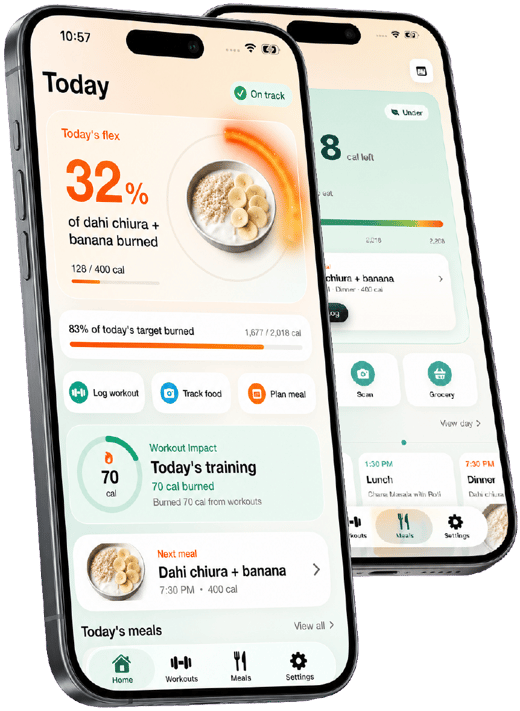
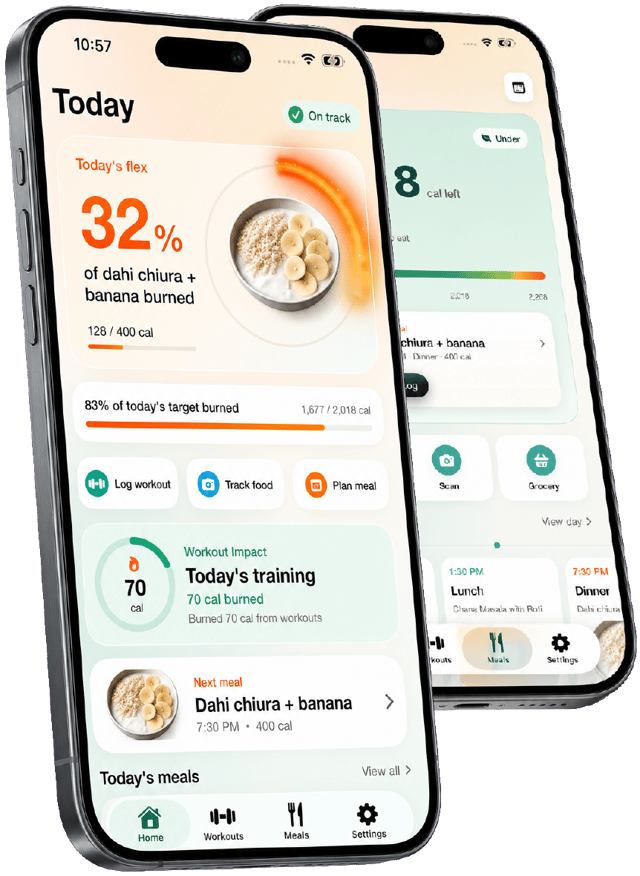
Log a post-dinner walk and Burnplate shows how much of the meal you've burned — a small, visible reason to take the stroll that helps your glucose most.
Practical guidance
Meal-planning tips that help with diabetes
Small structural habits that make a plan easier to stick to — and easier for your glucose to handle.
- 01 Fix your meal times first
Eating at roughly the same times each day makes glucose patterns readable and keeps medication timing predictable.
- 02 Plate method as a fallback
When you're off-plan: half the plate vegetables, a quarter protein, a quarter starchy carb. It approximates most diabetic targets without weighing anything.
- 03 Front-load protein
A protein-first breakfast reduces the late-morning dip and often lowers total intake later in the day.
- 04 Watch liquid carbs
Juice, sweet coffees, smoothies and alcohol mixers are the fastest way to spike. Water, unsweetened tea and coffee are free.
- 05 Walk after your biggest meal
Ten to fifteen minutes of easy walking after eating is one of the most reliable non-drug ways to lower the post-meal peak.
- 06 Test the plan, then trust it
If you monitor glucose, check 1–2 hours after a new meal a few times. Once a meal proves itself, repeat it — boring is a feature.

Get the week planned in one tap
Build my meal plan Burnplate builds a 7-day meal plan around your calories, protein and food preferences, writes the grocery list, and lets you swap any meal you don't feel like.
Questions
Meal planner for diabetics: FAQ
How many carbs should a diabetic eat per meal?
There's no single number — it depends on your medication, weight goal and activity. Many adults start around 45–60 g per meal and 15–20 g per snack, then adjust with their care team based on glucose readings. Consistency from meal to meal matters more than the exact figure.
Is a low-carb diet best for diabetes?
Lower-carb eating often improves glucose control and A1c, but very-low-carb plans aren't necessary for everyone and can be hard to sustain. Most people do well with moderate carbs from high-fiber sources, paired with protein. Talk to your doctor before major changes, especially if you take insulin.
Can a meal planner app help manage type 2 diabetes?
It can remove the daily planning burden and keep your carbs consistent, which is most of the battle. Burnplate builds a weekly plan around your calorie and macro targets and writes the grocery list, but it doesn't dose medication or replace medical advice.
What foods should diabetics avoid?
Sugary drinks, juice, refined breads and pastries, sweetened cereals and large portions of white rice or potatoes cause the biggest spikes. You don't have to eliminate them — pairing smaller portions with protein and fiber goes a long way — but they shouldn't be the base of a meal.
Do diabetics need to lose weight?
Not everyone. But for people with type 2 diabetes who carry extra weight, losing 5–10% often improves insulin sensitivity noticeably. A modest 300–500 kcal deficit is enough; anything aggressive raises the risk of low blood sugar if you're on glucose-lowering medication.
Does Burnplate work for type 1 diabetes?
Yes for planning meals and knowing the carb count in advance — which makes insulin dosing more predictable. Burnplate doesn't calculate insulin doses; use it alongside the carb ratios your endocrinologist has set.
