Age-related muscle loss, known as sarcopenia, runs about 3–8% per decade after 30 and speeds up after 60. Resistance training is the single most effective way to slow it, and it works at any age it's started.
Why it's different
Why exercise needs matter differently after 60
The physiology of aging changes what exercise should prioritize — and it isn't the same program that worked at 30.
3–8%/10y muscle loss rate per decade after 30, which speeds up after 60 without training
2×/week strength sessions weekly is the minimum most health guidelines recommend for older adults
~30% fall risk reduction from regular strength and balance training in older adults
Falls are a leading cause of injury in older adults, but balance responds to training just like strength does. Single-leg stands, heel-to-toe walks and light stability work measurably improve balance within weeks.
Weight-bearing and resistance exercise slow bone loss and, in some cases, partially rebuild it — important given how common osteoporosis becomes with age, especially after menopause.
Exercises that avoid high-impact or extreme ranges of motion can still be genuinely challenging. A seated leg press or resistance-band row can be just as effective as a barbell version, with far less joint stress.
What it looks like
A sample week for an exercise plan for seniors
Two strength sessions, one balance-focused session, and light daily movement. Sessions are short and can be done with bands, light dumbbells or bodyweight.
Example week
3 structured + daily walks Days/week25–35 min Session lengthBeginner, joint-friendly LevelChair, light dumbbells, bands Equipment
Monday Strength Chair squat 3×10 · Wall push-up 3×10 · Seated row (band) 3×12 · Standing calf raise 3×12
Tuesday Walk + balance 15–20 min walk · Single-leg stand 3×20s each side · Heel-to-toe walk 2×10 steps
Wednesday Rest Full rest or gentle stretching
Thursday Strength Sit-to-stand 3×10 · Seated shoulder press 3×10 · Band pull-apart 3×12 · Step-up 3×8 each side
Friday Walk + balance 15–20 min walk · Standing marches 3×15 · Side leg raise 2×10 each side
Saturday Light activity Gardening, a longer walk, or gentle swimming
Sunday Rest Full rest
How Burnplate handles it
How Burnplate supports a senior workout plan
Burnplate builds the plan to your level and keeps a clear record of it, which matters as much as the exercises themselves.
A plan scaled to your level and equipment
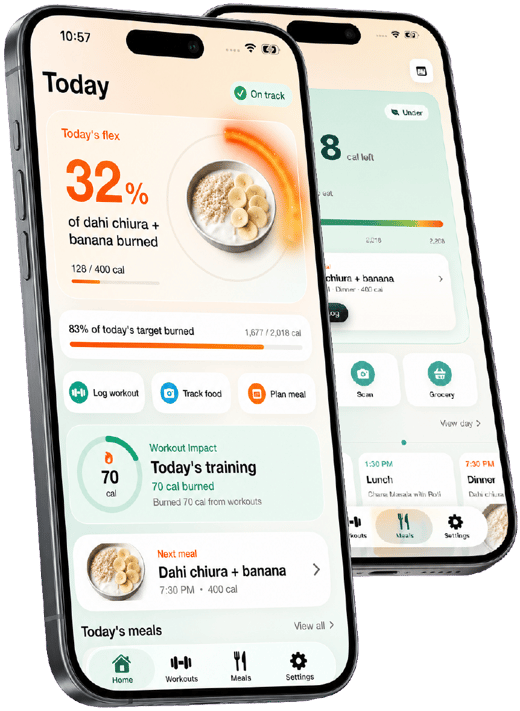
Set your level to beginner and Burnplate's workout planner builds sessions around bodyweight, bands or light dumbbells, with joint-friendly exercise choices.
Sessions logged so progress is visible
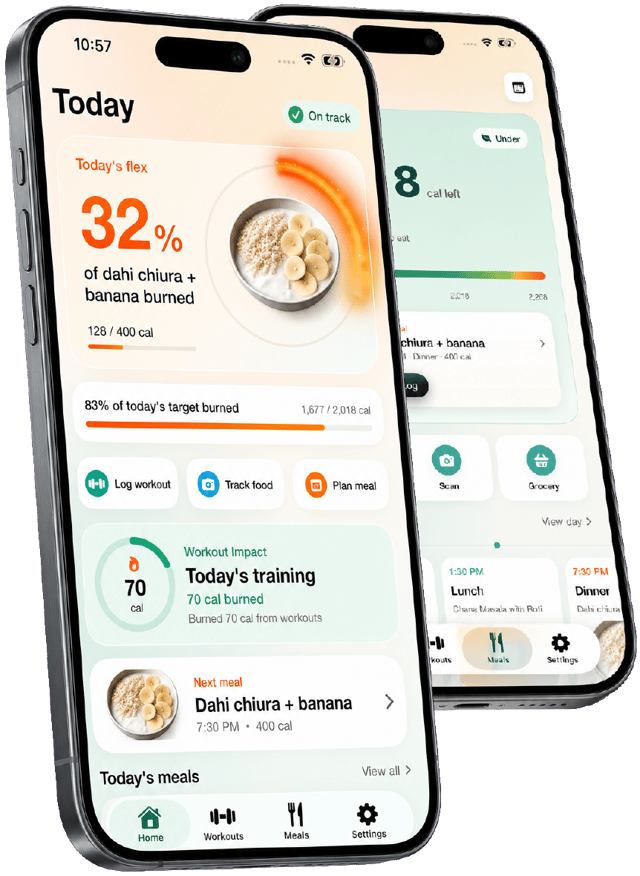
Log each walk or workout and Burnplate keeps a history, so improvements in reps, balance time or distance are easy to see over weeks and months.
Steps and daily activity counted
Walks and daily activity count toward your day alongside structured sessions, giving credit for the movement that matters most for older adults.
Calorie and protein targets for muscle
Burnplate sets protein and calorie targets from your body and goal, supporting the muscle-preserving effect of strength training rather than working against it.
Practical guidance
Tips for a safer, more effective senior workout plan
Practical adjustments that make training after 60 both safer and more effective.
- 01 Get cleared before starting anything new
A quick check-in with your doctor, especially with heart, joint or balance conditions, helps tailor intensity safely.
- 02 Prioritize the sit-to-stand movement
Standing from a chair without using your hands is one of the best predictors of functional independence — train it directly.
- 03 Train balance on purpose, not accident
Balance doesn't improve just from walking. Dedicated single-leg or heel-to-toe work is what moves the needle.
- 04 Use a full range of motion you control
Moving through a comfortable, pain-free range beats forcing a deeper range you can't control — control matters more than depth.
- 05 Stay near something to hold if needed
A chair or countertop nearby removes the fall risk from newer balance or strength exercises without reducing the benefit.
- 06 Consistency beats intensity
Three moderate sessions a week, kept up for months, do more for strength and balance than occasional hard ones.

Build the plan around your week
Build my workout plan Tell Burnplate your days, equipment and level and it builds a progressive workout plan, logs every session, and connects what you burn to what you eat.
Questions
Workout planner for seniors: FAQ
What is a good exercise plan for seniors?
A well-rounded plan combines strength training twice a week, dedicated balance work, and daily walking or light activity. Strength training slows age-related muscle loss, balance work reduces fall risk, and walking supports heart health and mobility.
How often should seniors do strength training?
Most health guidelines recommend at least two sessions of strength training a week for older adults, covering the major muscle groups. That frequency is enough to meaningfully slow muscle loss without requiring daily gym visits.
Can an elderly workout plan help prevent falls?
Yes. Combined strength and balance training has been shown to reduce fall risk by around 30% in older adults. Balance-specific exercises like single-leg stands and heel-to-toe walks make the biggest difference, more than strength training alone.
What exercises should seniors avoid?
High-impact movements, exercises with rapid direction changes, and anything performed with poor form or at a weight that sacrifices control are the main things to avoid. Joint-friendly alternatives, like a seated row instead of a heavy barbell row, deliver similar benefits more safely.
Do seniors need to lift weights, or is walking enough?
Walking is valuable for cardiovascular health but doesn't build or preserve muscle and bone the way resistance training does. Combining regular walking with two strength sessions a week covers more of what protects independence with age.
Is it safe to start a workout plan for seniors with no prior exercise experience?
Yes, when it starts light and progresses gradually. Bodyweight, resistance bands and short sessions are a safe entry point for most older adults; checking with a doctor first is worthwhile for anyone with existing heart, joint or balance conditions.
