
Muscles store a limited amount of carbohydrate as glycogen, and long or hard runs draw it down. A plan that keeps carb intake proportional to mileage keeps that tank fuller for the runs that need it.
Why it's different
Why runners need a different meal plan
A generic calorie target treats every day the same. A runner's glycogen stores rise and fall with weekly mileage and long-run distance, and running low on race day or during a long run has a very specific, very physical consequence — the wall. The plan has to be built around that reality.
5–7 g/kg daily carbohydrate for moderate mileage, rising toward marathon-training peak weeks
1.4 g/kg a typical daily protein target for runners, above sedentary guidance, to support recovery
30–60 g carbohydrate per hour many runners need during runs longer than 90 minutes
Runs over roughly 90 minutes benefit from carbohydrate taken in during the run itself — gels, chews or sports drink — not just from what was eaten beforehand. Under-fueling a long run is the most common cause of hitting the wall.
High-mileage runners, especially women, are at higher risk of low iron from foot-strike-related red blood cell breakdown, and running's repetitive impact raises the importance of steady calcium and vitamin D for bone stress injuries.
Carbs and protein within the hour after a hard or long run start glycogen refilling and muscle repair sooner — which matters more for runners than most sports because the next session often comes within 24 hours.
What it looks like
A sample day on a runner's meal plan
Around 2,500 calories on a day with a moderate run, with carbs weighted toward before and after the session and iron-rich foods built in.
Example day on the plan
~2,500 calories300–340 g carbs120–140 g protein2/day iron-rich meals
6:00 AM Pre-run toast & banana2 slices toast with honey, 1 banana 320 kcal
7:00 AM — 8-mile run —Water only for runs under 60–75 minutes —
8:30 AM Post-run recovery smoothieMilk, banana, oats, 1 scoop protein powder 440 kcal
12:30 PM Beef & spinach rice bowl150 g lean beef, spinach, 1.5 cups rice, olive oil 670 kcal
4:00 PM Yogurt & fortified cereal1 cup Greek yogurt, ½ cup fortified cereal 300 kcal
7:00 PM Chicken, sweet potato & broccoli170 g chicken, 1 large sweet potato, broccoli 560 kcal
Smart swaps
Running long fasted A small carb snack 60–90 min before a long runReduces the risk of running out of glycogen before the mileage does.
Water alone past 90 minutes Carb gels or sports drink at 30–60 g/hour during the runDelays the wall by directly replacing carbs the run is burning through.
Skipping red meat entirely 2–3 iron-rich meals a week (beef, lentils, spinach + vitamin C)Supports iron status, which endurance training draws down faster than a sedentary lifestyle.
A light dinner after a long run A full protein-and-carb meal within a couple hoursLong runs create a bigger recovery demand than an average day's dinner is sized for.
How Burnplate handles it
How Burnplate plans a runner's week
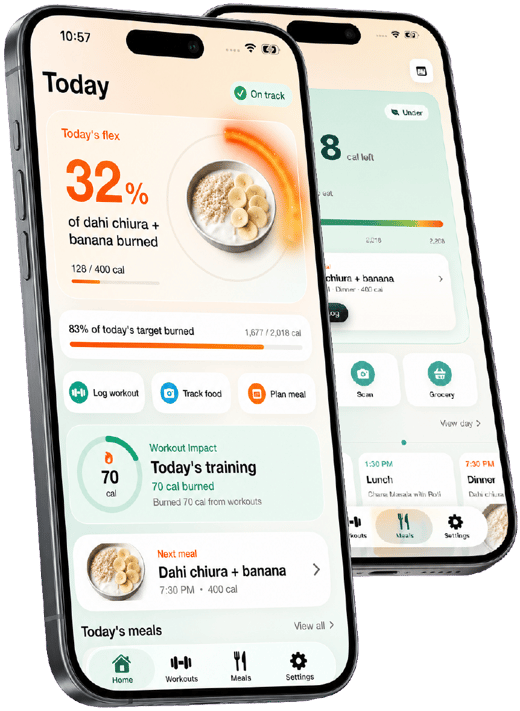
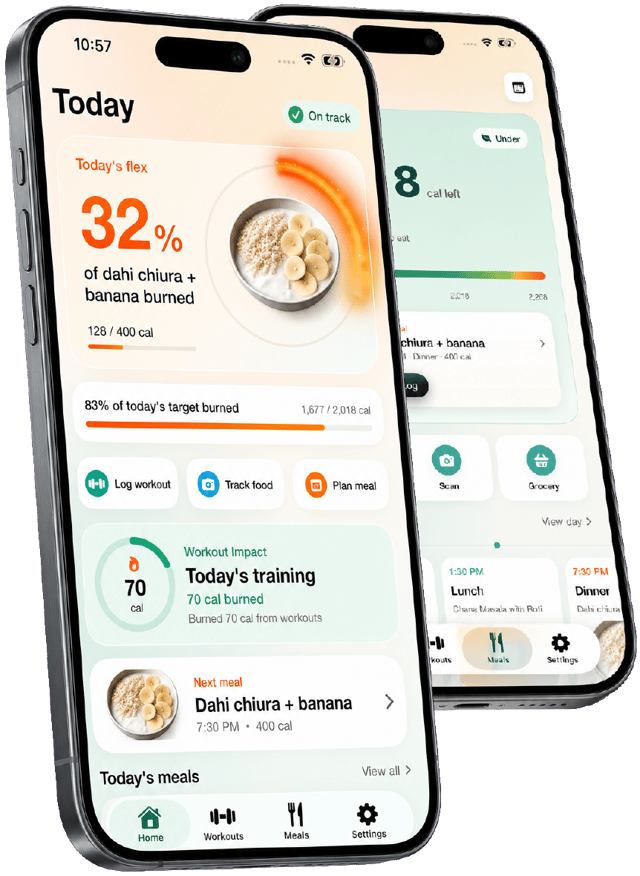
Burnplate builds meal plans around your calorie and carb targets and keeps your training visible on the same screen, so fueling tracks your mileage instead of a flat daily number.
A 7-day plan that flexes with training
Set your calorie and protein targets and Burnplate builds a week of meals with carbs positioned around your usual run days, plus a single grocery list for the week.
One-tap swaps that keep carbs on target
Swap a meal and Burnplate keeps the day's calories and carbs in range, so a schedule change doesn't undo your fueling for tomorrow's run.
Workout planner tracks the miles
Log runs in Burnplate's workout planner alongside your meals, so training load and fueling live in one place instead of a separate running app and a separate food log.
The burn bar shows the run's payoff
See what percentage of a meal today's run burned off — a concrete link between the miles and the plate that most calorie apps never show.
Practical guidance
Fueling tips for runners
Practical habits that keep glycogen topped off without overhauling every meal around a run schedule.
- 01 Carb-load lightly before long runs
A modest increase in carbs the day before a long run or race helps top off glycogen without the bloated feeling of an old-school carb-load.
- 02 Practice fueling before race day
Test gels, chews or sports drink on long training runs so race day isn't the first time your gut has to handle them.
- 03 Refuel within an hour of a hard run
A carb-and-protein snack soon after finishing starts glycogen replenishment sooner, which matters most when tomorrow has another run on it.
- 04 Scale carbs down on easy days too
Carb needs are lower on easy or rest days — matching intake to that day's effort keeps weight and energy more stable over a training block.
- 05 Build in iron-rich meals weekly
Red meat, lentils and spinach paired with a vitamin-C source a few times a week supports iron status that heavy mileage tends to draw down.
- 06 Hydrate on long or hot runs
Water alone doesn't replace the sodium lost in sweat on runs over an hour or in warm conditions.

Get the week planned in one tap
Build my meal plan Burnplate builds a 7-day meal plan around your calories, protein and food preferences, writes the grocery list, and lets you swap any meal you don't feel like.
Questions
Meal planner for runners: FAQ
How many calories should a runner eat?
It depends on weekly mileage, body size and goal, but many runners need 2,200–3,000+ calories on higher-mileage days, less on rest days. Burnplate sets a starting estimate from your body and activity level, then you adjust based on energy and results.
What is a good meal plan for marathon training?
A marathon-training meal plan leans carb-heavy — often 6–10 g of carbohydrate per kilogram of body weight during peak weeks — with protein held steady for recovery, dedicated fueling during long runs, and a light carb increase the day or two before race day.
What should runners eat before a run?
A carbohydrate-focused, lower-fiber, lower-fat snack 1–3 hours before running — toast with honey, a banana, or oats — tops off glycogen without sitting heavy. Shorter, easier runs need less pre-run food than long runs or hard workouts.
Do runners need more protein than average?
Yes, moderately — around 1.2–1.6 g per kilogram of body weight daily is a common range for endurance runners, higher than sedentary guidelines, to support repair from the repetitive muscle stress of running.
How much should I eat during a long run?
Many runners target roughly 30–60 g of carbohydrate per hour for runs longer than about 90 minutes, from gels, chews or sports drink. The right amount varies by person and should be practiced in training before race day.
Does Burnplate work for marathon training?
Yes — Burnplate builds a meal plan around your calorie and protein targets and logs your runs in its workout planner, so you can see training load and fueling together as mileage builds through a training block.
