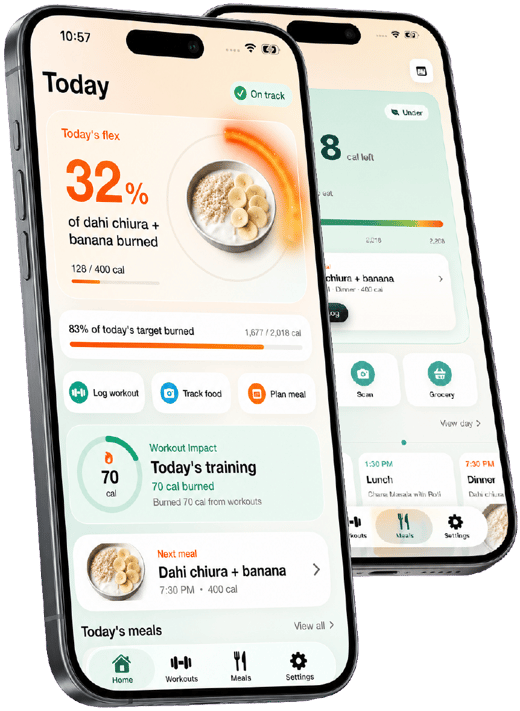

With rapid-acting insulin matched to each meal, the plan doesn't need to restrict carbs — it needs to count them accurately so the dose that follows lands where it should.
Why it's different
Why type 1 diabetes needs its own approach
Type 1 diabetes is an insulin-production problem, not an insulin-resistance one — the body makes little or no insulin, so it has to be replaced by injection or pump for every meal. That changes what a meal plan is actually optimizing for.
±5 g carb-counting accuracy most diabetes educators recommend aiming for at each meal
1:10-1:15 a common starting insulin-to-carb ratio range — yours is set by your endocrinologist
15-30 g fast carbs is the typical correction used to treat a low before or after exercise
Misjudging a meal by 20 grams can mean a real high or low a couple hours later. Precision matters here more than in almost any other condition.
Activity can increase insulin sensitivity for a day or more afterward, meaning the same meal may need less insulin than usual around a workout.
High-fat meals like pizza or takeout delay the glucose rise, which can call for a split or extended insulin dose beyond a simple carb count.
What it looks like
A sample day for type 1 diabetes
Around 1,900 calories with the carbs in every meal logged as an exact gram count, since that number is what the insulin dose is built on.
Example day on the plan
~1,900 calories45-60 g, logged exactly carbs / meal100 g+ protein / day28 g+ fiber / day
7:00 AM Greek yogurt bowl with granola and berries¾ cup yogurt, ¼ cup granola, mixed berries — 45 g carb 420 kcal
12:00 PM Turkey and hummus wrap with carrotswhole-grain wrap, turkey, hummus, carrot sticks — 55 g carb 520 kcal
3:00 PM Apple and peanut butter, pre-workout1 small apple, 1 tbsp peanut butter — 25 g carb 220 kcal
6:00 PM Chicken, rice and roasted vegetables, post-workout5 oz chicken, ¾ cup rice, broccoli — 60 g carb 560 kcal
8:30 PM Cheese and a few crackers1 oz cheese, 4 whole-grain crackers — 15 g carb 180 kcal
Smart swaps
Guessing a portion size Weighing or measuring a new food onceBuilds an accurate mental library so future carb counts are faster and more reliable
Bolusing right before a high-fat meal Splitting or extending the doseMatches insulin delivery to the slower, longer glucose rise that fat produces
Treating every low the same way 15-20 g fast carbs, then rechecking in 15 minutesAvoids overcorrecting into a rebound high a couple hours later
Using the same dose regardless of activity Adjusting for planned exerciseInsulin sensitivity can stay elevated for hours after a workout, raising low-blood-sugar risk
How Burnplate handles it
How Burnplate supports a type 1 diabetes routine
Burnplate doesn't calculate or replace insulin doses — it gives you the carb, calorie and activity numbers your own dosing decisions depend on.
Every meal logged with a carb count
Photo or text logging estimates the carbs in what you eat, giving you a number to check against your own counting before you dose.
A 7-day plan with carbs shown per meal
The AI meal plan lists carbs for each meal up front, so you can pre-plan doses instead of counting from scratch every single time.
Swap a meal without losing the count
One-tap swaps keep a meal's carbs in a similar range, so your usual insulin ratio stays a reasonable starting point after the swap.
See activity and food on one screen
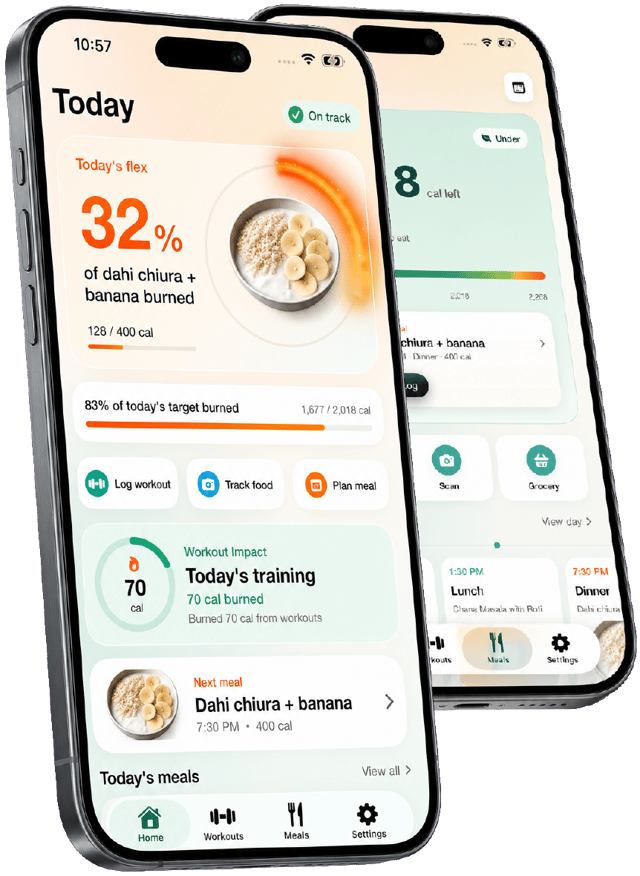
The burn bar shows workouts and steps against the day's intake — useful context when you're weighing an activity-related dose adjustment with your care team.
Practical guidance
Tips that help with type 1 diabetes
Small habits that make carb counting and insulin timing more reliable day to day.
- 01 Weigh new foods until they're familiar
A kitchen scale for a few weeks builds an eyeballing accuracy that lasts long after you stop weighing.
- 02 Log the carb count before you eat
Pre-logging lets you dose on the actual plan instead of reconstructing the meal from memory afterward.
- 03 Keep fast carbs on hand everywhere
A consistent low-treatment, like glucose tabs, removes the guesswork that comes with grabbing whatever's nearby.
- 04 Plan carbs around exercise, not just insulin
Extra carbs before or after activity are often the safer lever than cutting insulin, especially for unplanned exercise.
- 05 Build a library of known meals
A rotation of meals with insulin doses you trust reduces the daily variability that's hardest to manage.
- 06 Recheck ratios after big changes
Growth, illness, new medications and major activity shifts can all move your insulin-to-carb ratio — work with your endocrinologist to update it.

Get the week planned in one tap
Build my meal plan Burnplate builds a 7-day meal plan around your calories, protein and food preferences, writes the grocery list, and lets you swap any meal you don't feel like.
Questions
Meal planner for type 1 diabetes: FAQ
What should a meal plan for type 1 diabetes look like?
It should include carbs at every meal with an accurate count, since rapid-acting insulin is dosed to match that number. Beyond that, food choices can follow your preferences and hunger like anyone else's — the count is what has to be reliable.
What is the best diet for type 1 diabetes?
There isn't a single required diet. People with type 1 diabetes can eat a normal range of carbs as long as insulin is dosed accurately to match. Some prefer lower-carb eating because it's easier to predict, but it's a choice, not a requirement.
How many carbs can I eat with type 1 diabetes?
As many as your insulin plan is designed to cover. The limiting factor is usually the accuracy of your carb counting and your insulin-to-carb ratio, not a fixed daily ceiling — your endocrinologist sets that ratio.
Does Burnplate calculate insulin doses?
No. Burnplate logs the carbs, calories and activity that feed into your own insulin-dosing decisions, but doses come from the ratios and correction factors your care team has set — never from the app.
How does exercise affect insulin needs?
Activity typically increases insulin sensitivity during and for several hours after, raising low-blood-sugar risk if a dose isn't adjusted. Many people reduce a pre-exercise bolus or add carbs around a workout, based on their care team's guidance.
Can carb counting really be off by that much?
Yes — studies on estimated carb counts show errors of 20% or more are common without measuring. That's enough to meaningfully affect a dose, which is why weighing new or complex meals for a while is worth the effort.
