
Three large plates a day can feel physically uncomfortable long before they add up to a meaningful surplus, especially for someone with a naturally small appetite. Calorie-dense foods — nuts, oils, dried fruit, whole milk — pack more energy into less volume.
Why it's different
Why weight gain is often harder than weight loss
A low appetite, a fast metabolism, or a demanding schedule can all make it genuinely difficult to eat enough — 'just eat more' undersells how hard that is for someone who's never had to think about food this way.
300-500 extra calories a day above maintenance is a manageable surplus for most trying to gain
1.4-2 g/kg protein per kg of body weight so a surplus builds tissue, not just fat
5-6 smaller meals a day is often easier to hit a high calorie target than 3 large ones
Some people simply burn more at rest and in daily movement, which means maintenance calories — and the surplus on top of them — sit higher than a generic chart would suggest. Tracking for a couple of weeks reveals the real number faster than guessing.
A surplus with adequate protein and some resistance training adds lean tissue alongside fat; a surplus of mostly sugar and refined carbs with no training mostly adds fat. The food quality and activity around the surplus decide which one you get.
Most people who struggle to gain weight aren't undereating on purpose — they're just not eating on a schedule frequent enough to reach the target. A plan with built-in meal times solves more of the problem than any specific food does.
What it looks like
A sample day on a weight-gain meal plan
For an adult with roughly 2,300 maintenance calories, a 400 kcal surplus lands the day around 2,700 calories, spread across six smaller sittings.
Example day on the plan
~2,700 calories130 g+ protein6 meals/day90 g+ fat
7:30 AM Whole-milk oats & peanut butter¾ cup oats made with whole milk, 1 tbsp peanut butter, banana 520 kcal
10:30 AM Trail mix + whole milkHandful of nuts and dried fruit, 1 cup whole milk 380 kcal
1:00 PM Chicken, rice & avocado150 g chicken, 1 cup rice, ½ avocado, olive oil 600 kcal
4:00 PM Protein smoothie1 scoop protein powder, whole milk, peanut butter, banana 420 kcal
7:00 PM Pasta with beef & cheesePasta, 150 g ground beef, marinara, shredded cheese 620 kcal
9:00 PM Greek yogurt + granola1 cup Greek yogurt, ½ cup granola, honey 260 kcal
Smart swaps
Skim milk Whole milkNearly doubles the calories per glass with no extra volume to drink.
A large single dinner Same calories split into six sittingsReaches the same daily total without the discomfort of one oversized plate.
Diet or low-fat versions of staples Regular yogurt, dressing, nut butterRemoves an unnecessary calorie restriction when the goal is the opposite direction.
Water with meals A calorie-containing drink alongsideAn easy 200-400 extra calories a day without adding to how much you have to chew.
How Burnplate handles it
How Burnplate builds your weight-gain plan
Burnplate sets a realistic surplus and structures the day so eating enough stops depending on appetite alone.
Surplus calculated, not guessed
Burnplate estimates your maintenance calories from your body and activity level and sets a 300-500 kcal surplus, adjusting as your weight trend comes in.
A 7-day plan with smaller, frequent meals
The AI meal plan can build your week around more frequent sittings and calorie-dense choices, with a single grocery list so shopping matches the plan exactly.
Daily balance keeps the surplus visible
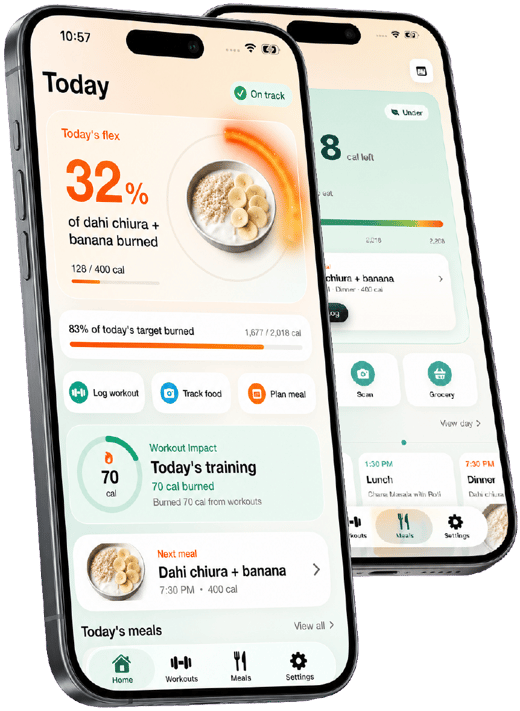
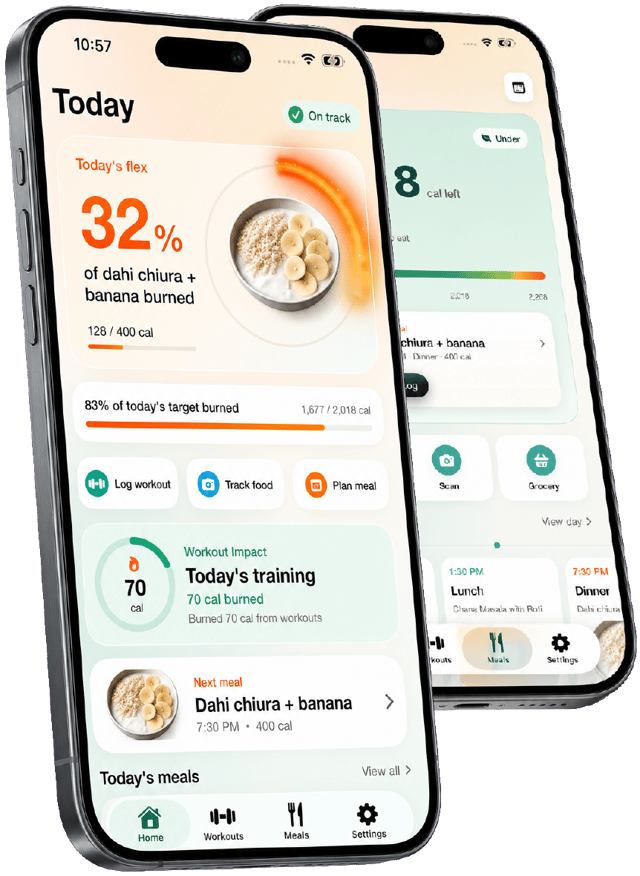
Your home screen shows calories left to eat for the day, which flips the usual weight-loss framing into a visible reminder to keep eating toward the target.
Photo logging for a fast, low-effort check
Snap a photo of any meal to log it in seconds — useful when eating enough already feels like effort and detailed tracking would be one more barrier.
Practical guidance
Tips for gaining weight without it feeling like a chore
Practical habits for people whose appetite genuinely doesn't match their calorie target.
- 01 Drink calories when eating feels hard
Smoothies and milk are far easier to get down than an equivalent amount of solid food.
- 02 Set meal alarms, not appetite cues
If hunger doesn't reliably show up, eating on a schedule works better than waiting to feel like it.
- 03 Add calories to what you already eat
Oil, nut butter, cheese and dressing add 100-200 calories to a plate you were already going to finish.
- 04 Lift weights to direct gains to muscle
Resistance training directs a surplus toward muscle instead of only fat, and it can also increase appetite over time.
- 05 Eat the calorie-dense food first
When a plate feels like a lot, eat the protein and fat-dense parts before the low-calorie vegetables so nothing gets skipped.
- 06 Track your trend weekly, not daily
Daily weight swings with water and food volume; a weekly average shows whether the surplus is actually working.

Get the week planned in one tap
Build my meal plan Burnplate builds a 7-day meal plan around your calories, protein and food preferences, writes the grocery list, and lets you swap any meal you don't feel like.
Questions
Meal planner for weight gain: FAQ
How many calories do I need to gain weight?
Most people gain steadily on 300–500 calories a day above maintenance. Since maintenance varies a lot by body size and activity level, Burnplate calculates your specific number from your stats rather than using one figure for everyone.
What is the best diet plan for weight gain?
One built around calorie-dense foods — nuts, oils, whole dairy, grains — spread across 5-6 smaller sittings rather than 3 large meals, with protein kept high enough that the gain isn't purely fat. The specific foods matter less than reliably hitting the surplus every day.
Why can't I gain weight no matter what I eat?
It usually comes down to underestimating how much you're actually eating, or a naturally high maintenance calorie level from a fast metabolism or high activity. Tracking for two weeks typically reveals the real daily total is lower than assumed, which is the more common issue.
Will weight gain all be fat, or can it be muscle?
That depends on protein intake and training, not the surplus alone. A surplus with 1.4-2 g/kg of protein and regular resistance training adds meaningful lean tissue; a surplus with low protein and no training adds weight that's mostly fat.
How does Burnplate help with weight gain specifically?
Burnplate calculates a calorie surplus and protein target from your body and goal, builds a 7-day meal plan around them with a grocery list, and shows your daily calories left to eat so hitting the target stays visible and trackable.
Is it normal to feel too full trying to gain weight?
Yes, and it's the most common obstacle. Spreading the same calories across more, smaller meals and leaning on calorie-dense liquids like smoothies and whole milk reduces the discomfort while still reaching the daily target.
