
Eggs, Greek yogurt, cottage cheese and cheese make protein targets very achievable — but a vegetarian diet can quietly drift toward pasta, bread and cheese-heavy comfort meals that are calorie-dense and protein-light unless tracked.
Why it's different
Why vegetarian tracking is its own category
Vegetarian eating sits between a standard omnivore diet and fully vegan — eggs and dairy remove the hardest protein and B12 constraints, but the diet still skews toward carbs by default unless protein is tracked on purpose.
0.8–1.2 g/kg protein per kg of body weight — easier to hit than fully vegan since eggs and dairy are available
18 mg iron a day for many adults; vegetarians without red meat often need to track this more deliberately
25–30 g fiber a day that most vegetarian diets hit naturally through beans, whole grains and produce
Without red meat, the main dietary iron source, vegetarians rely on plant (non-heme) iron from beans, spinach and fortified grains, which absorbs less efficiently. It's manageable with variety and vitamin C pairing, but worth tracking rather than assuming.
Eggs and dairy provide B12 reliably, so most vegetarians don't face the same supplement requirement vegans do — one less thing to actively manage day to day.
Cheese-forward vegetarian meals are calorie-dense in a way that's easy to underestimate — a generous cheese pizza or pasta dish can carry more calories than a comparable meat-based plate.
What it looks like
A sample day on a balanced vegetarian diet
Around 1,900 calories using eggs, dairy and legumes to hit protein without leaning entirely on cheese or pasta. Iron-rich foods are paired with vitamin C to help absorption.
Example day
Daily targets
calories ~1,900 adjust to your own goal — cheese and pasta can push this higher than expected if unwatched
protein 100 g+ straightforward to hit with eggs, Greek yogurt and legumes across the day
iron 18 mg+ paired with vitamin C sources since red meat isn't the source here
fiber 28 g comes naturally from beans, whole grains and produce
A logged day
7:30 AM 2-egg veggie omelette + Greek yogurtprotein anchored early, not left to dinner 410 kcal
10:30 AM Orange + almondsvitamin C alongside a plant iron and protein source 170 kcal
1:00 PM Chickpea and feta salad with olive oillegume plus dairy protein, not a bread-based lunch 480 kcal
4:00 PM Cottage cheese + berriesanother protein-forward snack rather than a carb one 180 kcal
7:00 PM Black bean and vegetable enchiladas, moderate cheesecheese used as a topping, not the main protein source 580 kcal
How Burnplate handles it
How Burnplate handles vegetarian tracking
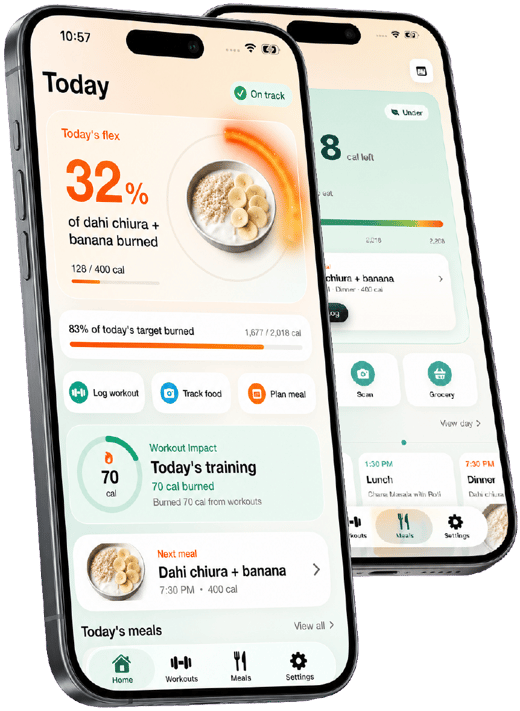
Burnplate tracks the same protein, calorie and micronutrient picture for vegetarians as for anyone else, with logging built for mixed egg, dairy and plant meals.
Photo logging for mixed vegetarian plates
Snap a photo of a chickpea salad or veggie omelette, confirm what it found, and adjust portions — built for dishes that combine eggs, dairy, legumes and vegetables rather than a single identifiable protein.
Protein tracked against a clear target
Set a protein goal and Burnplate tracks progress across eggs, dairy and legumes, catching the days a carb-heavy meal has quietly let protein slide.
AI meal plan built around vegetarian meals
Generate a 7-day plan using eggs, dairy and plant proteins that hits your calorie and protein targets, with a grocery list and one-tap swaps if a meal doesn't fit your week.
Calorie awareness for cheese-heavy dishes
Log a cheese-forward meal by photo and see the real calorie count, since vegetarian comfort meals are often more calorie-dense than they look.
Practical guidance
Tracking tips for vegetarian eating
Small habits that keep a vegetarian diet protein-adequate and calorie-aware without much extra effort.
- 01 Anchor protein at breakfast
Eggs or Greek yogurt in the morning makes the rest of the day's protein target far easier to reach.
- 02 Don't let cheese be the only protein
Cheese adds calories fast relative to its protein — pair it with eggs, legumes or dairy protein rather than relying on it alone.
- 03 Pair iron-rich plant foods with vitamin C
Spinach, beans and fortified grains absorb iron better alongside citrus, peppers or tomatoes.
- 04 Watch pasta and bread portions
Vegetarian meals default to grain-heavy easily — check the plate has a clear protein source, not just a carb base.
- 05 Use legumes as a main, not a side
A full cup of beans or lentils as the meal's protein anchor does more for satiety and protein totals than a small side portion.
- 06 Log dairy portions honestly
A generous pour of shredded cheese or a large yogurt serving adds up quickly — measuring occasionally keeps the log accurate.

Track it with a photo, not a search bar
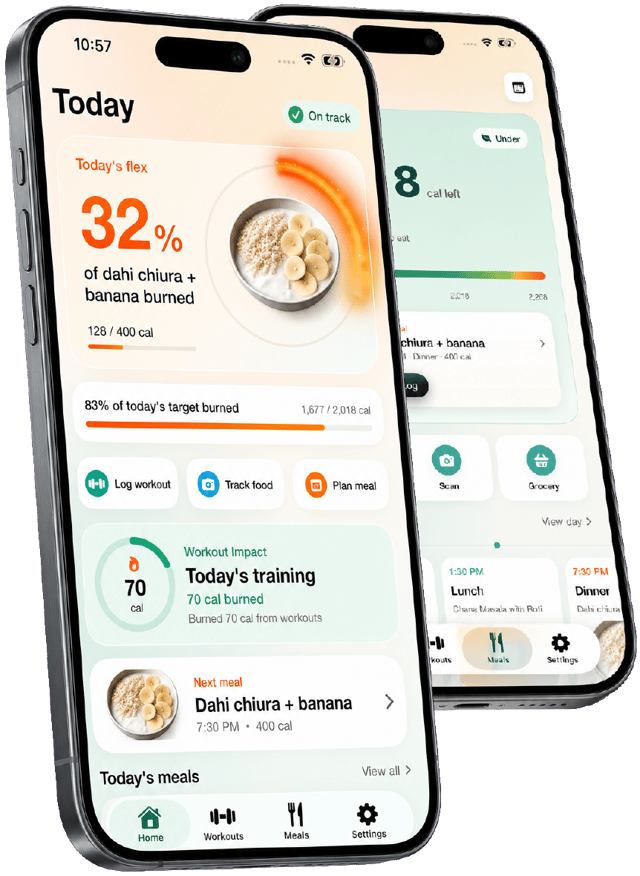
Start tracking free Burnplate sets your calorie and macro targets, logs meals from a photo, and shows how much of each meal your workouts and steps have burned off.
Questions
Calorie tracker for vegetarians: FAQ
How much protein do vegetarians need?
Protein needs for vegetarians are similar to the general population, often cited around 0.8–1.2 g per kg of body weight, and easier to hit than on a vegan diet because eggs and dairy are available. Spreading protein across eggs, dairy and legumes throughout the day makes the target straightforward.
Do vegetarians need to worry about iron?
It's worth more attention than for meat eaters, since red meat is the most efficiently absorbed iron source and vegetarians rely on plant (non-heme) iron instead. Pairing iron-rich foods like beans, lentils and spinach with vitamin C sources improves absorption meaningfully.
Is a vegetarian diet automatically lower in calories?
Not necessarily. Cheese-heavy pasta, pizza and comfort dishes common in vegetarian eating can be just as calorie-dense as meat-based meals, sometimes more so. Tracking matters here specifically because these dishes are easy to underestimate.
What's the difference between tracking for vegetarians and vegans?
Vegetarians have eggs and dairy available, which makes protein and B12 far easier to hit than on a fully vegan diet, where B12 requires supplementation and protein needs more deliberate combining. Iron is a shared consideration for both, since red meat is off the table either way.
Can Burnplate build a vegetarian meal plan?
Yes. Set your calorie and protein targets and Burnplate's AI meal plan generates a 7-day vegetarian plan using eggs, dairy and plant proteins, with a grocery list and swaps if a specific meal doesn't work.
How do vegetarians get enough B12?
Eggs and dairy provide B12 reliably for most vegetarians, unlike a fully vegan diet where B12 essentially requires fortified foods or a supplement. It's still worth confirming intake is adequate with a doctor, especially for anyone eating little dairy or egg.
