
In-season, the priority is fueling performance and recovering fast enough for the next game or practice. Off-season, with more time to build strength or cut body fat, calorie targets can shift toward a deliberate surplus or deficit without competition demands in the way.
Why it's different
Why athlete calorie needs move by season
A single yearly calorie target ignores the biggest variable in a competitive athlete's life: the training phase. Pre-season conditioning, in-season game load, and off-season strength work each demand a different balance of calories, carbs and recovery.
1.4–2.0g protein per kg bodyweight covers the range most competitive athletes need depending on sport and training phase
3–7g/kg carbs per kg bodyweight scales with how much high-intensity training or competition load a given day carries
±300–500 calorie swing between a heavy practice day and a light or rest day is common and expected, not a mistake to fix
An endurance-heavy sport leans harder on carbs; a power or contact sport needs both higher carbs for repeated high-intensity efforts and higher protein for the tissue damage that contact and heavy lifting create.
Competition day often needs a different eating pattern than a normal training day — more carbs pre-game for glycogen, careful timing to avoid GI distress, and a fast recovery meal after, especially with games close together.
For a competitive athlete, chronic underfueling tends to show up as slower recovery between sessions and declining performance late in games, often before it's obvious as fatigue or weight loss.
What it looks like
A sample day: in-season game day
Built around an evening game for a field-sport athlete, roughly 90 minutes of high-intensity play. Carbs are loaded earlier in the day and recovery is prioritized immediately after.
Example day
Daily targets
Calories ~3,200 elevated for a competition day's demand on top of normal daily activity
Carbs ~450 g roughly 5.5 g/kg for an 82 kg athlete, loaded through the day ahead of an evening game
Protein ~140 g 1.7 g/kg range to support recovery from contact and repeated high-intensity efforts
Pre-game meal 3–4 hrs before timed to finish digesting before kickoff and avoid GI distress during play
A logged day
7:30 AM Oatmeal, eggs, fruit, breakfasta normal, carb-forward start to a game day 560 kcal
12:00 PM Chicken, rice, roasted vegetables, pre-game mealeaten roughly six hours before kickoff to be fully digested 720 kcal
4:00 PM Banana + rice cakes, pre-game snacksmall, fast-digesting carbs closer to game time 260 kcal
6:00 PM Game: 90 min, high-intensity field sportlogged after the game, reflecting the competition's actual demand ~900 kcal burned
8:00 PM Recovery shake + fruit, post-gamecarbs and protein within the first hour off the field 380 kcal
9:00 PM Pasta, ground turkey, salad, dinnera full recovery meal to close out a high-demand day 780 kcal
How Burnplate handles it
How Burnplate tracks a competitive season
Burnplate connects your logged training and games to daily targets, so a heavy in-season week and an off-season strength block don't get treated identically.
Calorie and carb targets that flex with training load
Set your training phase and weekly schedule, and Burnplate adjusts calorie and carb targets around practice, games and rest days rather than holding one number all season.
The burn bar reflects real competition demand
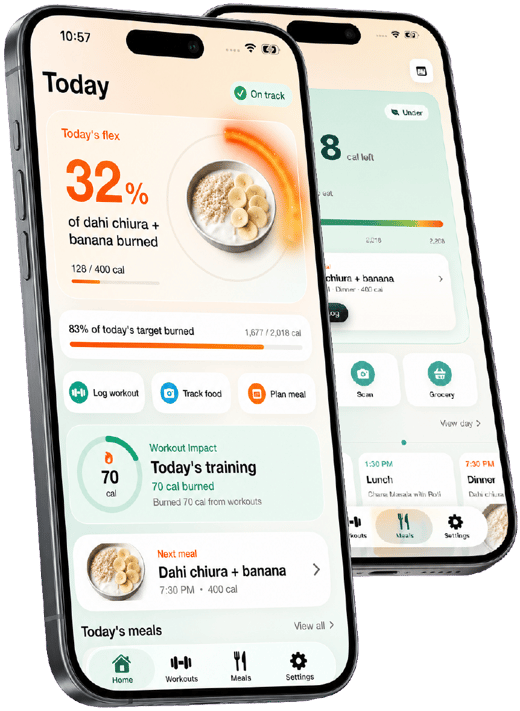
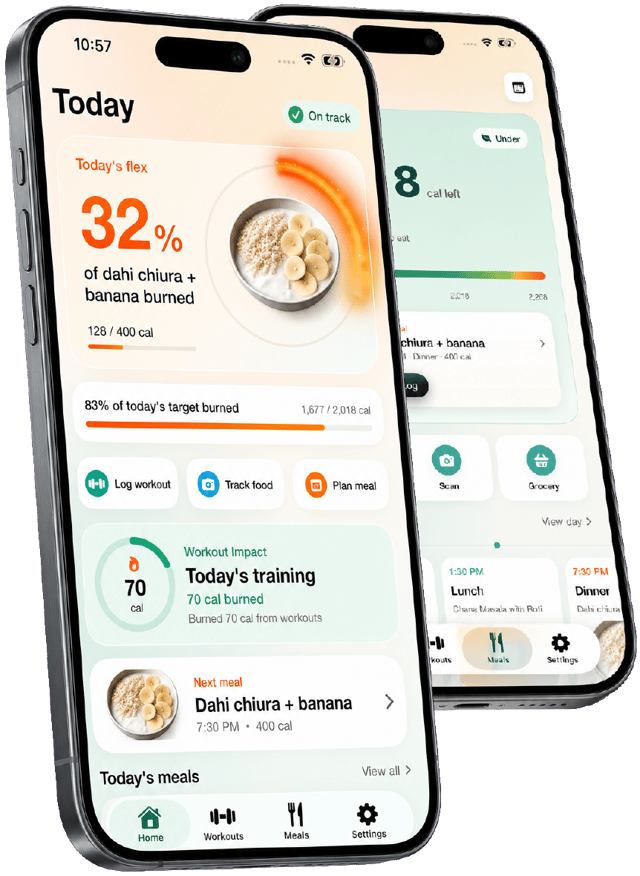
Log a game or a heavy practice and see the percentage of your next meal it's covered — a concrete way to see why recovery food after a game is bigger than after a light session.
Photo logging fits a packed game-day schedule
Snap a pre-game meal or a recovery shake and Burnplate logs it in seconds, which matters on a day already tight with warmups, travel and the game itself.
Protein targets held through in-season and off-season
Protein stays in a consistent, elevated range across both phases, supporting recovery whether the current focus is competition performance or off-season strength building.
Practical guidance
Fueling tips for competitive athletes
Habits that hold up across a full competitive season, not just a single training block.
- 01 Fuel the phase, not the calendar
Adjust calorie and carb targets when you move from off-season to in-season training rather than eating the same way year-round.
- 02 Time the pre-game meal 3–4 hours out
A carb-forward meal eaten too close to competition risks GI distress; too far out risks running low on fuel late in the game.
- 03 Refuel fast after competition
Carbs and protein within the first hour after a game or hard practice start recovery sooner, especially with a short turnaround to the next session.
- 04 Don't cut calories during a heavy competition stretch
A packed schedule of games or matches is the wrong time to run a deficit — save fat-loss phases for lower-demand parts of the season.
- 05 Match hydration to the sport's demands
Contact sports, hot climates and long games all raise fluid and sodium needs well above a normal training day.
- 06 Use the off-season for bigger dietary changes
Cutting body fat or building significant muscle mass both go more smoothly with more recovery time and less competition pressure.

Track it with a photo, not a search bar
Start tracking free Burnplate sets your calorie and macro targets, logs meals from a photo, and shows how much of each meal your workouts and steps have burned off.
Questions
Calorie tracker for athletes: FAQ
How many calories should an athlete eat?
It depends heavily on the sport, training phase and body size, so there's no single figure — a competitive athlete in-season with games and practices often needs considerably more than the same athlete in a lighter off-season block. Burnplate builds your specific target from your body, sport and logged training.
Does a calorie calculator for athletes need to account for game day differently?
Yes — competition day usually calls for a different eating pattern than a normal training day, with a timed pre-game meal, lighter fuel closer to kickoff, and a fast recovery meal afterward. A tracker that treats every day the same misses this.
How should calorie targets change between in-season and off-season?
In-season, targets generally center on fueling performance and recovery around a fixed game and practice schedule. Off-season, with more recovery time and no competition demands, is usually the better window to run a deliberate calorie surplus or deficit for body composition goals.
How much protein do competitive athletes need?
Most competitive athletes do well in the 1.4-2.0 g per kg bodyweight range, with contact and power sports often sitting toward the higher end due to greater tissue damage from training and competition. The right number also depends on total training volume and current goal.
Should I eat differently before and after a game?
Yes — a pre-game meal is usually eaten 3-4 hours ahead to finish digesting before competition starts, sometimes with a small, fast-digesting snack closer to kickoff. After the game, carbs and protein eaten within the first hour help start recovery, which matters most with a short turnaround to the next game.
Can Burnplate handle a full competitive season?
Burnplate tracks calories, macros and logged training day to day and adjusts targets as your activity level changes, which covers moving between off-season, pre-season and in-season phases. It doesn't replace a sport-specific nutrition plan from a team dietitian, but it handles the daily tracking underneath one.
