2,000 calories represents a generic reference person used for nutrition labeling, not a target calculated from your body or goal. It happens to land close to maintenance for many moderately active adults, which is why it's a reasonable default — not because it's precise.
Why it's different
Why 2,000 calories is a starting point, not a plan
The number on the label was chosen decades ago to represent an average adult for labeling purposes. Actual needs vary enormously by sex, size, age and activity — anywhere from roughly 1,600 to 2,800+ calories. What matters more than hitting 2,000 exactly is what fills it and whether you can repeat it.
2,000 kcal the reference intake used for Percent Daily Value on nutrition labels — not a personal target
~100 g protein is a common target at this calorie level for adults prioritizing muscle and fullness
25-30 g fiber a day is the range most guidelines recommend regardless of calorie level
2,000 calories of whole foods with protein and fiber at each meal behaves completely differently in your body than 2,000 calories from ultra-processed snacks — even though the label math is identical.
If you don't yet know your maintenance calories, starting near 2,000 and tracking how your weight responds over two to three weeks is a practical way to find your real number without guessing.
Hitting 2,000 exactly every day matters less than building two or three go-to days that land close to it — a repeatable pattern is easier to sustain than a perfect one you can't keep up.
What it looks like
A sample day at 2,000 calories
Built around three meals and two snacks, with protein at every meal and enough fiber to keep it filling. Swap freely — the structure is what makes it repeatable.
Example day on the plan
~2,000 calories95-110 g protein220-250 g carbs28 g+ fiber
7:00 AM Oatmeal with peanut butter and banana½ cup oats, 1 tbsp peanut butter, 1 banana, cinnamon 480 kcal
10:30 AM Greek yogurt with granola¾ cup plain Greek yogurt, ¼ cup granola, berries 220 kcal
1:00 PM Turkey and avocado wrap + side saladwhole-grain wrap, 4 oz turkey, ¼ avocado, mixed greens 560 kcal
4:00 PM Apple and string cheese1 medium apple, 1 part-skim string cheese 180 kcal
7:00 PM Salmon, rice and broccoli5 oz salmon, ¾ cup rice, roasted broccoli, olive oil 560 kcal
Smart swaps
Large bagel with cream cheese Two eggs plus whole-grain toastSimilar calories with roughly triple the protein for the same meal slot
Sweetened latte Coffee with milk, sweetener optionalSaves 150-250 calories a day you can put toward actual food
Fruit juice Whole fruitSame vitamins, more fiber, and meaningfully fewer calories per serving
Regular soda Sparkling water or a diet sodaFrees up 140-180 calories without changing anything else about the day
How Burnplate handles it
How Burnplate builds your own version
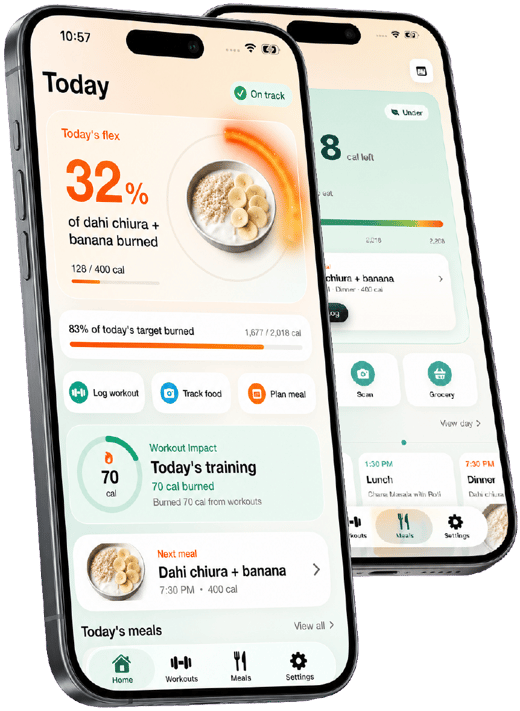
2,000 calories is a useful benchmark, but Burnplate calculates your actual target instead of assuming it.
Your own number, not just 2,000
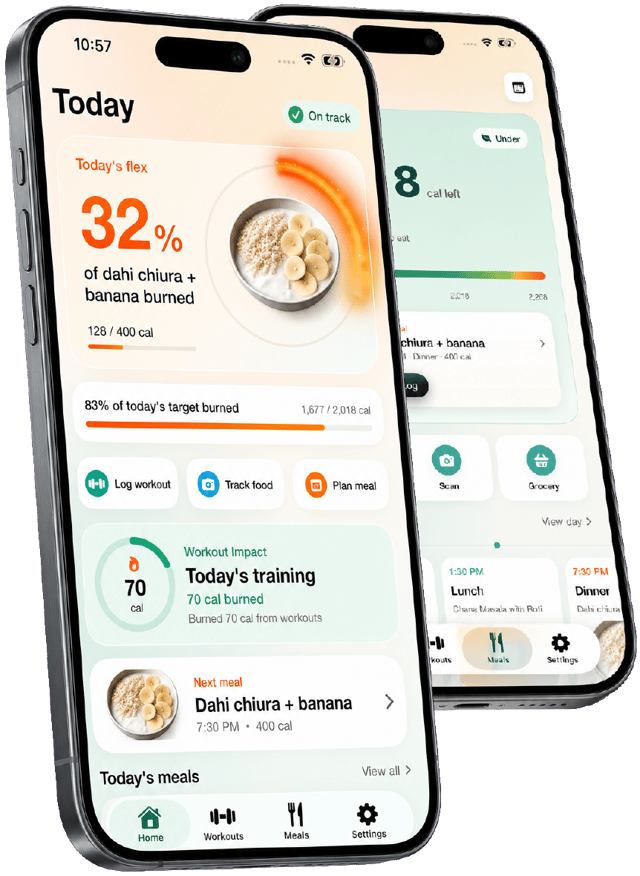
Burnplate calculates a personalized calorie target from your body, goal and activity level — 2,000 is just the reference most people compare their own number against.
A 7-day plan built to hit it
The AI meal plan builds a week of real meals around your calories, protein and food preferences, landing close to your target with a consolidated grocery list attached.
Swap any meal without redoing the math
Don't feel like salmon? Swap the meal and Burnplate keeps the day's calories and protein in range automatically, so the target still holds.
Watch the day fill up in real time
Photo or text logging plus a left-to-eat balance bar shows exactly how much of your target is left as you go, so 2,000 stops being an abstract number.
Practical guidance
Tips for making 2,000 calories work
Small habits that make a calorie target easy to hit without obsessing over every gram.
- 01 Anchor breakfast and lunch first
Fixing your first two meals removes most of the day's decisions and leaves dinner as the flexible slot.
- 02 Leave 500-600 calories for dinner
Most people eat their biggest social meal at dinner — budgeting for it up front avoids a tight squeeze later.
- 03 Track for two weeks, then estimate
Once you know what 2,000 calories of your usual meals looks like, you can eyeball portions without logging every bite.
- 04 Batch-cook one protein source
Having grilled chicken, salmon or tofu ready removes the slowest step from hitting your protein target most days.
- 05 Plan snacks like meals
A snack with protein or fiber holds you over; a snack that's just carbs often leaves you hungrier an hour later.
- 06 Adjust the whole week, not one day
If a birthday dinner runs long, trim a little across the next few days rather than trying to claw it all back at once.

Get the week planned in one tap
Build my meal plan Burnplate builds a 7-day meal plan around your calories, protein and food preferences, writes the grocery list, and lets you swap any meal you don't feel like.
Questions
Meal planner for 2,000 calories a day: FAQ
Is 2,000 calories a day right for me?
It might be close for a moderately active adult, but it's a generic label reference, not a personal calculation. Your actual maintenance calories depend on your sex, size, age and activity level, and can reasonably range from about 1,600 to 2,800 or more.
What does a 2000 calorie diet look like?
In practice, it's three meals and one or two snacks with protein at each, roughly 200-250 grams of carbs spread through the day, and enough fiber-rich vegetables, fruit and whole grains to stay full. There's no required food list — the total and the balance matter more than specific foods.
Will I lose weight eating 2,000 calories a day?
It depends entirely on your own maintenance level. If your maintenance is above 2,000, you'll lose weight; if it's below, you'll gain. That's why a personalized target, not the generic 2,000 figure, is what actually determines the result.
How much protein should I eat on 2,000 calories?
A common target is roughly 90-140 grams a day, depending on your goal and activity level — higher if you're trying to build or preserve muscle. That works out to around 20-25% of total calories for most people.
Can Burnplate build a 2000 calorie meal plan for me?
Yes — set 2,000 as your target or let Burnplate calculate your own number from your body and goal, and the AI meal plan will build a 7-day week of meals around it, with a grocery list and one-tap swaps that keep each day close to the target.
