
Climbing adds a large amount of extra energy cost compared to flat walking at the same distance — a hike with 2,000 feet of gain can burn meaningfully more than a flat hike of the same mileage, even at a similar pace.
Why it's different
Why hiking calorie needs aren't just 'walking'
Hiking spans everything from a flat two-mile nature loop to a multi-day backpacking trip with thousands of feet of elevation gain and a loaded pack. A generic 'walking' calorie estimate misses the two variables that matter most on trail: incline and load.
400–700 calories an hour is typical for moderate hiking with a light pack, rising sharply with elevation gain
+10–15% more calories burned per hour for roughly every 20 lb of pack weight added on a backpacking trip
100+ calories per ounce is a useful density bar for trail food, since pack weight is its own cost
Carrying a loaded backpacking pack adds a steady percentage to the calorie cost of every mile, on top of whatever elevation gain is already adding — the two stack together on a multi-day trip.
On a day hike, food weight barely matters. On a multi-day backpacking trip, every ounce is carried uphill, which is why calorie-dense foods — nut butters, dried fruit, trail mix — matter more than on-trail variety.
It's easy to underestimate how much a full day of hiking with a pack burns, and a small daily shortfall compounds over a multi-day trip into real fatigue, slower pace and a harder time on the last day.
What it looks like
A sample day: backpacking with elevation gain
Built around an 8-mile day with 2,500 feet of elevation gain and a 30-pound pack — a moderate backpacking day. Food is chosen for calorie density as much as taste, since every ounce is carried.
Example day
Daily targets
Calories ~3,400 covers roughly 2,000-2,300 kcal burned on trail plus daily baseline needs
Carbs ~420 g the main fuel source for sustained hours of steady, moderate-intensity effort
Fat ~110 g calorie-dense trail food naturally runs higher in fat, which is fine on a big-burn day
Water + electrolytes 3–4 L hydration needs rise fast with elevation gain, pack weight and trail exposure
A logged day
6:30 AM Oatmeal + peanut butter + coffee, camp breakfastcalorie-dense start before breaking camp 580 kcal
7:30 AM Hike: 8 miles, 2,500 ft gain, 30 lb packelevation and pack weight both add to the estimate ~2,100 kcal burned
10:00 AM Trail mix + jerky, on-trail snackcalorie-dense, low-weight fuel eaten without stopping 380 kcal
12:30 PM Tortilla wraps, peanut butter, dried fruittrail lunch built around calories-per-ounce, not variety 560 kcal
3:00 PM Energy bar + nuts, afternoon snackkeeps energy steady through the last climb of the day 340 kcal
6:30 PM Dehydrated meal, camp dinnercalorie-dense freeze-dried dinner, easy to carry and cook 680 kcal
How Burnplate handles it
How Burnplate fuels a day on trail
Burnplate logs hikes by duration, distance and effort so a flat nature walk and a loaded backpacking climb don't pull the same calorie estimate.
Hike logging that reflects real trail effort
Log a hike's duration and intensity and Burnplate estimates the burn accordingly, capturing the difference between an easy flat walk and a steep, sustained climb far better than a generic step count.
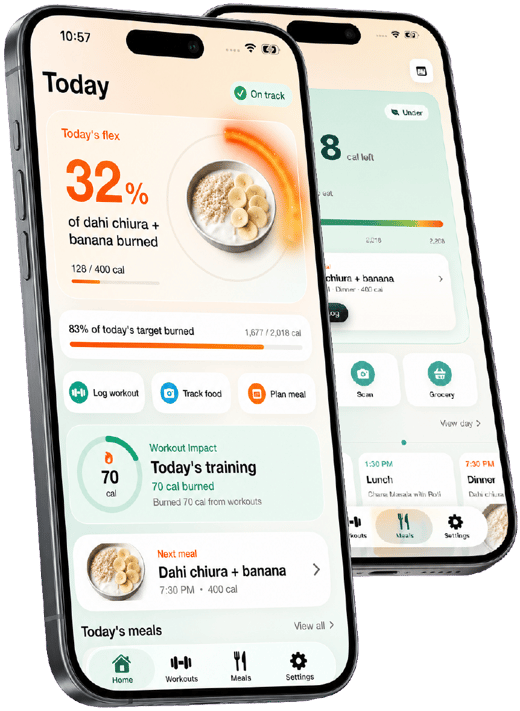
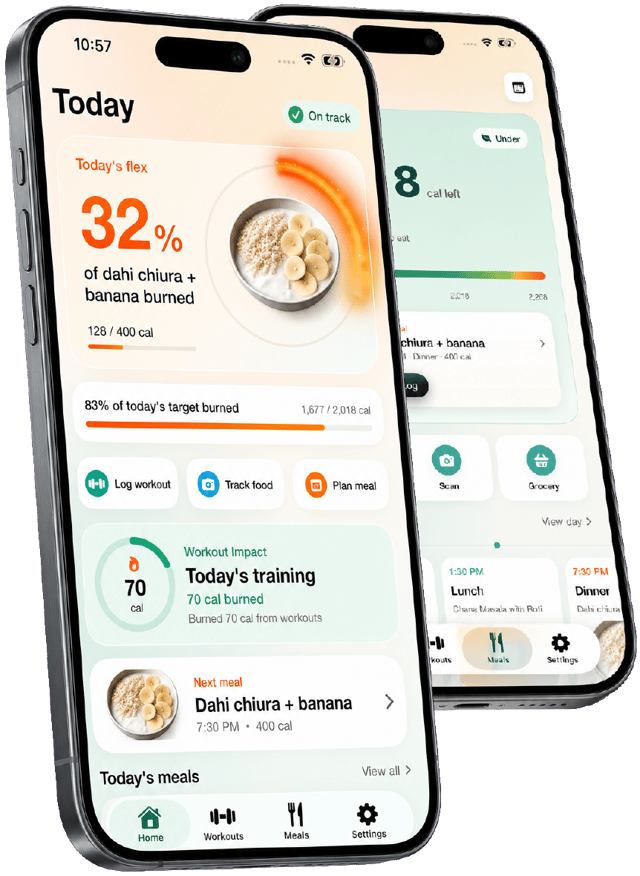
The burn bar shows what a big trail day earned back
Log the day's hike and see the percentage of dinner it's covered — a clear, motivating way to see why the camp dinner portion is bigger than a normal night in.
Photo logging works for trail food too
Snap a trail mix bag or a dehydrated meal pouch and Burnplate logs it in seconds, useful when you're eating on the move and don't want to stop and type.
Targets that scale with a multi-day trip
Set a higher activity level for backpacking days, and calorie and carb targets adjust to cover the cumulative demand of consecutive big trail days.
Practical guidance
Fueling tips for hikers
Practical habits for fueling day hikes and multi-day trips without carrying more weight than necessary.
- 01 Pick trail food by calories per ounce
Nut butters, trail mix, dried fruit and jerky pack more energy per ounce carried than most fresh or bulky snacks.
- 02 Eat before you feel hungry on trail
Waiting until you're noticeably low on energy often means you're already behind — snack on a schedule during long days.
- 03 Account for elevation gain, not just distance
A short, steep hike can burn more than a longer flat one — use elevation gain as a cue for how much extra food to pack.
- 04 Plan pack weight and food weight together
Every added pound of food is a pound carried uphill — balance calorie density against total pack weight on multi-day trips.
- 05 Don't underfuel the first day of a multi-day trip
Energy shortfalls compound — a light first day often leads to a much harder final day if the deficit isn't corrected.
- 06 Track water and electrolytes alongside food
Elevation, exertion and heat all raise fluid and sodium needs well above a normal day's baseline.

Track it with a photo, not a search bar
Start tracking free Burnplate sets your calorie and macro targets, logs meals from a photo, and shows how much of each meal your workouts and steps have burned off.
Questions
Calorie tracker for hikers: FAQ
How many calories does hiking burn?
It varies widely with pace, pack weight and elevation gain, but a rough range for moderate hiking with a light pack is 400-700 calories an hour. Adding significant elevation gain or a loaded backpacking pack can push that meaningfully higher.
Does a calorie calculator for hiking need to account for elevation gain?
Yes — elevation gain is one of the biggest factors in how much a hike actually burns, often more significant than distance alone. A calculator or app that only uses flat mileage will underestimate the cost of a steep or climbing-heavy trail.
How much does pack weight affect calorie burn while hiking?
Carrying a loaded pack adds a real, roughly proportional cost to each mile hiked — heavier packs on backpacking trips can add a meaningful percentage to the hourly burn compared to hiking unloaded, on top of whatever elevation gain adds.
What should I eat while backpacking to stay fueled?
Favor calorie-dense, lightweight foods — nut butters, trail mix, dried fruit, jerky and dehydrated meals — since every ounce carried matters on a multi-day trip. Eating on a schedule rather than waiting for hunger helps avoid a cumulative energy deficit over several days.
How many calories should I eat on a multi-day backpacking trip?
Often significantly more than a normal day — a big trail day with elevation gain and a loaded pack can burn 2,000+ calories from hiking alone, on top of baseline needs. Burnplate estimates this from your logged hike's duration and effort and adjusts your daily target accordingly.
Can I log a day hike the same way as a workout?
Yes — log the hike's duration and effort level the same way you would any workout, and Burnplate estimates the calorie burn and reflects it in your day's target and burn bar, whether it's a two-hour local trail or a full day on a longer route.
