A squat or deadlift done with poor form and heavy weight builds bad habits fast and raises injury risk. Learning the movement pattern with light weight or bodyweight first pays off for every session that follows.
Why it's different
Why a beginner plan should look different from an advanced one
Copying an experienced lifter's routine is one of the most common reasons a first attempt at the gym doesn't stick. Beginners need a different structure entirely.
2–3×/week full-body sessions a week is enough to build noticeable strength in the first two months
4–6 weeks how long it typically takes a true beginner to learn the core lifts with confident form
5–10% strength gain many beginners see week to week early on, before progress naturally slows
Strength gains in the first two to three months of training — often called "beginner gains" — happen faster than at any other point, mostly from the nervous system learning the movements. That momentum is real, and a simple plan captures it.
Training the whole body each session, two to three times a week, reinforces movement patterns more often than an advanced split would. There's also no wrong day to miss — every session covers the essentials.
Knowing exactly what to do when you walk in removes most of the intimidation that keeps people from starting. A written plan with clear sets and reps does more for consistency than motivation ever does.
What it looks like
A sample first week
Three full-body sessions built around six foundational movements, with rest days between them. This is the kind of workout program for women beginners that Burnplate typically builds to start.
Example week
3 Days/week35–45 min Session lengthTrue beginner LevelDumbbells + bodyweight Equipment
Monday Full body A Bodyweight squat 3×12 · Push-up (knees ok) 3×8 · Dumbbell row 3×10 · Plank 3×20s
Tuesday Rest Full rest or an easy walk
Wednesday Full body B Dumbbell goblet squat 3×10 · Glute bridge 3×15 · Shoulder press 3×10 · Dead bug 3×10
Thursday Rest Full rest or an easy walk
Friday Full body A Bodyweight squat 3×12 · Push-up 3×8 · Dumbbell row 3×10 · Plank 3×20s
Saturday Optional walk 20–30 min easy walk
Sunday Rest Full rest
How Burnplate handles it
How Burnplate builds a beginner plan for women
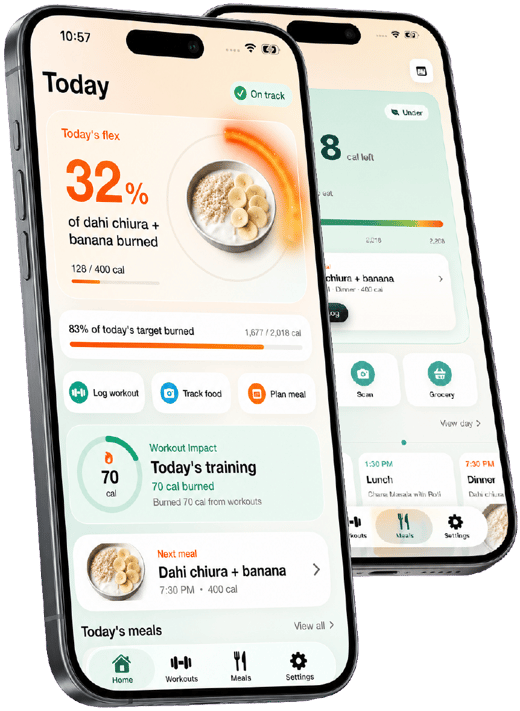
Burnplate's workout planner for women starts beginners with a manageable plan and grows it as you do — no guessing what comes next.
A plan scaled to true beginner level
Set your level to beginner and Burnplate builds a full-body plan around fewer, simpler movements and more recovery, based on your available days and equipment.
Sessions logged so you can see progress
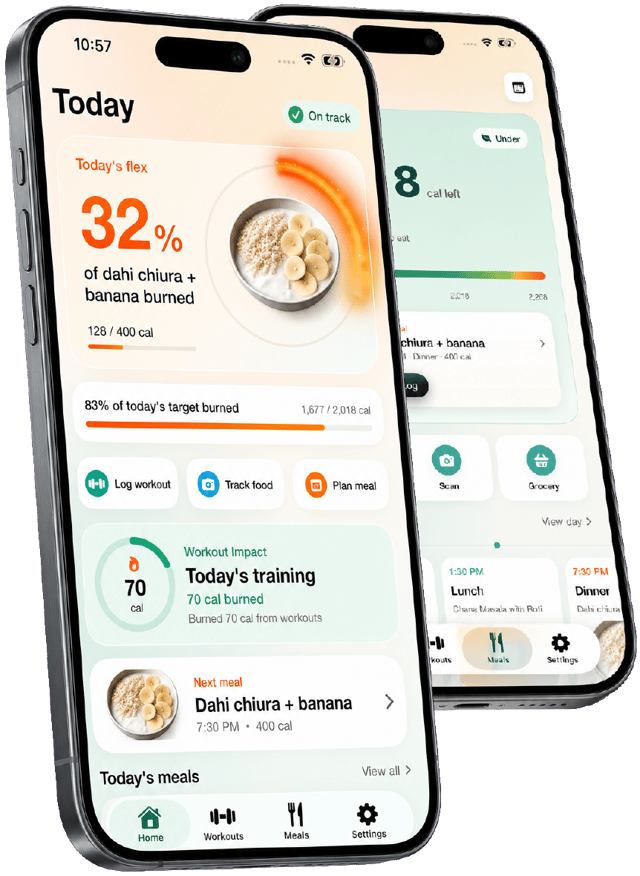
Log each workout and Burnplate keeps your history, so the first time a squat feels easier or a weight goes up, you'll actually see it in writing.
Calorie and protein targets, no guesswork
Burnplate sets calorie and protein targets from your body and goal, so you're not separately trying to figure out how to eat around a new routine.
A photo calorie counter for busy weeks
Snap a photo of a meal and confirm what Burnplate found — a faster way to stay consistent with logging while you're also building a new workout habit.
Practical guidance
Tips for starting a beginner workout plan
What actually makes the first few months stick, beyond just showing up.
- 01 Learn six movements, not sixty
A squat, hinge, push, pull, carry and core hold cover almost everything you need as a beginner — master those first.
- 02 Expect soreness the first two weeks
New movement patterns cause more soreness than the workout intensity would suggest. It fades within a month as your body adapts.
- 03 Write the plan down ahead of time
Deciding what to do in the moment is exhausting and is the top reason beginners quit early — remove that decision ahead of time.
- 04 Rest days aren't optional
New lifters recover slower than they expect. Two full-body days with a rest day between beats three days back to back.
- 05 Video your form on the big lifts
Ten seconds of phone video on a squat or deadlift shows things a mirror can't, and catches form issues early.
- 06 Judge week one by consistency
Showing up three times is the win in week one — strength and confidence follow from repetition, not from one brutal session.

Build the plan around your week
Build my workout plan Tell Burnplate your days, equipment and level and it builds a progressive workout plan, logs every session, and connects what you burn to what you eat.
Questions
Workout planner for women who are beginners: FAQ
What is a good beginner workout plan for women?
A full-body plan trained two to three times a week, built around a squat, a hinge, a push, a pull and a core exercise, is the simplest and most effective place to start. Bodyweight or light dumbbells are enough for the first month.
How many days a week should a beginner work out?
Two to three days a week is ideal for a true beginner. It's enough to build strength and learn the movements while leaving recovery time between sessions, which matters more for new lifters than people expect.
Is it normal to be sore after every beginner workout?
Yes, especially in the first two to three weeks, as your muscles adapt to movement patterns they haven't done before. The soreness fades with consistency and isn't a sign you need to train harder or more often.
Should a workout program for women beginners include cardio?
A little is useful for general health, but strength training should be the priority early on since it builds the foundation cardio can't. A few short walks a week alongside two to three strength sessions is plenty to start.
Do beginners need a gym, or can they start at home?
You can start entirely at home with bodyweight exercises and a pair of dumbbells. The movement patterns — squat, push, pull, hinge — transfer directly to gym equipment once you're ready to add more weight than home gear allows.
How long until a beginner workout plan shows results?
Most beginners notice strength improving within two to four weeks and see visible changes in shape within eight to twelve weeks of consistent training. Progress is fastest in the first few months, so early consistency pays off the most.
