Because a 5K is raced near or above lactate threshold for most runners, interval sessions — repeated hard efforts with recovery — train exactly the system the race depends on, more directly than easy mileage does.
Why it's different
Why 5K training rewards a different structure than longer races
A marathon plan is won on volume. A 5K is short enough that raw aerobic endurance is rarely the limiter — for most runners, VO2 max and the ability to sustain a hard pace for around 20-30 minutes matters more.
4–8 weeks typical training block length for a 5K, shorter than any other common race distance
1–2×/week dedicated speed or interval sessions most 5K plans build around
3–4 mi peak weekly long run distance — a 5K plan needs far less mileage than longer races
A 5K plan can produce real gains on 3–4 running days a week and a peak long run of just 3–4 miles — the distance doesn't demand the volume that half and full marathons do.
Someone running their first 5K benefits most from consistent easy running and a gradual buildup to 3.1 miles. Someone chasing a faster time needs structured intervals and tempo work layered on top of a base that's already there.
A 5K is short enough to go out too fast and long enough to make you pay for it. Race-pace practice in training — not just fitness — is part of what separates a good 5K from a personal best.
What it looks like
A sample training week (PR-focused)
A four-day week for a runner with some base fitness working toward a faster 5K time.
Example week
4 running days Days/week25–45 min Session lengthIntermediate LevelNone — running shoes Equipment
Monday Easy run 2.5 miles at a conversational pace
Tuesday Interval session 1-mile warm-up · 6×400m at 5K pace or faster with 90s jog rest · 1-mile cool-down
Wednesday Rest Full rest or light cross-training, 20 min easy
Thursday Tempo run 1-mile warm-up · 2 miles at a comfortably hard pace · 1-mile cool-down
Friday Rest Full rest or gentle mobility work
Saturday Easy run 2.5 miles easy + strides
Sunday Long run 4 miles at an easy, steady pace
How Burnplate handles it
How Burnplate supports 5K training
Burnplate builds the running plan around your schedule, whether the goal is finishing or setting a PR.
A plan built around your goal and level
Tell Burnplate your running days and level, and it builds a plan structured around easy running, one to two quality sessions and a manageable long run.
Calorie targets sized to a lighter training load
Burnplate sets calorie and macro targets from your body, goal and activity — a 5K's lower weekly mileage means the eating side doesn't need marathon-level carb loading, and the targets reflect that.
Fast logging that fits a short training block
Photo-based food logging keeps tracking realistic through a focused 4–8 week block without turning nutrition into a second training plan.
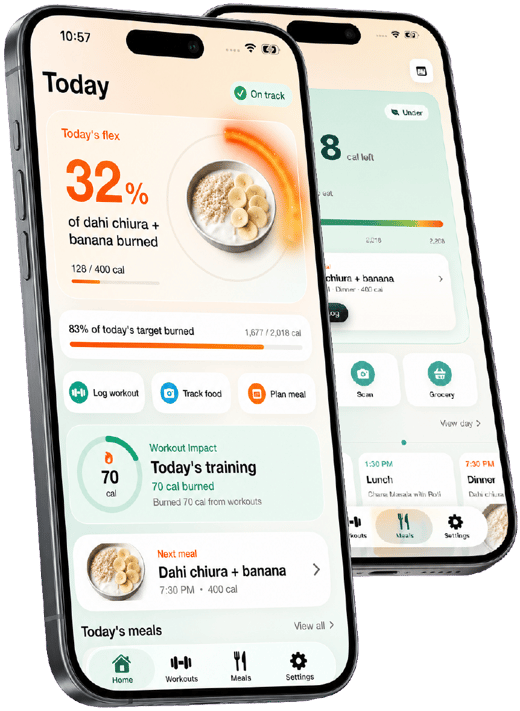
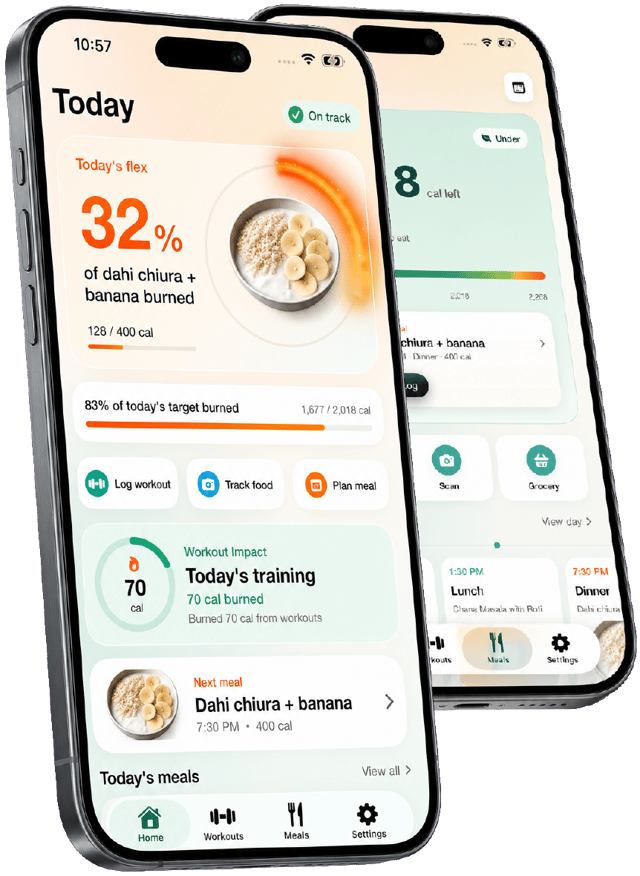
The burn bar shows a hard interval session counted
Log a speed workout and see the percentage of your day's food it burned — short sessions can still move the needle more than they look like on paper.
Practical guidance
Tips for 5K training
Practical habits that help whether the goal is finishing your first one or chasing a faster time.
- 01 Practice your goal pace before race day
Knowing what goal pace actually feels like prevents the classic 5K mistake of starting too fast and fading in the final mile.
- 02 Don't skip easy days even in a short block
Easy running between quality sessions is what lets you absorb the hard work — cutting it out slows progress, not speeds it up.
- 03 Warm up properly before speed sessions
A mile of easy running plus a few strides primes the legs for interval pace and reduces injury risk.
- 04 Use a flat, familiar route for time trials
Testing your current fitness on a consistent course removes terrain as a variable when comparing times.
- 05 Taper even for a short race
A lighter final week with reduced volume but a bit of speed keeps legs fresh — skipping the taper leaves fatigue on the table on race day.
- 06 Fuel lightly before, not during
A 5K rarely needs mid-race fueling — a light, familiar pre-run meal or snack 1-2 hours before is usually enough.

Build the plan around your week
Build my workout plan Tell Burnplate your days, equipment and level and it builds a progressive workout plan, logs every session, and connects what you burn to what you eat.
Questions
Workout planner for running a 5K: FAQ
How long does it take to train for a 5K?
A complete beginner can go from little running to finishing a 5K in about 8 weeks using a gradual run-walk buildup. Someone with an existing running base chasing a faster time can see meaningful improvement in as little as 4-6 weeks of structured training.
What is a good training plan for a 5K?
For most runners, three to four running days a week works well: one interval or speed session, one tempo or moderate-effort run, and one to two easy runs, with a long run that peaks around 3-4 miles. The distance doesn't require marathon-style weekly mileage.
How many days a week should I run to train for a 5k?
Three to four days a week is enough for most people to see real improvement, especially when at least one session is dedicated to speed work. Running every day isn't necessary at this distance and can raise injury risk without adding much benefit.
Should beginners do speed work when training for a 5K?
Some structured effort helps, but true beginners often benefit more from simply building consistent easy running and a run-walk progression first. Once running 3 miles continuously feels manageable, adding one interval session a week starts to pay off.
What should I eat before a 5K race?
A light, familiar meal or snack with mostly carbohydrate and a little protein, eaten 1–2 hours before the race, works well for most runners. A 5K is short enough that heavy carb-loading or mid-race fueling generally isn't necessary.
Can Burnplate build a 5K training plan?
Yes. Tell Burnplate your running days and level, and it builds a plan around easy running, speed work and a manageable long run, plus calorie targets sized to a shorter training block.
