Chest, shoulders and triceps all get heavily involved in pressing movements, so training them on the same day and resting them together, rather than splitting shoulders onto a separate day, avoids accidental overlap.
Why it's different
Why push/pull/legs works as a split
Grouping exercises by movement pattern instead of individual muscle keeps overlapping muscle groups from being trained on back-to-back days without you realizing it.
10–20 sets weekly sets per major muscle group that most hypertrophy research supports for growth
48 hrs typical recovery window before hitting the same pattern hard again on a 6-day PPL
6–10 reps a common working range for the main compound lift on each day, with accessories higher
Run it once through the week for 3 days, or twice through for 6 — the same day structure works at either frequency, which is rare for a split this structured.
Because each day trains a distinct set of movement patterns, a well-spaced PPL naturally gives 48+ hours before the same muscles are stressed hard again, without extra planning.
Lagging body part? A push/pull/legs split makes it simple to add an extra exercise or set to the relevant day without disrupting the rest of the plan.
What it looks like
A sample push/pull/legs workout plan
A 6-day version that runs the push/pull/legs cycle twice through the week — the same three days repeated with a rest day at the end.
Example week
6 Days/week50–65 min Session lengthIntermediate LevelFull gym Equipment
Monday Push A Bench press 4×6 · Overhead press 3×8 · Incline dumbbell press 3×10 · Lateral raise 3×15 · Triceps pushdown 3×12
Tuesday Pull A Deadlift 3×5 · Pull-up 4×8 · Barbell row 3×8 · Face pull 3×15 · Barbell curl 3×12
Wednesday Legs A Back squat 4×6 · Romanian deadlift 3×8 · Leg press 3×12 · Calf raise 4×15
Thursday Push B Overhead press 4×8 · Incline barbell press 3×8 · Cable fly 3×12 · Dips 3×10 · Overhead extension 3×12
Friday Pull B Barbell row 4×8 · Lat pulldown 3×10 · Seated cable row 3×10 · Rear delt fly 3×15 · Hammer curl 3×12
Saturday Legs B Front squat 3×8 · Walking lunge 3×12/leg · Leg curl 3×12 · Hip thrust 3×10
How Burnplate handles it
How Burnplate handles a push/pull/legs plan
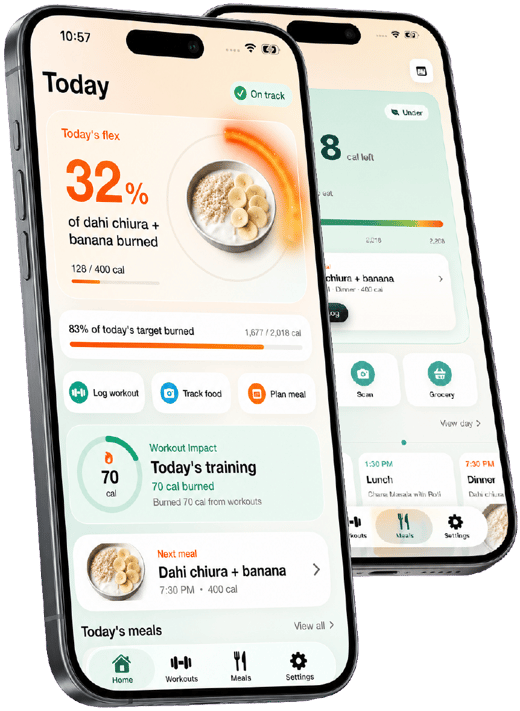
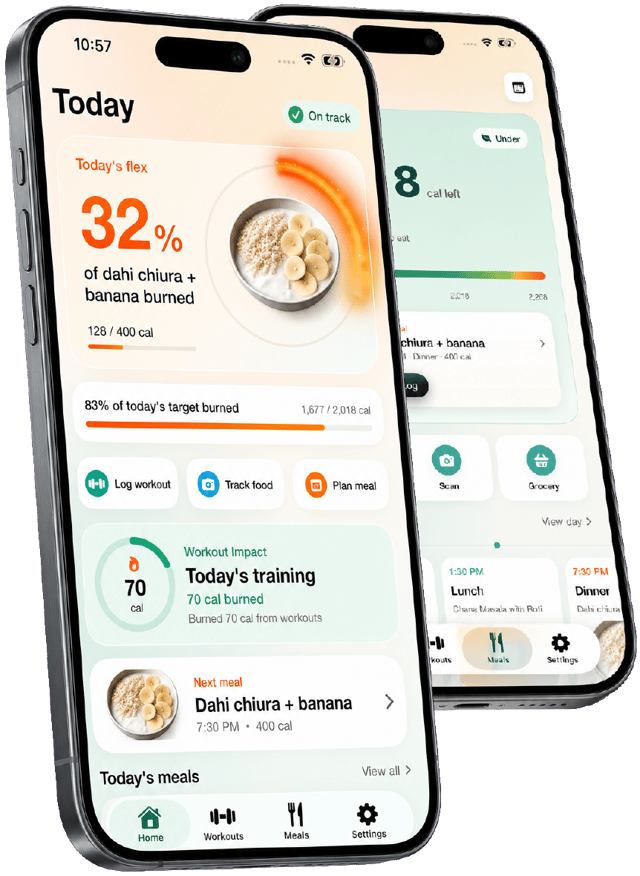
Burnplate builds the PPL structure around how many days you can actually train and keeps your food matched to the volume.
A plan that scales from 3 to 6 days automatically
Tell Burnplate how many days you have and it builds a push/pull/legs plan sized to fit — one pass for 3 days, two passes for 6 — instead of a fixed template.
Session logging built for a repeating split
Log sets and reps for each push, pull or legs day, and Burnplate keeps a clear history so you can see whether your A and B days are both trending up.
Calorie and protein targets that match training volume
A 6-day PPL burns more and demands more protein than a 3-day version. Burnplate sets targets from your actual schedule, not a generic estimate.
The burn bar shows each day's contribution
Whether it's a push, pull or legs day, the burn bar shows how much of your day's food that session has offset.
Practical guidance
Tips for running a push/pull/legs split well
Practical guidance for getting the most out of a PPL workout plan at any frequency.
- 01 Don't let push days get all the attention
Push exercises are often more familiar, which can lead to skimping on pull volume — pulling strength needs equal effort to avoid posture and shoulder issues.
- 02 Order matters within each day
Do the heaviest compound lift first when you're freshest, and save single-joint accessory work for the end of the session.
- 03 Use the rest day deliberately
On a 6-day PPL, the single rest day matters more than it looks — protect it rather than filling it with extra cardio or accessory work.
- 04 Keep leg days non-negotiable
Legs is the easiest day to skip or shorten under time pressure — treat it with the same priority as push and pull.
- 05 Adjust volume before adding a 7th day
If progress stalls, adding sets to existing days is usually more effective and more recoverable than adding a 7th training day.
- 06 Track top sets across both A and B days
Since each pattern is trained twice a week, tracking your best set on both versions gives a clearer picture of progress than tracking just one.

Build the plan around your week
Build my workout plan Tell Burnplate your days, equipment and level and it builds a progressive workout plan, logs every session, and connects what you burn to what you eat.
Questions
Workout planner for a push/pull/legs split: FAQ
What is a push pull legs workout routine?
It's a split that organizes training by movement direction: push day covers chest, shoulders and triceps; pull day covers back and biceps; legs day covers quads, hamstrings, glutes and calves. It can be run once or twice through the week.
Is push pull legs better than a bro split?
For most lifters, yes — PPL naturally spaces recovery for overlapping muscle groups (like shoulders getting hit on both bench and overhead press), which a traditional single-muscle-per-day split can accidentally ignore.
How many days a week should I run a push pull legs split?
Three days a week (one full cycle) works well for beginners and those with limited time; six days a week (two full cycles) adds the training frequency that benefits intermediate and advanced lifters most.
Can I run PPL split on 4 or 5 days?
Yes — a common approach is push, pull, legs, rest, push, pull, rest, restarting the cycle the following week, which still gives most muscle groups two sessions across roughly nine days.
How long should each push pull legs workout be?
Most sessions run 50–65 minutes including warm-up, covering a heavy compound lift, two to three supporting exercises and one or two isolation movements for the pattern's day.
Is push/pull/legs good for beginners?
Yes, especially the 3-day version — it teaches the major movement patterns clearly and is simple to progress. Beginners can add a second weekly pass once the basic lifts feel comfortable.
