Total weekly sets taken close to fatigue is one of the strongest predictors of muscle growth in research — a bodybuilding plan is built to accumulate enough quality volume per muscle, not just to move the heaviest weight possible.
Why it's different
Why bodybuilding training looks different from general strength work
A powerlifting program optimizes three lifts. A bodybuilding workout plan optimizes the look and development of every visible muscle group, which changes exercise selection, rep ranges and how volume is distributed.
10–20 sets weekly sets per muscle group is the range most hypertrophy research supports for growth
8–15 reps the working rep range most bodybuilding programming centers on for muscle-building sets
1.6–2.2 g/kg daily protein per kilogram of bodyweight that supports muscle growth during training
Big lifts like squats and bench press build a lot of muscle, but isolation exercises — lateral raises, leg curls, cable flies — target muscles and angles that compound lifts under-develop.
Deliberately focusing on the working muscle during a set, and choosing a controlled tempo, measurably increases activation of that muscle compared to rushing through reps focused only on moving the weight.
Meaningful muscle growth usually requires a period of eating at or slightly above maintenance calories; getting visibly leaner requires a deficit. Bodybuilding training is typically organized around these bulk and cut phases rather than one constant calorie target.
What it looks like
A sample bodybuilding workout plan
A 5-day body-part split with volume concentrated on 1–2 muscle groups per session — a classic bodybuilding structure for building size with clear recovery.
Example week
5 Days/week60–75 min Session lengthIntermediate LevelFull gym Equipment
Monday Chest + triceps Bench press 4×8 · Incline dumbbell press 4×10 · Cable fly 3×12 · Dips 3×10 · Triceps pushdown 3×15
Tuesday Back + biceps Deadlift 3×6 · Lat pulldown 4×10 · Barbell row 4×10 · Cable row 3×12 · Barbell curl 3×12
Wednesday Legs Back squat 4×8 · Leg press 4×12 · Romanian deadlift 3×10 · Leg extension 3×15 · Calf raise 4×15
Thursday Shoulders + abs Overhead press 4×8 · Lateral raise 4×15 · Rear delt fly 3×15 · Cable crunch 3×15 · Hanging leg raise 3×12
Friday Arms + weak points Close-grip bench 3×10 · Barbell curl 3×12 · Hammer curl 3×12 · Skull crusher 3×12 · Lagging body part focus
How Burnplate handles it
How Burnplate handles bodybuilding training
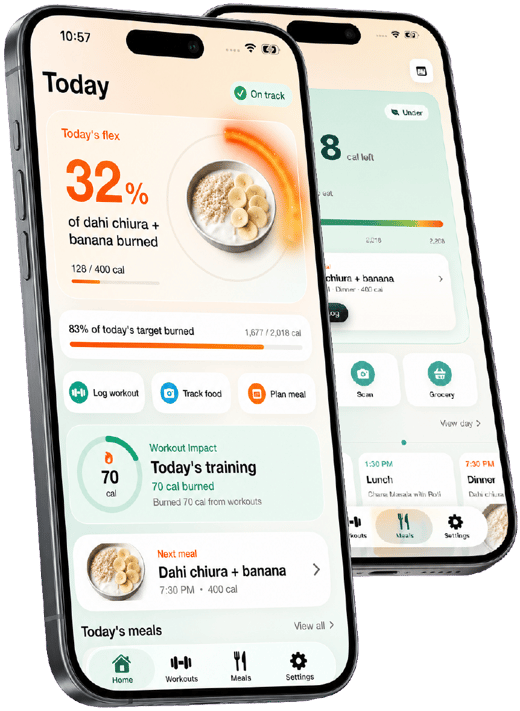
Burnplate builds the split and manages the bulk-or-cut calorie side that bodybuilding progress depends on just as much as the training.
A plan built around bodybuilding volume and splits
Tell Burnplate your days and goal and it builds a body-part or push/pull/legs style plan with the volume and rep ranges bodybuilding training calls for.
Calorie targets for bulk or cut phases
Burnplate sets a surplus for building muscle or a deficit for cutting, with protein calculated from your bodyweight so the food side of a bodybuilding plan is dialed in, not guessed.
Session logging built for high-volume training
Log every exercise, set and rep across a 5-day split, and see your progression per muscle group in your workout history.
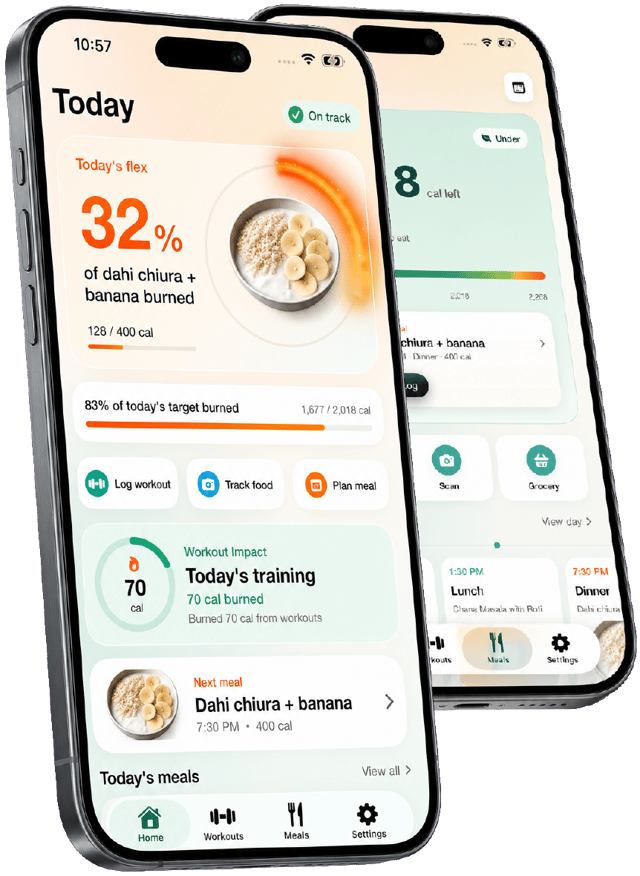
The burn bar shows training against a bulk or cut
See how a training session offsets your day's food whether you're eating in a surplus to build or a deficit to lean out.
Practical guidance
Tips for making a bodybuilding workout plan effective
Practical guidance for building size with a structured, sustainable approach.
- 01 Don't chase soreness as a progress marker
Muscle soreness fades as you adapt to a program even while it's still working — track load, reps and visible progress instead.
- 02 Prioritize progressive overload every block
Whether through more weight, more reps or more sets, some form of progression over 4–6 weeks is what separates a bodybuilding plan from just going through the motions.
- 03 Keep bulk phases controlled
A calorie surplus of roughly 250–500 above maintenance builds muscle efficiently without adding excess fat that a later cut has to remove.
- 04 Train close to failure on isolation work
Isolation exercises for smaller muscles generally tolerate training closer to failure than heavy compound lifts, where form breakdown carries more risk.
- 05 Plan a deload every 6–8 weeks
A lighter week reduces accumulated fatigue from high training volume and helps sustain the split for months rather than burning out in six weeks.
- 06 Sleep 7+ hours during a bulk
Muscle repair and growth hormone release both depend heavily on sleep quality — undersleeping blunts the return on a well-designed training volume.

Build the plan around your week
Build my workout plan Tell Burnplate your days, equipment and level and it builds a progressive workout plan, logs every session, and connects what you burn to what you eat.
Questions
Workout planner for bodybuilding: FAQ
What's a good workout plan for bodybuilding beginners?
A 3–4 day full-body or upper/lower split with a mix of compound and isolation exercises builds a base before progressing to a higher-volume 5-day body-part split. Beginners generally see fast progress on lower volume before needing the specialization a bodybuilding split provides.
How many sets per muscle group should a bodybuilding plan include?
Most research points to roughly 10–20 weekly sets per muscle group for meaningful growth, spread across 2 or more sessions rather than crammed into one day.
What's the best rep range for bodybuilding?
8–15 reps per set taken close to fatigue is the classic bodybuilding range, though research shows a wide range (roughly 5–30 reps) can build muscle effectively as long as sets are taken near failure.
Do bodybuilders need to bulk and cut?
It's a common and effective approach, but not the only one — a slower, more moderate calorie surplus with a smaller eventual cut can also work well, especially for beginners who can build muscle and lose fat somewhat simultaneously.
How much protein do I need for a bodybuilding workout plan?
Roughly 1.6–2.2 g of protein per kilogram of bodyweight per day supports muscle growth during training, with higher intakes offering little additional benefit for most people.
How long until I see results from a bodybuilding plan?
Noticeable strength gains often show up within 4–6 weeks; visible muscle changes typically take 8–12 weeks of consistent training and appropriate nutrition to become clearly apparent.
