
The weeks with the longest long runs and highest total mileage — often the final big weeks before taper — carry the highest calorie and carb demand of the entire buildup, and this is where underfueling causes the most damage to training quality.
Why it's different
Why marathon training calories move in phases
A 16 to 20-week marathon buildup isn't a flat block of training — it moves from lower base mileage, through a peak of long runs and workouts, into a taper, then race day itself. Eating the same way through all of it either underfuels the peak or overshoots the taper.
6–8g/kg carbs per kg bodyweight is a common carb-loading target for the 2-3 days before race day
30–60g/hr carbs during the marathon itself is the range most runners need to avoid hitting the wall past mile 18-20
1.2–1.6g protein per kg bodyweight supports recovery through months of accumulating training stress
Taper reduces mileage sharply, which lowers total calorie needs, but carbs should stay a similarly high share of intake to keep glycogen stores topped off heading into race day — the cut should come from total calories, not from carbs specifically.
In the 2-3 days before the race, many runners intentionally raise carb intake toward 6-8 g/kg while keeping fiber and fat lower, to maximize glycogen stores without race-week GI issues.
What you eat and drink during the marathon itself — usually 30-60 g of carbs per hour after the first 45-60 minutes — should be practiced on long training runs beforehand, since trying something new on race day is a common cause of GI trouble.
What it looks like
A sample day: peak-week 20-miler
Built around a 20-mile long run during peak training, roughly 4-6 weeks before race day. This is close to the highest single-day calorie and carb need of the entire buildup.
Example day
Daily targets
Calories ~3,300 well above rest-day maintenance to cover a 20-mile long run plus daily activity
Carbs ~480 g roughly 6.5 g/kg for a 74 kg runner — near the top of the buildup's carb needs
Protein ~110 g 1.5 g/kg range to support recovery from the buildup's biggest single training stimulus
On-run carbs 30–60g/hr practiced during the long run itself, rehearsing exactly what race day will use
A logged day
6:00 AM Toast, honey, banana, pre-runthe same simple pre-run meal used most long-run weekends by this point 320 kcal
6:45 AM Long run: 20 miles, gels at miles 6/12/18the single biggest calorie event of the training week ~2,000 kcal burned
9:30 AM Recovery shake + bagel, post-runcarbs and protein within the first hour to start glycogen refill 460 kcal
12:30 PM Turkey sandwich, sweet potato, fruitcarb-forward lunch continues the day's refuel 680 kcal
4:00 PM Greek yogurt + granola, afternoon snackkeeps carbs topped up through the rest of the day 320 kcal
7:00 PM Salmon, rice, roasted vegetablesprotein and carbs both stay high through dinner on the day's biggest training load 740 kcal
How Burnplate handles it
How Burnplate fuels a marathon buildup
Burnplate ties calorie and carb targets to your logged training, so base weeks, peak weeks, taper and race day each get treated the way they actually need to be.
Targets that move through the whole buildup
Set your training plan and weekly mileage, and Burnplate raises calorie and carb targets through base and peak weeks, then pulls calories back during taper while keeping carbs proportionally high.
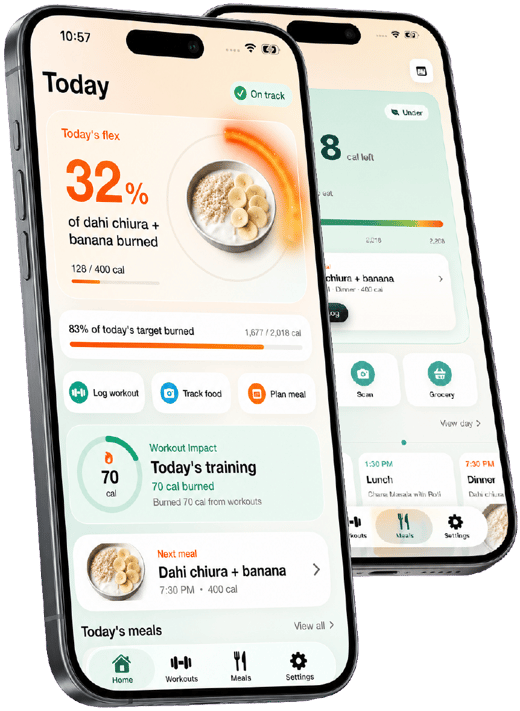
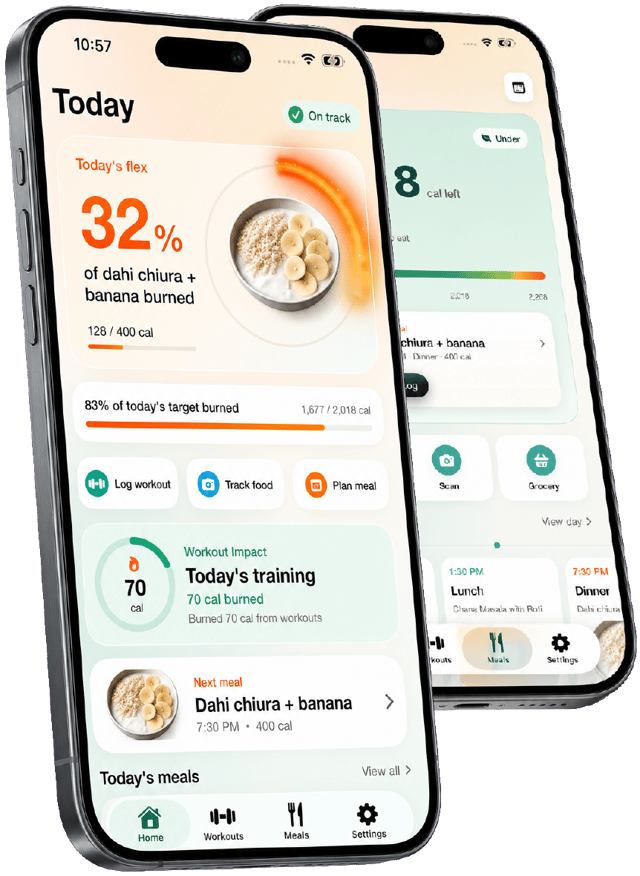
The burn bar shows what a long run earned back
Log a 16, 18 or 20-mile long run and see the percentage of your next meal it's covered — a clear, visible reason the post-long-run meal is significantly bigger than a normal one.
Photo logging for rehearsing race-day fueling
Log gels and sports drink during long runs the same way you'll need to think about them on race day, building a fueling routine you can trust before it actually matters.
Macro targets that shift for carb-loading
In the final days before a logged race, carb targets can be raised to reflect a carb-loading window, without needing to manually recalculate grams by hand.
Practical guidance
Fueling tips for a marathon buildup
Practical habits across base training, peak weeks, taper and race week.
- 01 Fuel long runs before they start
A carb-focused meal 2-3 hours before any run over 90 minutes reduces the risk of running out of fuel partway through.
- 02 Practice race-day fueling on long runs
Test the exact gels, chews or sports drink you plan to use on race day during training, never for the first time in the race itself.
- 03 Don't cut calories during peak weeks
The highest-mileage weeks of the buildup are the worst time to also be running a calorie deficit — save weight goals for lower-mileage phases.
- 04 Cut volume in taper, not carb percentage
Taper week needs fewer total calories as mileage drops, but carbs should stay a similarly high share of the plate to protect glycogen stores.
- 05 Carb-load deliberately in the final 2–3 days
Raising carbs toward 6-8 g/kg in the last couple of days before the race, while keeping meals familiar and lower in fiber, helps maximize glycogen without GI issues.
- 06 Refuel within an hour after every long run
Carbs and protein eaten soon after a long run start recovery sooner and make the next day's easy run feel easier.

Track it with a photo, not a search bar
Start tracking free Burnplate sets your calorie and macro targets, logs meals from a photo, and shows how much of each meal your workouts and steps have burned off.
Questions
Calorie tracker for marathon training: FAQ
How many calories should I eat during marathon training?
It changes through the buildup — base weeks need less, peak weeks with the longest long runs need the most, and taper week needs less again as mileage drops. Many runners in peak weeks need 2,800-3,500+ calories a day; Burnplate calculates your specific number from your body, goal and logged training.
How many carbs should I eat during marathon training?
During peak mileage weeks, many runners target 6-8 g of carbs per kg of bodyweight on long-run days, dropping to 3-5 g/kg on easy or rest days. In the final 2-3 days before the race, carb intake is often intentionally raised further as part of a carb-load.
What should I eat during a marathon?
A common approach is 30-60 g of carbs per hour starting after the first 45-60 minutes, from gels, chews or sports drink, alongside water and electrolytes as needed. Whatever combination you use should already be practiced and tolerated on long training runs before race day.
Should I eat more or less during taper week?
Total calories typically come down during taper since mileage drops sharply, but carbs should stay a high share of what you do eat to keep glycogen stores topped off heading into race day. The cut should come from overall volume, not from carb percentage.
What is carb-loading and when should I start it?
Carb-loading is a deliberate increase in carb intake, often toward 6-8 g/kg, in the 2-3 days immediately before a marathon, meant to maximize glycogen stores. It works best alongside reduced training volume during the same window, which is already happening naturally during taper.
Can Burnplate help me fuel for race day?
Burnplate tracks your calories, carbs and protein through the entire buildup and can reflect a carb-loading window in the days before a logged race, which builds the fueling habits race day depends on. It doesn't replace a coach's race-specific plan, but it handles the daily tracking underneath one.
