Bodybuilders use the squat to grow legs. Powerlifters use the squat to squat more. That means bar path, stance and depth get practiced at competition specs, not whatever feels best that day.
Why it's different
Why powerlifting training is its own category
A general strength-training plan wants you fitter. A powerlifting program wants three specific numbers on a specific day to be as high as possible — that changes almost every training decision.
3–5×/week training frequency most powerlifting programs use to hit each lift often enough to progress
1–5 reps the rep range where strength-specific training lives, usually at 80–95% of a working max
1.6–2.2 g/kg protein per kilogram of bodyweight supports the recovery this style of training demands
Working near a one-rep max taxes the nervous system, not just the muscle. Programs cycle intensity — heavy, medium, light weeks — so you're fresh enough to hit a true max when it counts.
Pause squats, board presses, deficit deadlifts and rows aren't random — each one targets the specific part of a lift where you're losing pounds, whether that's the bottom of the squat or lockout on the deadlift.
Gaining weight can raise your total, but only if it's controlled enough that strength outpaces fat gain. Most lifters eat at maintenance or a small surplus while chasing a total, not a physique.
What it looks like
A sample week of powerlifting training
A four-day upper/lower split built around the competition lifts, with volume accessories on top.
Example week
4 Days/week75–90 min Session lengthIntermediate LevelBarbell, rack, bench Equipment
Monday Squat + lower accessories Back squat 5×3 @ 80% · Pause squat 3×5 · Leg press 3×10 · Plank 3×45s
Tuesday Bench + upper accessories Bench press 5×3 @ 80% · Close-grip bench 3×6 · Barbell row 4×8 · Face pulls 3×15
Wednesday Rest or light cardio Easy walk or bike 20–30 min · Mobility work
Thursday Deadlift + posterior chain Deadlift 5×2 @ 82% · Romanian deadlift 3×8 · Pull-ups 3×8 · Ab wheel 3×10
Friday Bench variation + arms Overhead press 4×6 · Incline bench 3×8 · Dumbbell curl 3×12 · Triceps pushdown 3×12
Saturday Squat variation Front squat 4×5 · Bulgarian split squat 3×10 · Hanging leg raise 3×12
Sunday Rest Full recovery day — sleep and food take over
How Burnplate handles it
How Burnplate supports a powerlifting program
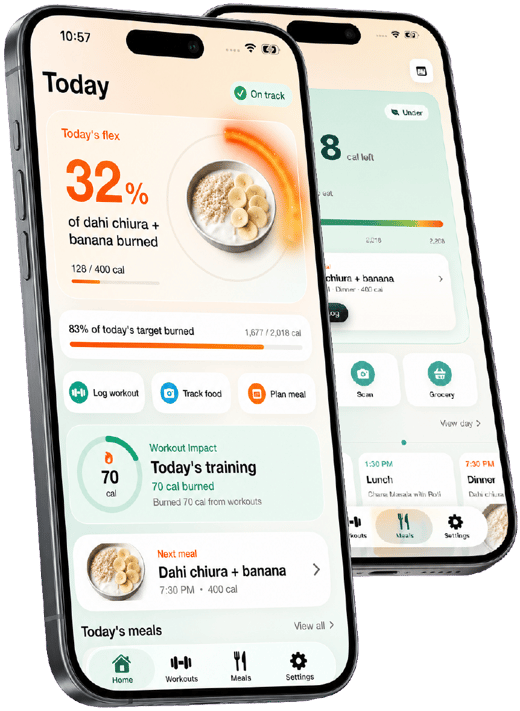
Burnplate builds the program around your schedule and equipment, then logs the sets and reps that show whether it's working.
A plan built around your training days
Tell Burnplate how many days a week you can train and what equipment you have access to, and it builds a squat/bench/deadlift-focused plan around that.
Session logging for sets, reps and load
Log each working set as you go — Burnplate keeps the history so you can see whether last week's top set actually moved faster this time.
Calorie and protein targets sized for strength training
Burnplate sets calorie and protein targets from your body and goal, so you're eating enough to recover from heavy lower-body days without needless fat gain.
The burn bar keeps training and eating connected
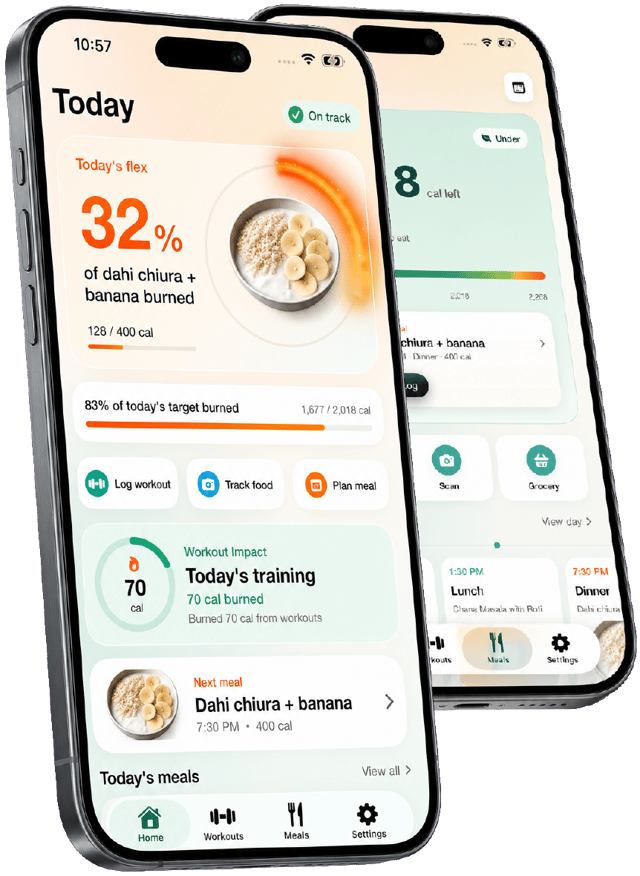
A heavy squat day burns real calories — the burn bar shows how much of your day's food that session covered, so you're not underfueling on your biggest lifting days.
Practical guidance
Tips for a powerlifting training block
The habits that separate a total that keeps climbing from one that stalls.
- 01 Warm up with the bar path, not just weight
Rehearse the exact stance, grip and depth you compete with, even in your warm-up sets — consistency is worth more than surprise PRs.
- 02 Don't chase a max every session
Most training happens at 70–90% of your max. Save the true singles for testing days or meets, not every Monday.
- 03 Sleep is part of the program
Seven to nine hours is where most of the adaptation to heavy training actually happens — cutting sleep undercuts the lifting.
- 04 Log RPE, not just weight on the bar
Noting how hard a set felt (on a 1–10 scale) catches fatigue trends before they show up as a missed lift.
- 05 Fuel the day of a heavy session
Under-eating before a max-effort squat or deadlift day is one of the most common reasons a lift that should go up doesn't.
- 06 Respect the deload
Skipping planned lighter weeks to keep pushing is the most common way lifters talk themselves into an overuse injury.

Build the plan around your week
Build my workout plan Tell Burnplate your days, equipment and level and it builds a progressive workout plan, logs every session, and connects what you burn to what you eat.
Questions
Workout planner for powerlifting: FAQ
What is a good beginner powerlifting program?
Most beginners do well with a linear program: squat, bench and deadlift trained 2–3 times a week each, adding small amounts of weight every session while the lifts are still new. Once progress stalls week to week, a percentage-based program with planned heavy, medium and light days usually takes over.
How many days a week should I do a powerlifting workout plan?
Three to five days a week is the common range. Three days suits beginners or people with limited time; four to five lets intermediate and advanced lifters spread volume across more sessions, which usually helps recovery more than cramming everything into fewer days.
Should powerlifters do cardio?
Yes, in moderation. Light to moderate cardio supports recovery and general health without meaningfully interfering with strength gains. Very high volumes of hard cardio can compete with recovery from heavy lifting, so most programs keep it easy and separate from lifting days when possible.
How much should I eat to get stronger?
Most lifters do well at maintenance calories or a small surplus of 200–300 kcal a day, with 1.6–2.2 g of protein per kilogram of bodyweight. A large surplus can speed strength gains slightly but adds more fat than most lifters want per pound of strength gained.
Can Burnplate build me a powerlifting workout plan?
Yes. Tell Burnplate your training days, equipment and level, and it builds a plan around the squat, bench and deadlift with accessory work, then logs your sets, reps and load so you can see the trend over time.
How long does it take to see progress in a powerlifting program?
Beginners often add weight to their lifts every session for the first 2–3 months. After that, progress usually shows up over 4–8 week blocks rather than week to week, which is why programs are built in training cycles instead of day-by-day gains.
