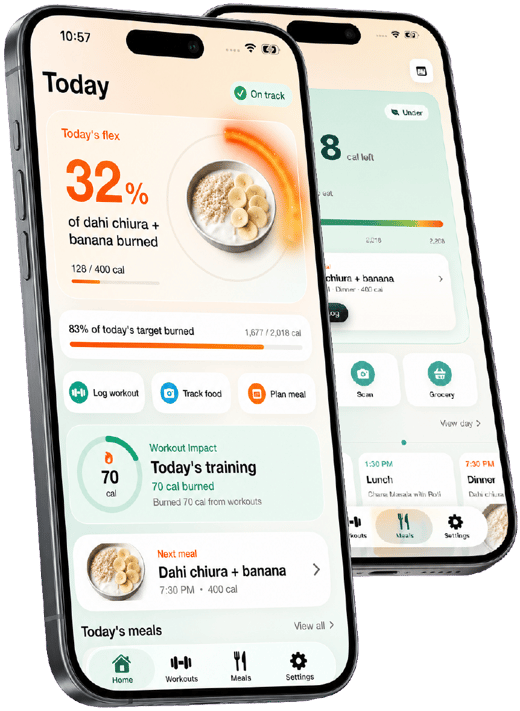

Low carb usually means a carb ceiling — commonly 50–130 g a day — without requiring fat to hit a specific percentage. That makes day-to-day tracking simpler: watch the carb number, let protein and fat fill in naturally.
Why it's different
Why low carb tracking is different from keto tracking
Keto tracking lives or dies on a precise fat-protein-carb ratio to sustain ketosis. Low carb is more forgiving — the target is simply eating meaningfully fewer carbs than a typical diet, which changes what the tracker needs to emphasize.
50–130 g carbs a day is the common low-carb range, well below typical intake but above strict keto
25–35 g fiber a day that most low-carb plans target from vegetables and legumes, not just protein
100+ g protein a day is typical on low carb, since removing carbs usually raises the share from protein and fat
Unlike keto, most low-carb approaches don't subtract fiber from the carb count, since the ceiling is high enough that the distinction matters less. Tracking total carb grams against a daily budget is usually sufficient.
Cutting carbs typically means eating more meat, eggs, dairy and legumes, which naturally pushes protein intake up — a side benefit for satiety and muscle maintenance that keto's protein ceiling doesn't allow as freely.
Because it's less restrictive than keto, low carb is often a long-term pattern rather than a short cycle — so the tracker's job is building a habit you can check quickly, not obsessively logging every gram.
What it looks like
A sample day at 1,900 calories, low carb
Around 100 g of total carbs for the day — well under a typical diet's carb load, but without the strict ketosis math. Starches are swapped for vegetables and legumes; protein carries most meals.
Example day
Daily targets
calories ~1,900 adjust to your own goal — low carb changes the carb source, not necessarily the total
carbs under 100 g total carbs, not net — no need to subtract fiber at this range
protein 110 g+ rises naturally as starches are replaced with protein-rich foods
fiber 28–30 g from vegetables, beans and berries rather than grains
A logged day
7:30 AM 3-egg veggie scramble + avocado410 kcal — no toast, avocado instead of starch 8g carbs
10:30 AM Handful of almonds + string cheese230 kcal — protein and fat snack, minimal carbs 5g carbs
1:00 PM Grilled chicken salad with olive oil dressing480 kcal — carbs come from vegetables, not a wrap or bread 12g carbs
4:00 PM Greek yogurt + a few berries180 kcal — fruit in moderation, not eliminated 14g carbs
7:00 PM Steak, roasted broccoli, side of black beans (1/3 cup)560 kcal — a modest legume portion still fits the range 28g carbs
How Burnplate handles it
How Burnplate tracks a low-carb day
Burnplate lets you set a carb ceiling without forcing a keto-style macro split, so tracking stays simple for a flexible low-carb approach.
A carb budget that's yours to set
Set a daily carb limit anywhere in the low-carb range and Burnplate tracks total grams against it — no forced 70% fat requirement or net-carb math unless you want it.
Photo logging that catches hidden carbs
Snap a photo of a meal and Burnplate flags the carb count on sides and sauces that often carry more carbs than the main protein — bread, dressing, a scoop of rice — so nothing sneaks past the budget.
Protein tracked alongside carbs
See protein and carbs together on the same daily view, since low carb usually means protein does more of the work satiety-wise — Burnplate makes sure that trade-off is visible, not just the carb number.
AI meal plan built around your carb ceiling
Generate a 7-day plan that keeps carbs under your target with a grocery list to match, including smart swaps that keep a meal's carb count in range if you want to change a dish.
Practical guidance
Low-carb tracking tips
Simple habits for keeping carbs in range without turning every meal into a math problem.
- 01 Pick a number and stick with it
Choose a daily carb ceiling in the 50–130g range based on how strict you want to be, then track against that single number.
- 02 Swap the starch, not the meal
Most low-carb success comes from replacing rice, bread and pasta with vegetables — not eliminating entire meals or food groups.
- 03 Watch liquid and hidden carbs
Sauces, dressings, coffee add-ins and drinks often carry more carbs than the plate itself — these are the easiest to undercount.
- 04 Let protein fill the gap
As carbs drop, let protein rise to fill the calorie and satiety gap rather than replacing carbs with pure fat.
- 05 Don't fear fruit and legumes entirely
Low carb is more flexible than keto — a portion of berries or beans usually fits without blowing the daily budget.
- 06 Check total carbs weekly, not just daily
A day slightly over the ceiling is normal; look at the week's average to judge whether the pattern is working.

Track it with a photo, not a search bar
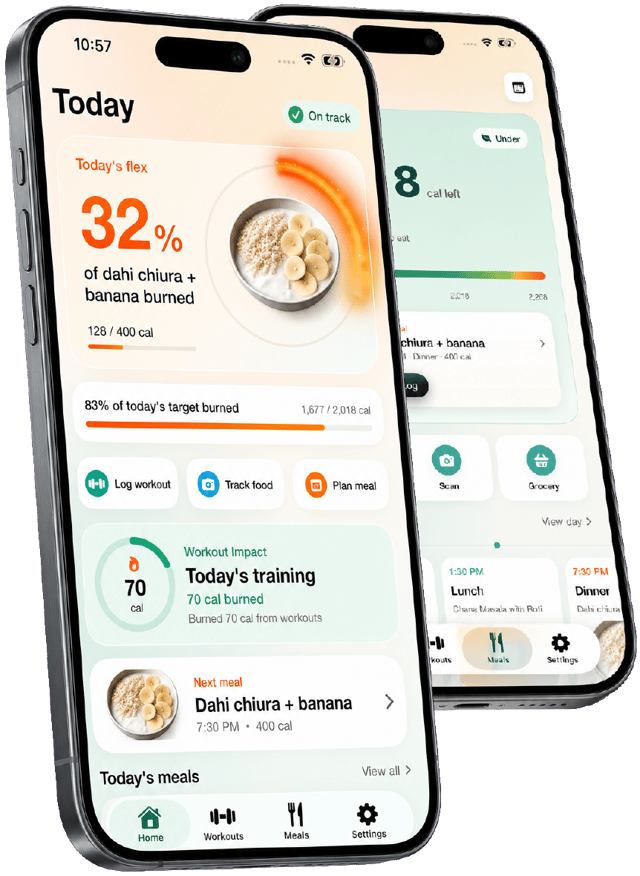
Start tracking free Burnplate sets your calorie and macro targets, logs meals from a photo, and shows how much of each meal your workouts and steps have burned off.
Questions
Calorie tracker for low carb: FAQ
How many carbs a day is considered low carb?
Most low-carb approaches fall between 50 and 130 g of carbs a day, compared to 225–325 g on a typical diet. It's a flexible range rather than a strict number — stricter low-carb plans sit closer to 50 g, while more moderate ones allow up to 130 g.
Is low carb the same as keto?
No. Keto requires a strict macro ratio, usually 70%+ of calories from fat and under 20–50 g of net carbs, to sustain ketosis. Low carb is looser — it simply means eating fewer carbs than typical, without a required fat percentage or net-carb math.
What is a macro calculator for low carb used for?
It sets a daily carb ceiling based on your calorie goal and activity level, then lets protein and fat fill the rest of your calories without a fixed ratio requirement. It's less rigid than a keto macro calculator, which locks fat to a specific percentage.
Do I need to track net carbs on a low-carb diet?
Usually not — because the carb ceiling is higher than keto's, tracking total carbs is typically sufficient. Net-carb tracking (subtracting fiber) matters more at the stricter end of low carb, closer to 50 g a day.
Will low carb eating help me lose weight?
Cutting carbs often leads to weight loss because it tends to reduce overall calorie intake and increase protein, which is filling. The deficit still comes from eating fewer calories than you burn — low carb is one route to get there, not a separate mechanism.
Can Burnplate track low carb without forcing keto macros?
Yes. Set a carb limit that fits your version of low carb and Burnplate tracks against that number, without requiring a specific fat percentage the way a strict keto setup would.
