The same rotational movement, loaded on the same side, dozens of times a round, week after week — without counterbalancing strength work, that pattern is a common source of lower back pain in golfers.
Why it's different
Why golfers need a real workout plan, not just range time
The best workout for golfers isn't more time on the range — it's strength and mobility work that builds the rotational power and posterior-chain durability the swing itself never trains.
4–8 mi distance an 18-hole round on foot typically covers, almost all of it walking
2–3x/wk strength sessions shown to add clubhead speed without changing your swing
~400 kcal calories many golfers burn per hour walking and carrying or pushing a cart
Research on golf performance consistently links greater rotational power and lower-body strength to faster clubhead speed and longer drives — more than swing tweaks alone can produce.
A round on foot covers several miles carrying or pushing equipment, which adds up over a weekend of golf — most players underestimate how much it costs them physically.
Restricted hip and thoracic spine rotation forces the lower back to compensate during the swing, which is one of the most common mechanical causes of golf-related back pain.
What it looks like
A sample training week for golfers
A three-day strength and mobility week built to fit around rounds and range sessions.
Example week
3 strength Days/week40–50 min Session lengthRecreational to competitive LevelDumbbells + resistance bands Equipment
Monday Full-body strength Goblet squat 3x8 · Romanian deadlift 3x8 · Bench press 3x8 · Plank 3x30s
Tuesday Mobility and rotation Hip openers · Thoracic rotations 3x10/side · Med-ball rotational throws 3x8/side
Wednesday Rest or walk 30–45 min easy walk
Thursday Power and core Kettlebell swings 3x12 · Cable woodchops 3x10/side · Single-leg RDL 3x8
Friday Rest Full rest ahead of the weekend
Saturday Play or practice round 18 holes walking, or a focused range and short-game session
Sunday Mobility and light cardio 20 min stretching and hip/thoracic mobility · easy cardio
How Burnplate handles it
How Burnplate plans a golfer's week
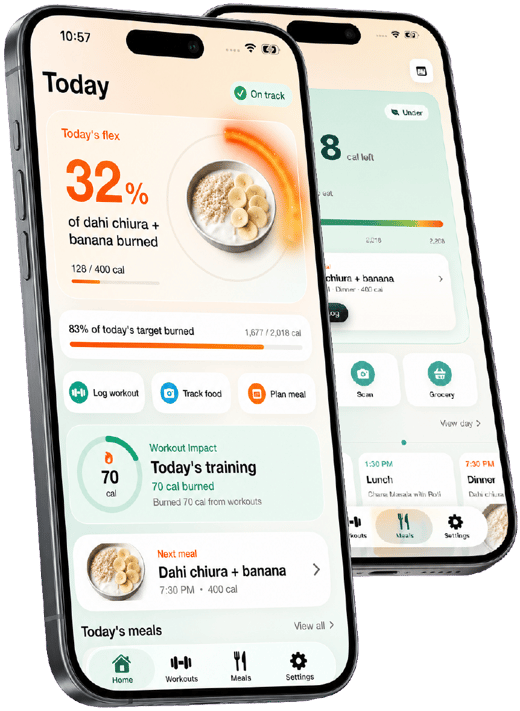
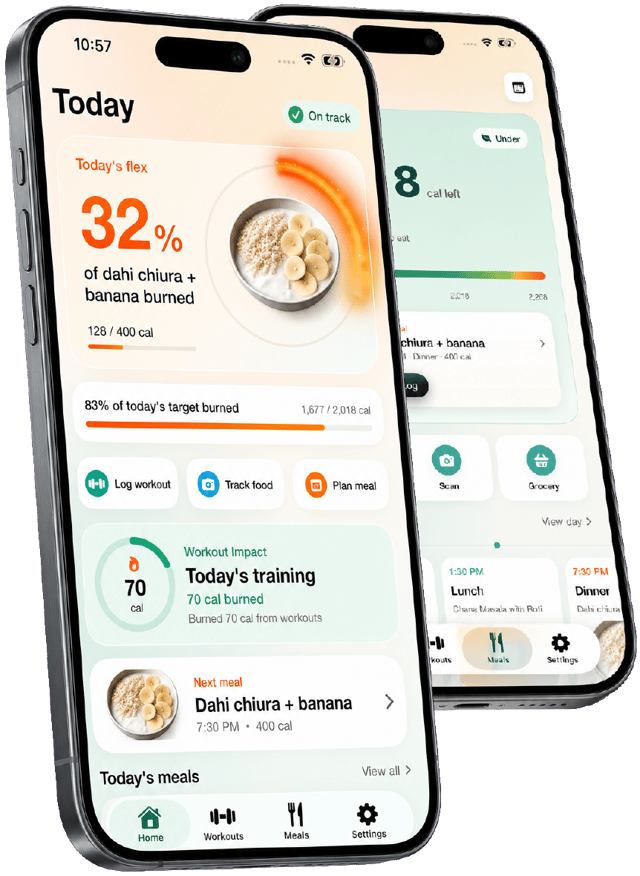
Burnplate builds a strength and mobility schedule that fits around your rounds, and counts the walking toward your day.
A plan built around 3x/week strength
Tell Burnplate your days available and equipment, and it structures rotational power, strength and mobility work around your playing schedule.
Every lift logged and tracked
Log your strength sessions and Burnplate keeps a history so you can see clubhead-speed-relevant lifts progress over a season.
Steps and activity count toward your day
A round walked adds real activity — Burnplate counts steps toward your daily totals so 18 holes shows up alongside your training.
Calorie targets that account for a round
Your daily targets factor in the activity from a walked round, so a Saturday on the course doesn't throw off your numbers.
Practical guidance
Training tips for golfers
Simple habits that add distance off the tee and keep you playing pain-free.
- 01 Warm up rotation before you play
A few minutes of hip and thoracic rotation before the first tee reduces the chance your lower back compensates for a cold, stiff swing.
- 02 Strengthen the posterior chain
Glutes, hamstrings and the muscles along your spine are what protect your lower back from the repetitive rotational load of the swing.
- 03 Train grip and forearm strength
Grip endurance affects control late in a round — direct forearm and grip work is an easy, often-skipped addition.
- 04 Walk when you can
Walking a round instead of riding adds meaningful low-impact conditioning that a cart quietly removes from your week.
- 05 Eat protein after strength sessions
Recovery from rotational power training benefits from the same protein timing as any other strength work.
- 06 Stretch hips and thoracic spine regularly
Limited rotation in the hips or upper back is one of the most common, fixable contributors to golf-related back pain.

Build the plan around your week
Build my workout plan Tell Burnplate your days, equipment and level and it builds a progressive workout plan, logs every session, and connects what you burn to what you eat.
Questions
Workout planner for golfers: FAQ
What is the best workout for golfers?
The best workout for golfers combines rotational power training — med-ball throws, cable woodchops — with lower-body and posterior-chain strength, plus hip and thoracic mobility work. Two to three sessions a week is enough for most recreational players.
Do golfers need to lift weights?
Lifting isn't mandatory to enjoy golf, but strength training is one of the most evidence-backed ways to add clubhead speed and protect the lower back from the repetitive rotational load of the swing.
How many calories does golf burn?
Walking 18 holes while carrying or pushing clubs commonly burns 1,200-2,000 calories over a round depending on pace, terrain and bodyweight — riding a cart cuts that substantially.
What exercises increase golf swing speed?
Rotational power movements like medicine-ball throws and cable woodchops, combined with lower-body strength work such as squats and deadlifts, are consistently linked to faster clubhead speed in golf performance research.
How many days a week should golfers train?
Two to three strength and mobility sessions a week, built around your playing and range schedule, is enough to build meaningful power and durability without interfering with your golf time.
