
Because cells respond less to insulin, glucose stays elevated in the blood longer after eating. Food choices and timing that lower the total insulin demand of a meal help more directly than calorie counting alone.
Why it's different
Why type 2 diabetes needs its own approach
Type 2 diabetes is fundamentally an insulin-resistance problem — the body still makes insulin, but cells don't respond to it well. That makes the food plan different from type 1, where insulin is dosed to match meals, and different from a generic weight-loss plan that only tracks calories.
5-10% body-weight loss is enough to measurably improve insulin sensitivity and often lower A1c
45-60 g carbs per meal is a common starting range many care teams use, then adjust from there
~30 min of daily activity, even in short walks, improves insulin sensitivity within a few weeks
Unlike type 1 diabetes, moderate weight loss in type 2 can improve blood sugar control substantially, and for some people soon after diagnosis, can bring it back into a non-diabetic range. The plan should support a sustainable deficit, not just glucose management.
Metformin and other oral medications are often taken with food to reduce stomach upset, and their effect is smoothest with consistent meal timing rather than skipped or erratic meals.
Building and using muscle through activity increases how much glucose it can absorb without insulin's help — a mechanism that works alongside food choices, not instead of them.
What it looks like
A sample day for type 2 diabetes
Around 1,600 calories with carbs held near 40-50 g per meal, protein at each meal, and a modest deficit built from portion size rather than skipped meals.
Example day on the plan
~1,600 calories40-50 g carbs / meal100 g+ protein / day30 g+ fiber / day
7:30 AM Veggie egg scramble with berries3 eggs, spinach, mushrooms, ½ cup blueberries 380 kcal
12:00 PM Turkey and bean chili with side saladlean turkey, black beans, tomato, mixed greens 420 kcal
3:30 PM Cottage cheese with cucumber¾ cup cottage cheese, sliced cucumber, black pepper 180 kcal
6:30 PM Grilled chicken, roasted vegetables and farro5 oz chicken, broccoli and peppers, ½ cup farro 460 kcal
8:00 PM Small handful of walnutsabout 1 oz walnuts 160 kcal
Smart swaps
White bread Sprouted or whole-grain breadMore fiber slows the carb absorption and blunts the glucose rise from the same sandwich
Fruit smoothie Whole fruit with a protein sourceBlending strips fiber and concentrates sugar into a fast-absorbing dose
Fried sides Roasted or grilled vegetablesCuts calories and unhelpful fat without losing any volume on the plate
Sweetened yogurt Plain yogurt with berriesRemoves 15-20 g of added sugar for the same creamy base
How Burnplate handles it
How Burnplate plans a type 2 diabetes week
Burnplate isn't a medical device and doesn't replace your care team's targets. It turns those targets into a week of real meals you don't have to plan from scratch.
Targets built from your numbers
Burnplate sets calorie and macro targets from your body, goal and activity, supporting both glucose management and a gradual, sustainable weight loss.
A 7-day plan that holds the carb pattern
The AI meal plan spreads carbs evenly meal to meal and writes the grocery list, so you're not recalculating the pattern every single day.
Log in seconds, even off-plan
Photo or text logging shows the carb and calorie count of what you actually ate, so a surprise meal gets caught the same day instead of at your next appointment.
Turn a walk into visible progress
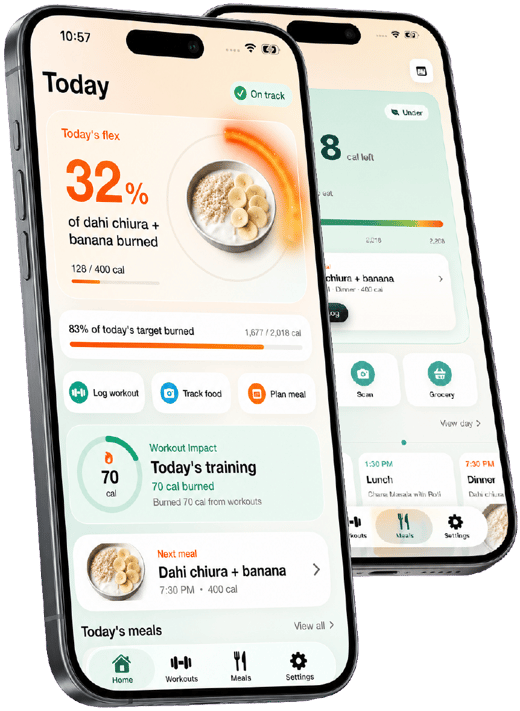
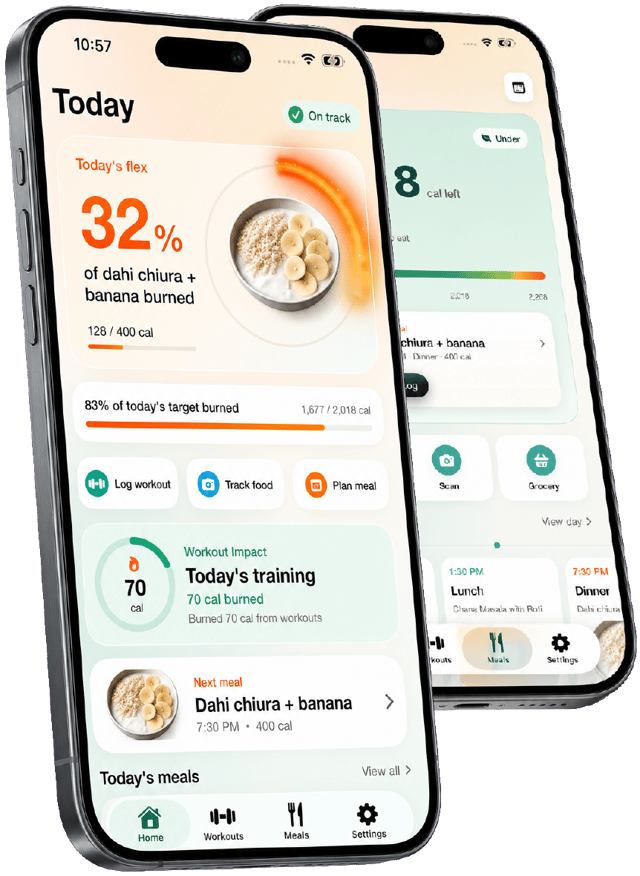
The burn bar shows how much of a meal your post-meal walk or workout has offset — a small, visible reason to take the short walk that helps glucose the most.
Practical guidance
Tips that help with type 2 diabetes
Small structural habits that make a plan easier to stick to and easier for your glucose to handle.
- 01 Walk within 30 minutes of eating
A short walk after your largest meal blunts the glucose spike more than the same walk earlier in the day.
- 02 Eat protein and vegetables first
Starting a meal with protein and fiber before carbs measurably flattens the glucose curve of the same plate.
- 03 Keep meal times consistent
Regular timing keeps medication and glucose patterns predictable, which makes it easier to see what's actually working.
- 04 Build the deficit from portions
Skipping a meal usually produces a bigger rebound spike at the next one — trim portions instead of cutting meals.
- 05 Batch-cook a protein and a grain
Having both ready removes the two slowest steps from an on-plan lunch or dinner on a busy day.
- 06 Recheck a favorite meal occasionally
If you monitor glucose, recheck a go-to meal every few months — your response can shift as weight and fitness change.

Get the week planned in one tap
Build my meal plan Burnplate builds a 7-day meal plan around your calories, protein and food preferences, writes the grocery list, and lets you swap any meal you don't feel like.
Questions
Meal planner for type 2 diabetes: FAQ
What should a type 2 diabetes meal plan include?
Consistent carbs at each meal paired with protein and fiber, mostly whole foods, and portions sized to support a modest calorie deficit if weight loss is part of your goal. Exact carb and calorie targets should come from your care team.
What is the best diet for type 2 diabetes?
There isn't one required diet — Mediterranean-style, DASH and moderate-carb, high-fiber patterns all show strong evidence. The common thread is minimizing refined carbs and pairing the carbs you do eat with protein or fiber.
Can a meal planner app help with type 2 diabetes?
Yes, mainly by removing the daily decision fatigue of keeping carbs consistent. Burnplate builds a week of meals around your targets and writes the grocery list, but it doesn't replace medical guidance or medication management.
Can type 2 diabetes be reversed with diet?
For some people, especially soon after diagnosis and with meaningful weight loss, blood sugar can return to a non-diabetic range without medication — often called remission. It isn't guaranteed for everyone, but weight loss and diet quality are the biggest levers available.
How many carbs per day for type 2 diabetes?
Commonly 130-225 g a day spread across meals, depending on calorie needs and your care team's guidance. The per-meal consistency usually matters more day to day than hitting an exact daily total.
Does exercise really affect blood sugar as much as diet?
Yes — a single bout of exercise can improve insulin sensitivity for up to 24-48 hours afterward. It works alongside diet, not as a replacement for it, which is why both show up in most treatment guidance.
