Heart rate and muscle fatigue can climb just as high on a bike, in a pool or on a rower as they do running — the difference is the joints absorb far less force getting there.
Why it's different
Why low impact training needs its own plan
A standard workout plan assumes you can run, jump and pound the pavement without consequence. Low impact training gets the same fitness outcomes a different way — through control, tempo and resistance instead of ground-reaction force.
150 min/week the general activity guideline most low-impact routines are built to reach across the week
2×/week minimum strength sessions recommended to maintain muscle and joint-supporting tissue
1.0–1.4 g/kg protein per kilogram of bodyweight that supports muscle maintenance during lower-impact training
Building muscle around a joint — quads around the knee, glutes around the hip — improves stability and often reduces pain, even though the exercises themselves are low impact.
Slowing a squat or a step-up down, or adding a pause, raises the muscular demand without adding any jumping or pounding — it's how low-impact plans still get hard.
The biggest advantage of low impact training is what it avoids: the flare-ups and missed weeks that come from a joint that got pushed too hard. Steady weeks beat intense ones that get interrupted.
What it looks like
A sample low impact training week
A four-day mix of strength and steady cardio, all joint-friendly by design.
Example week
4 Days/week35–45 min Session lengthBeginner to intermediate LevelDumbbells, resistance bands, bike or pool optional Equipment
Monday Full-body strength Goblet squat 3×12 · Seated row 3×12 · Glute bridge 3×15 · Standing calf raise 3×15
Tuesday Steady cardio Stationary bike or brisk walk 30 min at a conversational pace
Wednesday Upper body + core Dumbbell chest press 3×12 · Band pull-apart 3×15 · Dead bug 3×10 · Side plank 3×20s
Thursday Rest or gentle mobility Stretching or a slow walk, 15–20 min
Friday Lower body strength Step-up (low step) 3×10 · Romanian deadlift (light) 3×12 · Clamshell 3×15 per side · Wall sit 3×20s
Saturday Steady cardio Swimming, elliptical or bike, 30–40 min easy pace
Sunday Rest Full recovery — no scheduled training
How Burnplate handles it
How Burnplate builds a low impact workout plan
Burnplate designs the plan around equipment and level you actually have, then tracks whether it's working.
A plan that skips high-impact moves by design
Tell Burnplate your days per week, equipment and level, and it builds a strength-and-cardio plan without running, jumping or pounding movements.
Session logging without guesswork
Log sets, reps and cardio minutes as you go, so you can see the plan progressing in load or duration even without impact to track.
Calories and macros sized to your goal
Burnplate sets calorie and protein targets from your body and activity level, whether the goal is weight loss, maintenance or building strength.
The burn bar shows the session mattered
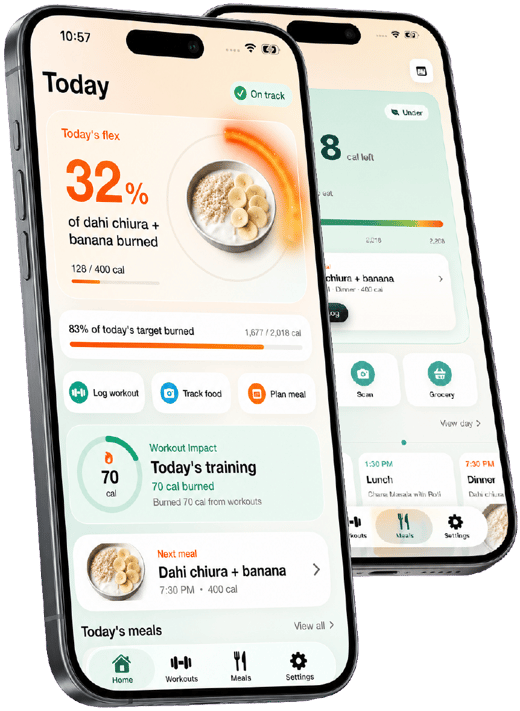
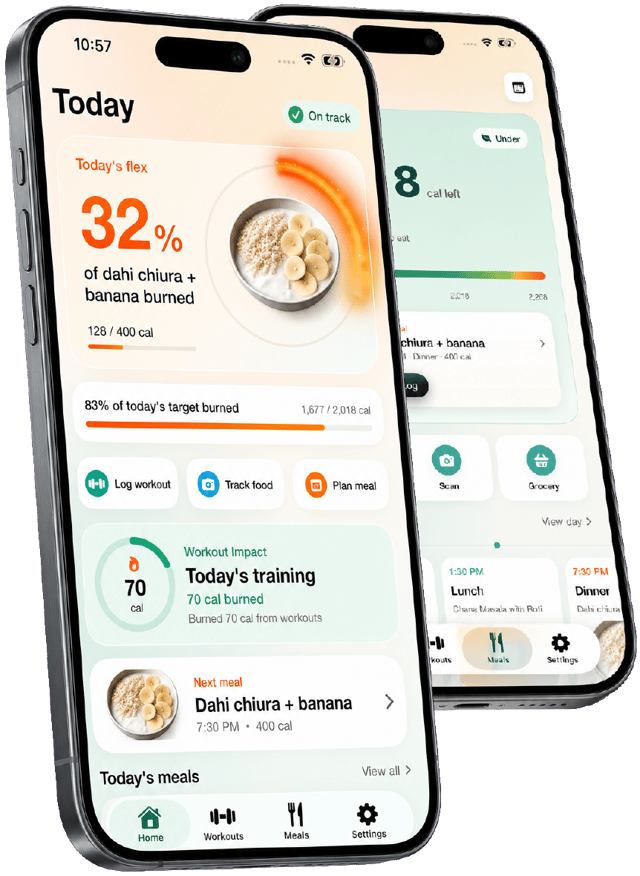
Low impact doesn't mean low burn — the burn bar shows what percent of your day's food a session covered, which is often more than people expect from a bike or pool workout.
Practical guidance
Tips for a low impact training routine
Small choices that keep intensity high without adding stress to sensitive joints.
- 01 Warm up joints before loading them
Five minutes of easy movement — marching, arm circles, bodyweight squats — primes joints before strength work starts.
- 02 Use resistance to replace impact
Bands, dumbbells and cables let you raise difficulty through load instead of speed or pounding.
- 03 Try water-based cardio
Swimming and water aerobics are close to zero-impact while still working the whole body against resistance.
- 04 Track effort, not just distance
A stationary bike or elliptical session can be measured by perceived effort or heart rate, not just how far you went.
- 05 Don't skip strength for cardio
Two low-impact strength sessions a week protect joints better than cardio alone — muscle is a joint's best support system.
- 06 Progress slowly if you're returning from pain
Add duration or load in small steps and back off if a joint reacts — low impact still needs to be built up gradually.

Build the plan around your week
Build my workout plan Tell Burnplate your days, equipment and level and it builds a progressive workout plan, logs every session, and connects what you burn to what you eat.
Questions
Workout planner for low-impact training: FAQ
What is a good low impact workout routine for beginners?
A simple mix works well: two strength sessions a week covering the whole body with dumbbells or bands, plus two to three steady cardio sessions on a bike, in a pool or walking. Keep sessions to 30–45 minutes and add load or duration gradually as it feels manageable.
Can you lose weight with low impact exercise?
Yes. Weight loss comes down to a sustained calorie deficit, and low impact cardio and strength training both burn meaningful calories while building or preserving muscle. The exercise doesn't need to be high impact to create the deficit that drives weight loss.
Is walking considered a low impact workout?
Yes, walking is one of the most accessible low impact activities and counts toward general activity guidelines. Combined with two strength sessions a week, a regular walking habit covers most of what a low impact routine needs.
What exercises should I avoid with joint pain?
Running, jumping, box jumps and other moves with hard ground contact are the usual ones to swap out. Cycling, swimming, rowing and controlled strength training with slow tempos typically load the muscles without the same joint stress.
How many days a week should a low impact workout plan include?
Four to five days a week works well for most people — a mix of two to three strength sessions and two to three steady cardio sessions, with at least one full rest day. It's flexible; consistency across the week matters more than hitting an exact number.
Can Burnplate build a low impact workout plan for me?
Yes. Tell Burnplate your days per week, equipment and level, and it builds a plan without high-impact movements, then logs your sessions so you can see load or duration progress over time.
