Water supports your bodyweight and cools you down as you go, so swimmers routinely underestimate how much a practice actually costs them — both in calories and in fatigue that needs real recovery.
Why it's different
Why a swimmer workout plan needs dryland, not just yardage
A generic gym program ignores the shoulder-heavy, high-volume nature of swimming, and a pool-only plan ignores that the strength to pull harder mostly gets built on land, not in the water.
1.2–1.6 grams of protein per kg bodyweight per day competitive swimmers typically need
2–3x/wk dryland strength sessions most swim programs add alongside pool training
~600 kcal average calories a hard hour-long swim practice can burn
Thousands of strokes a week put swimmers at real risk of shoulder overuse injury. Dryland strength for the rotator cuff, upper back and shoulder stabilizers is what keeps that volume sustainable.
Pool time builds technique and aerobic capacity, but the raw force behind each stroke is best built with land-based strength work — pulling, pushing and core power that doesn't have a water equivalent.
Aimlessly swimming distance builds endurance but not speed. A structured plan mixes aerobic base sets with dedicated threshold and sprint work at real race pace.
What it looks like
A sample training week for swimmers
A club-level week combining pool volume, technique and speed work with two dedicated dryland strength sessions.
Example week
5 pool + 2 dryland Days/week60–90 min pool Session lengthClub to masters LevelPool access + basic weights Equipment
Monday Pool — aerobic base 3000m mixed strokes with drill sets and endurance intervals
Tuesday Dryland strength 30 min pulling and pushing lifts · core circuit
Wednesday Pool — technique and speed 2500m including 8x50m sprints at race effort
Thursday Rest or easy swim 20–30 min easy swim, or full rest
Friday Pool — threshold sets 3200m including 10x100m at race-pace effort
Saturday Dryland strength + mobility 30 min shoulder-focused lifting · stretching and mobility work
Sunday Pool — long aerobic swim 45–60 min continuous easy-effort swimming
How Burnplate handles it
How Burnplate plans a swimmer's week
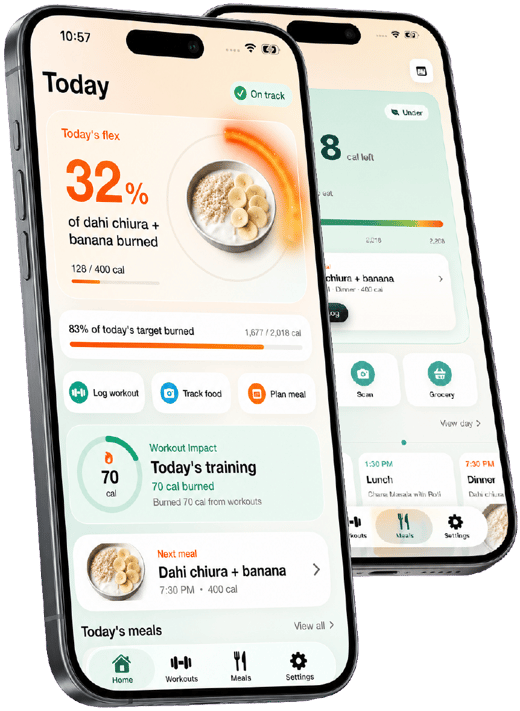
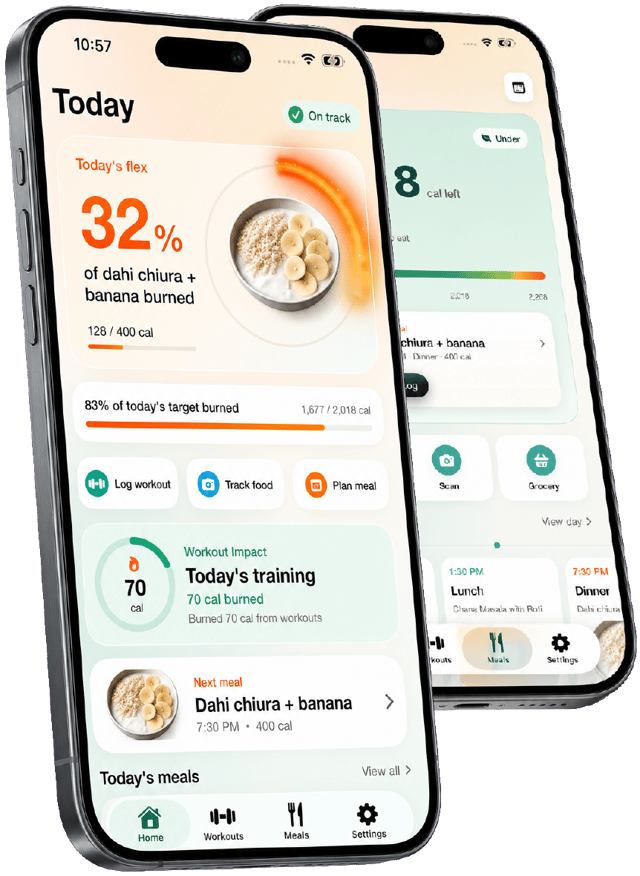
Burnplate builds your pool and dryland days around your schedule and keeps your fueling in step with real training volume.
A week built around pool and dryland days
Tell Burnplate your practice schedule and level, and it structures dryland strength sessions around your pool time instead of competing with it.
Every session logged and tracked
Log dryland lifts and swim sessions, and Burnplate keeps a training history so you can see strength and pool progress side by side.
The burn bar after a hard set
After a demanding pool practice, Burnplate shows how much of your next meal you've burned off — useful when cold water makes real exertion easy to underestimate.
Calories and protein that scale with yardage
Your daily targets adjust with training volume, so a high-yardage week doesn't leave you under-fueled for recovery.
Practical guidance
Training tips for swimmers
Habits that keep a high-volume swim schedule productive instead of just exhausting.
- 01 Fuel before early practices
A small carb-forward snack before a morning session prevents bonking halfway through a long set.
- 02 Eat protein after every practice
Swimming is high-volume, repetitive work — protein within a couple hours of practice supports the muscle repair that keeps you improving.
- 03 Prioritize shoulder prehab
A few minutes of rotator cuff and scapular stability work most days goes a long way toward preventing the overuse injuries common in high-yardage swimmers.
- 04 Hydrate even though you're in water
Sweat loss in the pool is real but easy to ignore — drink around practice like you would for any other hard training session.
- 05 Protect sleep on double-practice days
Two-a-days accumulate fatigue fast; sleep is where most of that recovery actually happens.
- 06 Don't skip dryland for extra laps
More yardage without strength training plateaus faster than a balanced plan — the power gains largely come from land.

Build the plan around your week
Build my workout plan Tell Burnplate your days, equipment and level and it builds a progressive workout plan, logs every session, and connects what you burn to what you eat.
Questions
Workout planner for swimmers: FAQ
How many calories does swimming burn?
A vigorous hour-long swim practice burns roughly 500-700 calories for many swimmers, though it varies with intensity, stroke and body size. Because water masks how hard you're working, swimmers often underestimate this and under-fuel.
What is a good workout plan for swimmers?
A good swimmer workout plan combines 4-6 pool sessions a week mixing aerobic base, technique and race-pace sets, with 2-3 dryland strength sessions targeting the shoulders, upper back and core.
Do swimmers need to lift weights?
Yes. Dryland strength training builds the pulling and pushing power that translates directly into faster stroke rates, and it protects the shoulders from the overuse injuries that high swim volume can cause.
How much protein do swimmers need?
Most competitive swimmers do well around 1.2-1.6 grams of protein per kg bodyweight per day, supporting recovery from high-volume pool training plus dryland strength work.
How many days a week should swimmers train?
Competitive swimmers commonly train 5-6 pool days a week alongside 2-3 dryland strength sessions, though recreational swimmers see real gains from 3-4 well-structured sessions a week.
