
Nothing is fully off-limits. Red meat and sweets are occasional rather than daily, but bread, pasta, cheese and wine (in moderation) all have a place. That flexibility is a big reason adherence studies favor it over stricter diets.
Why it's different
Why the Mediterranean diet works differently
Most diets are defined by what they cut out. The Mediterranean diet is defined by what it's built on — and that's most of why it's easier to sustain for years, not weeks.
2×/week servings of fish, especially fatty fish, is the core Mediterranean recommendation for heart health
7+ /day combined servings of vegetables and fruit form the base of most meals in the pattern
<30% cal of daily calories from saturated fat is the ceiling most Mediterranean-diet guidance targets
The diet isn't low-fat — often 35–40% of calories come from fat. What matters is the source: olive oil and nuts instead of butter and fried food, which is the mechanism behind its cardiovascular track record.
Vegetables, legumes, whole grains and fruit anchor most meals, with meat or fish as an addition rather than the centerpiece. That shift alone tends to raise fiber and lower calorie density without anyone counting anything.
The same pattern works for weight loss, maintenance or general heart health — the calorie level moves, the food pattern doesn't. That makes it one of the few diets worth adopting even after a weight goal is met.
What it looks like
A sample Mediterranean day
Around 1,900 calories with olive oil as the primary fat, fish at dinner and vegetables built into three of the five meals.
Example day on the plan
~1,900 caloriesolive oil fat source30 g+ fiber2×/week fish
7:30 AM Greek yogurt, walnuts & honey1 cup Greek yogurt, handful walnuts, drizzle of honey, figs 380 kcal
10:30 AM Whole-grain toast & tomato1 slice toast, olive oil, tomato, sea salt 180 kcal
1:00 PM Chickpea & vegetable salad1 cup chickpeas, cucumber, feta, olives, olive oil, lemon 480 kcal
4:00 PM Fruit & almonds1 orange, 15 almonds 200 kcal
7:00 PM Grilled fish, farro & greens160 g grilled fish, ½ cup farro, sautéed greens, olive oil 550 kcal
Smart swaps
Butter on bread Olive oil for dippingSame satisfaction, unsaturated fat instead of saturated — the core Mediterranean swap.
Red meat most nights Fish twice a week, legumes on other nightsMatches the pattern most linked to lower cardiovascular risk.
Salt as the main seasoning Herbs, lemon and garlicCuts sodium while the food still tastes like something.
A sugary dessert Fresh fruit, sometimes with a little honeyKeeps the sweet ending without the pattern's rare processed-sugar exception becoming a daily habit.
How Burnplate handles it
How Burnplate builds a Mediterranean week
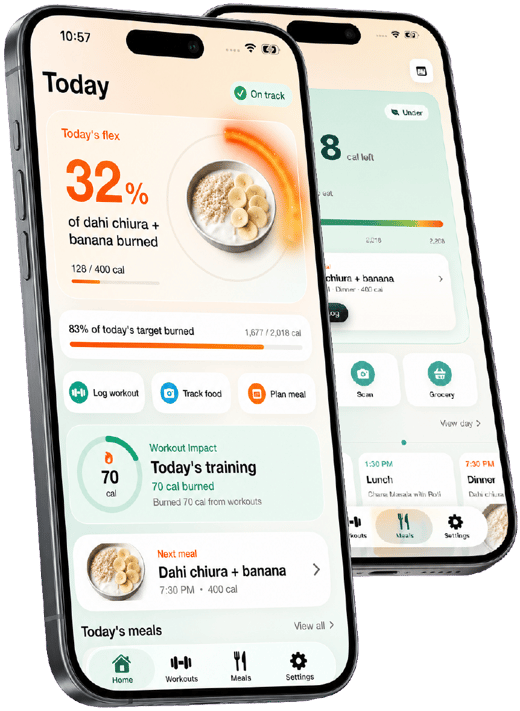
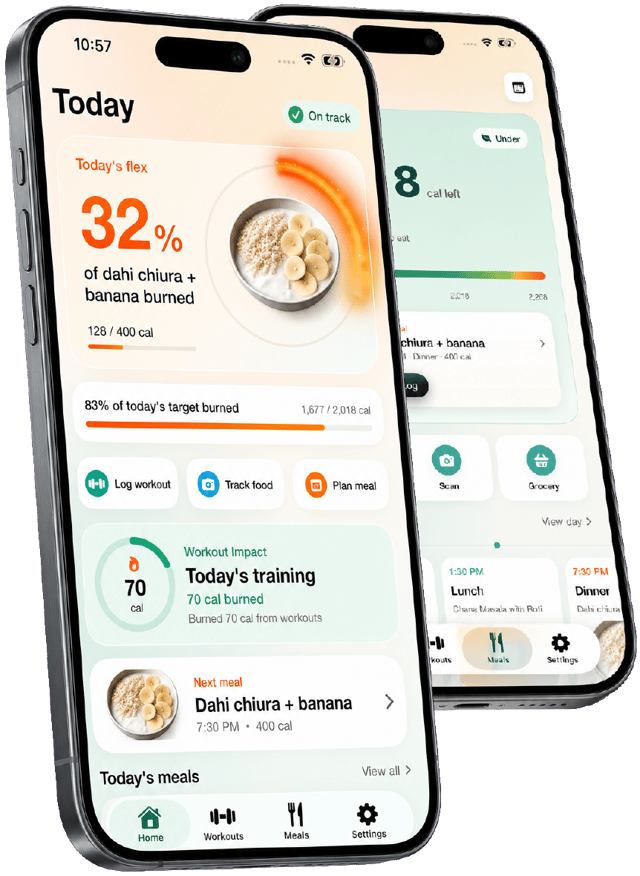
Burnplate turns the Mediterranean pattern into an actual weekly plan with a grocery list, instead of leaving you to interpret a food pyramid.
A 7-day plan built on the pattern
Tell Burnplate you want Mediterranean-style eating and it builds a week around olive oil, fish, legumes, whole grains and vegetables — sized to your calorie and protein targets.
Grocery list that matches the pattern
The plan's shopping list groups produce, legumes, fish and olive oil together, so the ingredients that define the diet are the ones that land in your cart.
Photo logging for real meals, including restaurant food
Snap a plate at a Greek or Italian restaurant and Burnplate estimates the calories and macros, so eating out doesn't mean losing track of the week.
Swap any meal, stay in pattern
Not feeling the salmon? Swap it for another Mediterranean-style meal and Burnplate keeps the day's calories and macros where they need to be.
Practical guidance
Tips for eating Mediterranean-style
Practical habits that shift a normal week toward the Mediterranean pattern without a total overhaul.
- 01 Make olive oil the default fat
Use it for cooking, dressing and dipping in place of butter and other oils — it's the single highest-leverage swap in the diet.
- 02 Put legumes on the weekly menu
Chickpeas, lentils and beans two or three times a week cover fiber and plant protein cheaply.
- 03 Fish twice, meat occasional
Plan two fish meals first, then fill the rest of the week around vegetables and legumes with meat as the exception, not the rule.
- 04 Snack on fruit and nuts
A piece of fruit with a handful of nuts replaces packaged snacks and fits the pattern without any tracking.
- 05 Vegetables at lunch and dinner
Building a vegetable side into both meals, not just dinner, is what actually gets most people to 7+ servings a day.
- 06 Treat wine and dessert as occasional
Both have a place in the traditional pattern in moderation — the diet works because nothing is a forbidden-fruit binge trigger.

Get the week planned in one tap
Build my meal plan Burnplate builds a 7-day meal plan around your calories, protein and food preferences, writes the grocery list, and lets you swap any meal you don't feel like.
Questions
Meal planner for the Mediterranean diet: FAQ
What is a typical Mediterranean diet plan?
A Mediterranean diet plan centers on vegetables, fruit, whole grains, legumes and olive oil, with fish at least twice a week, moderate dairy and eggs, and red meat and sweets kept occasional. Nothing is fully excluded — it's a shift in ratios, not a restriction list.
Is the Mediterranean diet good for weight loss?
Yes, when calories are controlled — the diet itself isn't automatically low-calorie since it includes bread, pasta and olive oil. Burnplate can build a Mediterranean-style meal plan at a calorie level that creates a deficit while keeping the food pattern intact.
How much olive oil is used on the Mediterranean diet?
There's no fixed gram target, but olive oil typically replaces butter and other cooking fats entirely, often totaling 2–4 tablespoons a day across cooking, dressing and dipping. It's counted toward your fat and calorie targets like any other fat.
Can vegetarians follow a Mediterranean meal planner?
Very easily. The Mediterranean pattern already leans on legumes, whole grains, vegetables, dairy and eggs, so removing fish and meat still leaves a full diet — you'll lean a bit more on legumes and eggs to keep protein up.
Does Burnplate have a Mediterranean meal planner?
Yes. Burnplate's AI meal plan can build a 7-day Mediterranean-style week around your calorie and protein targets, with a consolidated grocery list and one-tap swaps if a particular meal doesn't work for you.
