
With no plant food, carnivore provides essentially zero dietary fiber, which changes digestion for most people adapting to it — some report this resolves prior digestive issues, others find the adjustment period uncomfortable.
Why it's different
Why carnivore is a different kind of restriction
Most restrictive diets remove one or two food groups. Carnivore removes every plant food at once, which changes the practical challenges from "what should I eat" to "what am I missing, and does it matter for me."
1.5–2.2 g/kg protein per kg body weight is typical on carnivore, since meat is essentially the only food group left
0 g fiber is the expected total on a strict carnivore diet — there is no plant matter to provide it
2–3 g sodium a day is often needed on carnivore, since the diet's low carb intake reduces the body's water and sodium retention
Without carbs, calories come almost entirely from protein and fat. Fattier cuts of meat typically make up more of the plate than lean cuts alone, since protein-only at high volumes is hard to sustain digestively.
Very low carbohydrate intake reduces the body's water and sodium retention, which is why people new to carnivore (like keto) often need more sodium, not less, to avoid fatigue and headaches.
Many people use carnivore short-term to see if removing all plant foods changes specific symptoms, then selectively reintroduce foods — similar in spirit to Whole30, but far more restrictive in scope.
What it looks like
A sample carnivore day
Around 2,000 calories from meat, fish and eggs only, with fattier cuts providing a meaningful share of calories alongside protein.
Example day on the plan
~2,000 calories160–180 g protein0 g fiber2–3 g sodium
8:00 AM Eggs & bacon4 eggs, 4 strips bacon, salted 460 kcal
12:00 PM Ribeye steak250 g ribeye, salted, cooked in butter 700 kcal
4:00 PM Canned sardines1 tin sardines in oil 220 kcal
7:00 PM Ground beef & eggs220 g ground beef (85/15), 2 eggs, salted 620 kcal
Smart swaps
Lean cuts only A mix of fattier cuts (ribeye, ground beef, bacon)Lean meat alone at carnivore's volume is hard to sustain digestively — fat carries a meaningful share of calories.
No added salt Salting meals generouslyCarnivore's low carbohydrate intake needs more sodium than usual to avoid fatigue and headaches.
Skipping organ meat Liver once or twice a weekThe closest carnivore gets to a multivitamin — meat alone is otherwise low in a few specific micronutrients.
Muscle meat only Some canned fish with bones (sardines, salmon)One of the few carnivore-compliant calcium sources, since dairy is optional and plants are excluded.
How Burnplate handles it
How Burnplate tracks a carnivore plan
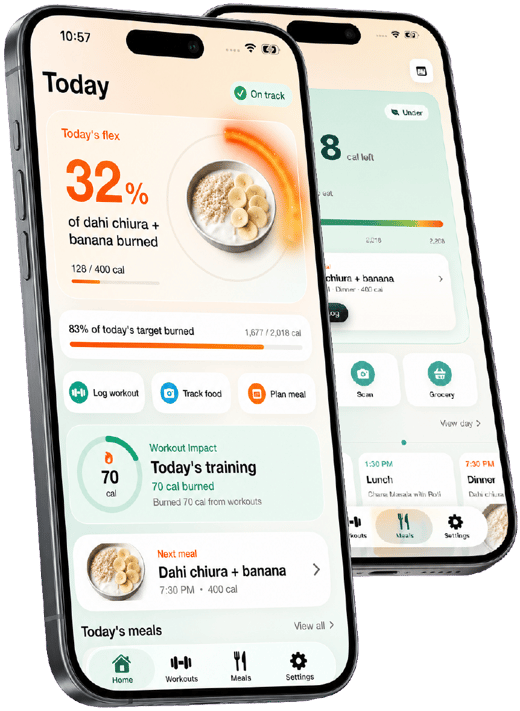
Burnplate isn't built to generate a carnivore-specific meal plan, but its logging and targets work well for tracking one.
Protein and calorie targets set for you
Burnplate calculates your daily protein and calorie targets from your body, goal and activity, which is the main thing a carnivore plan actually needs to hit.
Photo logging for meat-heavy meals
Snap a plate of steak, eggs or ground beef and Burnplate estimates the calories and protein, which is straightforward with carnivore's small number of ingredients.
Text logging for repeat meals
Carnivore meals repeat often — ribeye, eggs, ground beef — so text logging a saved meal is usually faster than a new photo each time.
The burn bar still connects training to food
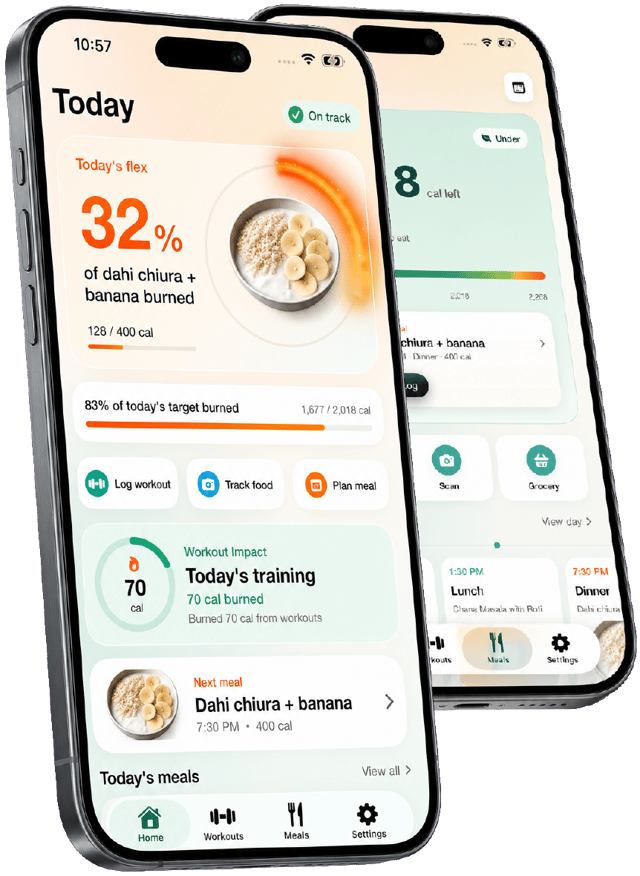
Log a workout and Burnplate's burn bar shows what percentage of your day's target it's covered, whether the day's meals were all animal-based or not.
Practical guidance
Practical tips for a carnivore diet plan
The handful of things that matter most on a diet with this few moving pieces.
- 01 Salt generously and consistently
Lower carbohydrate intake means more sodium is needed to avoid the fatigue and headaches often reported in the first week or two.
- 02 Include fattier cuts, not just lean protein
Ribeye, ground beef and bacon carry the calories that lean chicken breast alone can't sustainably provide at this volume.
- 03 Consider organ meat periodically
Liver in particular covers several micronutrients that muscle meat alone runs lower in.
- 04 Watch for the fiber-related adjustment period
Digestion often changes in the first couple of weeks without any fiber — this is a known adjustment, not necessarily a sign something is wrong.
- 05 Decide on dairy and eggs deliberately
Strict carnivore excludes dairy; many versions of the diet include it along with eggs — know which version you're following.
- 06 Treat it as worth monitoring, not set-and-forget
Given how different this is from typical dietary guidance, periodic bloodwork with a doctor is a reasonable way to check how your body is responding.

Get the week planned in one tap
Build my meal plan Burnplate builds a 7-day meal plan around your calories, protein and food preferences, writes the grocery list, and lets you swap any meal you don't feel like.
Questions
Meal planner for the carnivore diet: FAQ
What do you eat on a carnivore diet plan?
Meat, fish and eggs, with many versions also allowing dairy like butter, cheese and heavy cream. Fattier cuts — ribeye, ground beef, bacon — typically make up more of the plate than lean cuts alone, since fat is the main non-protein calorie source.
Is the carnivore diet safe long-term?
It removes every plant food, including all fiber and many micronutrients typically obtained from produce, so long-term use is not well studied and is not mainstream dietary guidance. Anyone considering it long-term should discuss it with a doctor and monitor bloodwork periodically.
Why do people get headaches or fatigue starting carnivore?
Most commonly from inadequate sodium — very low carbohydrate intake reduces the body's water and sodium retention, similar to the early "keto flu." Salting meals more generously than usual typically resolves it within a few days.
How is carnivore different from keto?
Keto restricts carbs but allows a wide range of low-carb vegetables, nuts, dairy and fats. Carnivore excludes all plant foods entirely, leaving only meat, fish, eggs and sometimes dairy — it's meaningfully more restrictive than keto, not just a stricter version of it.
Can Burnplate track a carnivore meal plan?
Yes for logging and targets — Burnplate sets your protein and calorie targets and its photo or text logging tracks meat-heavy meals easily. It doesn't generate a carnivore-specific AI meal plan, since its meal plan feature is built around a wider range of foods.
