A hard bike session leaves your legs compromised for the next day's run whether you planned it that way or not. A good triathlon training plan sequences sessions deliberately instead of stacking hard days by accident.
Why it's different
Why a triathlon training plan for a triathlon is different
Training for three sports at once isn't three separate training plans stacked together — the fatigue carries over between disciplines, and the transitions themselves have to be practiced, not just the swimming, biking and running.
3 sports disciplines a triathlon plan has to balance training and recovery across each week
6–10 g/kg carbohydrate per kg bodyweight many triathletes need on their highest-volume weeks
1x/wk brick session most sprint-triathlon plans include to train the bike-to-run transition
Legs that have just pedaled for an hour move differently — heavier, stiffer, slower to respond. Brick workouts (bike straight into run) are the only way to train that specific feeling before race day.
A sprint triathlon (750m swim / 20km bike / 5km run) trains closer to speed and technique; an Olympic or 70.3 distance shifts the emphasis toward sustained aerobic endurance and fueling strategy.
Swimming stresses the shoulders, cycling the hips and low back, running the knees and calves — a balanced plan has to respect all three rather than optimizing one discipline at the expense of the others.
What it looks like
A sample week for sprint triathlon training
A 6-day week for an intermediate athlete training toward a sprint or Olympic-distance triathlon, including one brick session.
Example week
6 sessions Days/week30–90 min Session lengthBeginner to intermediate LevelPool, bike, running shoes Equipment
Monday Swim technique 30 min drills · 800m easy continuous swim
Tuesday Run intervals 6x3 min hard effort with 2 min jog recovery
Wednesday Bike endurance 45–60 min steady aerobic pace
Thursday Swim + strength 30 min swim set · 20 min core and upper-body strength
Friday Rest or easy spin Full rest, or 20 min very easy spin
Saturday Brick session 45 min bike straight into 15 min run off the bike
Sunday Long ride or run 60–90 min easy aerobic effort, alternating discipline weekly
How Burnplate handles it
How Burnplate plans a triathlon week
Burnplate builds your training week around the days and equipment you have, and keeps every session — whichever sport it is — in one history.
A week built around your schedule
Tell Burnplate your days available, equipment access and current level, and it structures your swim, bike and run sessions so hard days don't stack on top of each other by accident.
One training history for every sport
Log swim, bike and run sessions — plus any strength work — and Burnplate keeps them together so you can see your training load across all three disciplines, not just one.
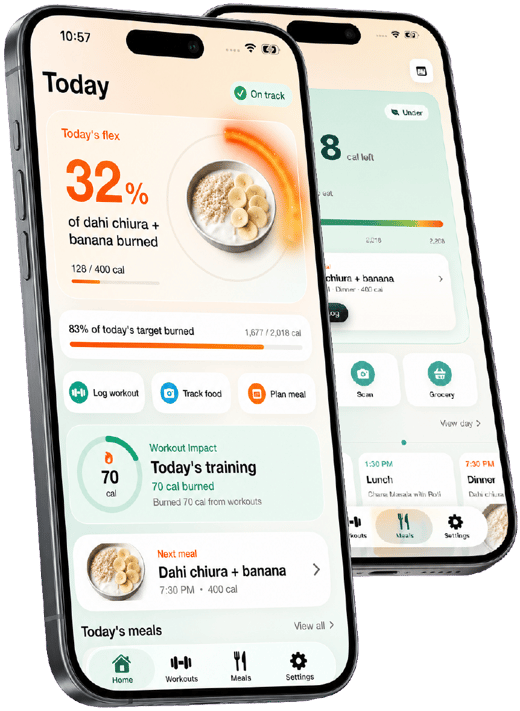
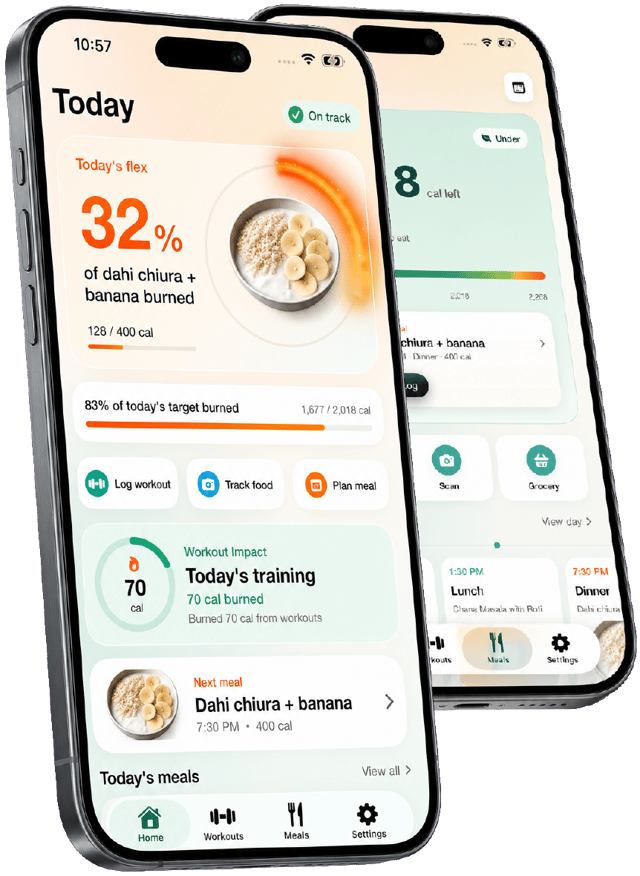
The burn bar after a brick session
After a hard brick or long ride, Burnplate shows how much of your next meal you've burned off, connecting a three-sport training day to what you need to eat to recover from it.
Calories and carbs that scale for triple-discipline days
Your targets adjust upward on the days you're combining two or three sports, so a brick-session day doesn't leave you running on empty into the following week.
Practical guidance
Training tips for triathlon
Practical habits that make balancing three sports manageable instead of overwhelming.
- 01 Fuel long rides with 30–60g carbs/hour
Anything over about 75-90 minutes benefits from carbohydrate during the session, not just before and after.
- 02 Practice your transitions, not just the sports
A slow transition can cost more time than a faster swim split — rehearse getting from wetsuit to bike to run gear.
- 03 Protect sodium and fluids in heat
Combined training days in warm weather add up fast; replacing sodium alongside water matters once sessions run long.
- 04 Do at least one brick a week
Nothing else substitutes for the specific feeling of running immediately off the bike — it has to be practiced directly.
- 05 Guard your rest days fiercely
With three sports competing for training time, rest days are the easiest thing to sacrifice — and the first thing that causes burnout when you do.

Build the plan around your week
Build my workout plan Tell Burnplate your days, equipment and level and it builds a progressive workout plan, logs every session, and connects what you burn to what you eat.
Questions
Workout planner for triathlon: FAQ
How long should I train for a triathlon?
A first sprint triathlon is realistic with 8-12 weeks of structured training if you already have some base fitness in one discipline. A first Olympic-distance or 70.3 race typically benefits from 16-20 weeks.
What is a good triathlon training plan for beginners?
A beginner sprint-triathlon training plan usually includes 4-6 sessions a week split across swim, bike and run, with one easy brick session, building volume gradually and prioritizing finishing technique over speed.
How many hours a week should I train for a sprint triathlon?
Most sprint-triathlon training plans land around 5-8 hours a week at the peak of the block, though it can be less for a beginner focused on simply completing each discipline comfortably.
What should I eat during triathlon training?
On heavy multi-sport days, many triathletes need 6-10 grams of carbohydrate per kg bodyweight to support training and recovery, plus enough protein to repair muscle across three different movement patterns. Targets should scale with how much you're training that week.
Do I need to do brick workouts?
Yes, if you want the run leg to feel manageable. Running immediately after cycling uses your legs differently than a standalone run, and the only way to prepare for that feeling is to practice it in training.
