
Cold water and submersion can blunt hunger signals during and right after a swim, which means waiting to feel hungry often means eating too little, too late for a swimmer training multiple hours a day.
Why it's different
Why swimmers need a different calorie approach
Swimming has a quirk most sports don't: being in cold water can suppress appetite hormones right when the body needs to eat the most, and the buoyancy of water hides how much impact and effort the workout actually involved compared to running or cycling.
500–700 calories an hour is a common range for moderate-to-hard swim training, depending on stroke and pace
1.4–1.8g protein per kg bodyweight supports the daily muscle repair load of high-volume swim training
2×/day training sessions are common in competitive swimming, which roughly doubles the day's carb needs
A morning and evening practice is common in competitive swimming, and each session draws down glycogen separately. Treating the day as a single 'workout' undercounts the total carb and calorie need.
Swimming works nearly every major muscle group most days of the week, which creates a steady, cumulative recovery demand that benefits from consistently high protein rather than protein concentrated around one workout.
For competitive swimmers, chronic underfueling tends to show up first as flat sets and stalled times in practice, well before it becomes obvious fatigue — making it easy to blame training instead of food.
What it looks like
A sample day: morning and evening practice
Built around a 5:30 AM practice and an evening session, roughly 2.5 hours in the pool total. Deliberate eating matters here since the cold water blunts the appetite cue that would normally prompt it.
Example day
Daily targets
Calories ~3,000 covers two pool sessions totaling roughly 1,300-1,600 kcal plus daily baseline needs
Protein ~130 g 1.7 g/kg range to support recovery across two training sessions in one day
Carbs ~380 g elevated to refuel glycogen used across both morning and evening practice
Post-practice window within 60 min eating soon after each session matters more here since hunger cues run late
A logged day
5:00 AM Banana + toast, pre-practicesmall carb hit before an early session when appetite is naturally low 220 kcal
5:30 AM Practice: 90 min, moderate-hardlogged from the session, before hunger has a chance to catch up ~650 kcal burned
7:00 AM Eggs, oats, fruit, full breakfasta real meal eaten on a timer, not waited for hunger to show up 560 kcal
12:30 PM Chicken, rice, roasted vegetablessteady protein and carbs through the school or work day 650 kcal
4:30 PM Greek yogurt + granola, pre-evening-practicecarb top-off ahead of the second session of the day 320 kcal
6:00 PM Practice: 60 min, race-pace setsthe second draw on glycogen for the day ~500 kcal burned
7:30 PM Salmon, pasta, salad, dinnerthe biggest meal of the day, timed to the day's total training load 700 kcal
How Burnplate handles it
How Burnplate fuels swim training
Burnplate logs pool sessions by duration and intensity and builds targets around them, so eating stays on schedule even when the water blunts the usual hunger cues.
Calorie and carb targets built for training volume
Set your weekly pool hours and goal, and Burnplate raises calorie and carb targets on double-session days and pulls them back on single-practice or rest days.
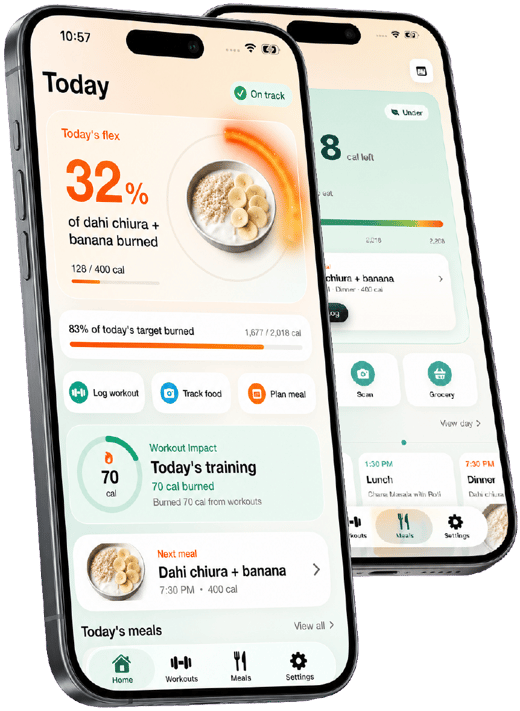
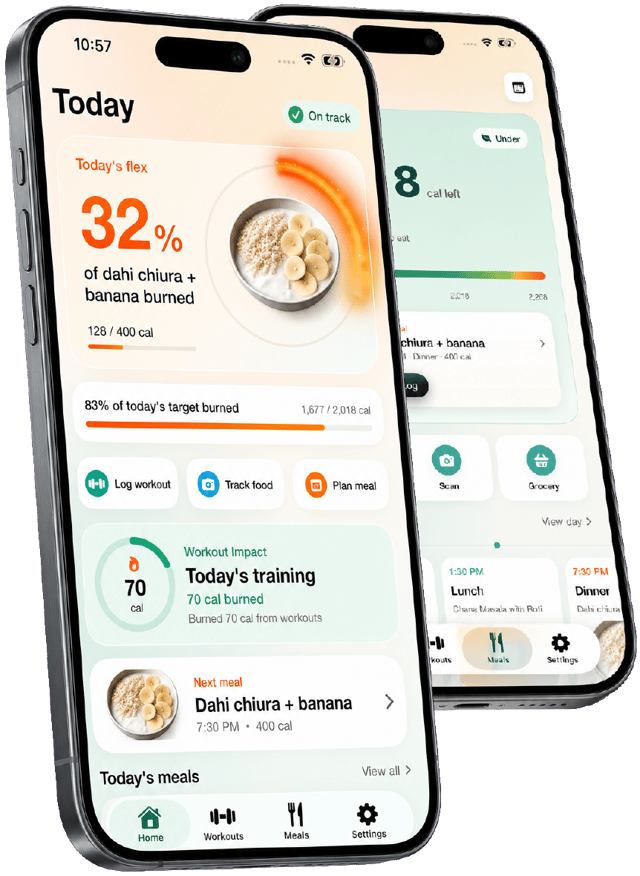
The burn bar shows what a practice earned back
Log a session and see the percentage of your next meal it's covered — useful for a swimmer whose appetite doesn't naturally signal how much a hard set actually cost.
Photo logging fits between practice and school or work
Snap breakfast or a post-practice snack and Burnplate logs it in seconds, so eating on a schedule doesn't require extra time a two-a-day day doesn't have.
Protein targets built for daily, full-body recovery
Macro targets stay high on protein across the week, matching a sport that loads nearly every muscle group most training days rather than one muscle group once a week.
Practical guidance
Fueling tips for swimmers
Practical habits for a sport where hunger signals lag behind what the body actually needs.
- 01 Eat on a schedule, not on hunger
Cold water blunts appetite cues, so eat a planned snack or meal after every practice whether or not you feel hungry yet.
- 02 Plan around two-a-days in advance
A morning and evening session roughly doubles the day's carb needs — build a bigger lunch and afternoon snack into the plan ahead of time.
- 03 Keep a pre-practice carb small and simple
Toast, a banana or a small bar 30-60 minutes before an early session gives fuel without sitting heavy in the stomach.
- 04 Refuel within an hour of getting out
Carbs and protein eaten soon after practice start recovery sooner, especially important before a same-day second session.
- 05 Spread protein across the whole day
Full-body, high-frequency training responds better to protein at every meal than one large post-workout dose.
- 06 Watch for flat sets as an underfueling sign
If times or effort feel consistently off despite good sleep, check whether total calories or carbs have quietly dropped.

Track it with a photo, not a search bar
Start tracking free Burnplate sets your calorie and macro targets, logs meals from a photo, and shows how much of each meal your workouts and steps have burned off.
Questions
Calorie tracker for swimmers: FAQ
How many calories does swimming burn?
A moderate-to-hard swim practice burns roughly 500-700 calories an hour for many swimmers, depending on stroke, pace and body size. Easy technique-focused sessions burn less; race-pace interval sets burn more. Burnplate estimates this from the session's duration and intensity.
How many calories should a swimmer eat a day?
It depends on training volume, but competitive swimmers doing two-a-days often need 3,000 calories or more per day, while a single-practice day needs less. Burnplate builds your specific target from your body, goal and the sessions you log rather than a flat daily number.
Why don't I feel hungry after swimming even though it was a hard practice?
Cold water and submersion can blunt the hormones that normally trigger hunger, so a swimmer's appetite often doesn't match the actual energy cost of a session. This makes eating on a schedule after practice more reliable than waiting to feel hungry.
How much protein do competitive swimmers need?
Many competitive swimmers do well in the 1.4-1.8 g per kg bodyweight range, on the higher end of general athlete guidance, reflecting the full-body, high-frequency muscle demand of daily pool training. Spreading protein across meals works better than one large dose.
How should I fuel for a morning and evening practice on the same day?
Treat it as two separate training sessions that each need their own carb refuel — a real breakfast after morning practice and a solid afternoon snack before the evening one, rather than one large meal trying to cover both.
Can a calorie calculator for swimmers account for different strokes and intensities?
Burnplate estimates calorie burn from the logged session's duration and effort level, which captures the difference between an easy technique swim and a hard interval set reasonably well, though it doesn't break burn down by individual stroke.
