
Most marathon fitness comes from accumulated easy mileage, not fast running. The long run and weekly volume build the aerobic base and connective-tissue durability that carry you through 26.2 miles.
Why it's different
Why marathon training is its own discipline
A 5K plan optimizes speed over a short distance. A marathon plan optimizes something almost opposite: how much volume your body can absorb without injury, and how well you can fuel a 3-plus hour effort. That changes the entire structure.
16–20 weeks typical marathon training block length, long enough to build mileage gradually
80/20 roughly the easy-to-hard mileage split most marathon plans use to build volume without injury
5–7 g/kg carbohydrate per kilogram of bodyweight per day supports glycogen stores during peak training weeks
A weekly long run that gradually extends toward 18–20 miles teaches the body to burn fat efficiently and rely less on limited glycogen stores — a skill that only shows up at distance.
The marathon is long enough that carbohydrate availability, not fitness alone, often decides the last 6 miles. Training fueling strategy — what and when to eat during long runs — is part of the plan, not an afterthought.
High weekly mileage without enough easy days is the most common way marathon training turns into an overuse injury. Most plans run 80% of miles at a conversational pace specifically to allow this volume without breaking down.
What it looks like
A sample mid-training week
A five-day running week from the middle of a training block, mixing easy volume, one quality session and the long run.
Example week
5 running days Days/week35–150 min Session lengthIntermediate LevelNone — running shoes Equipment
Monday Rest Full rest or light cross-training (bike/swim, 20–30 min easy)
Tuesday Easy run 5 miles at a conversational, easy pace
Wednesday Quality session 1.5-mile warm-up · 4×1 mile at goal marathon pace with 2-min jog rest · 1-mile cool-down
Thursday Easy run 4 miles easy + strides
Friday Rest Full rest or gentle mobility work
Saturday Short easy run 3 miles easy, conversational pace
Sunday Long run 14 miles at an easy, sustainable pace with practice fueling every 40–45 min
How Burnplate handles it
How Burnplate supports marathon training
Burnplate builds the running plan around your schedule and connects it to the fueling that a marathon block actually needs.
A plan built around your weekly mileage and schedule
Tell Burnplate your training days and level, and it builds a running plan structured around a weekly long run and progressive mileage.
Calorie and carb targets that scale with training load
Burnplate sets calorie and macro targets from your body, goal and activity — during a high-mileage week, that means enough carbohydrate to support glycogen stores, not a flat number that ignores training load.
Photo logging keeps fueling honest during peak weeks
High-mileage weeks mean eating more — a fast photo-based food log makes it realistic to track intake even on weeks when appetite and meal timing are all over the place.
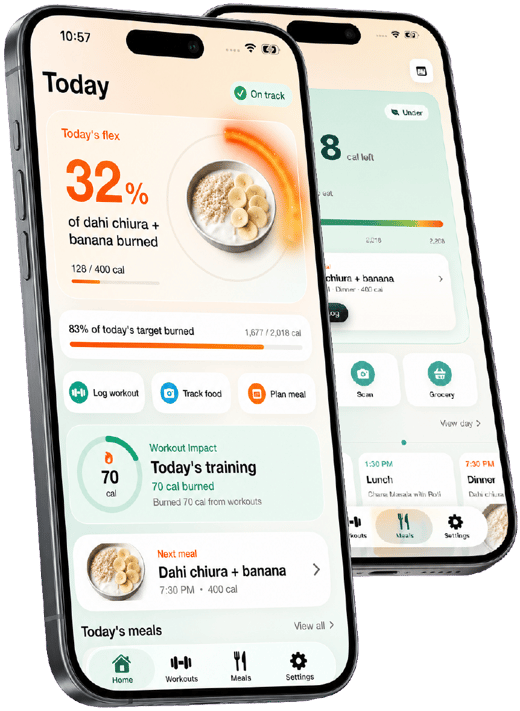
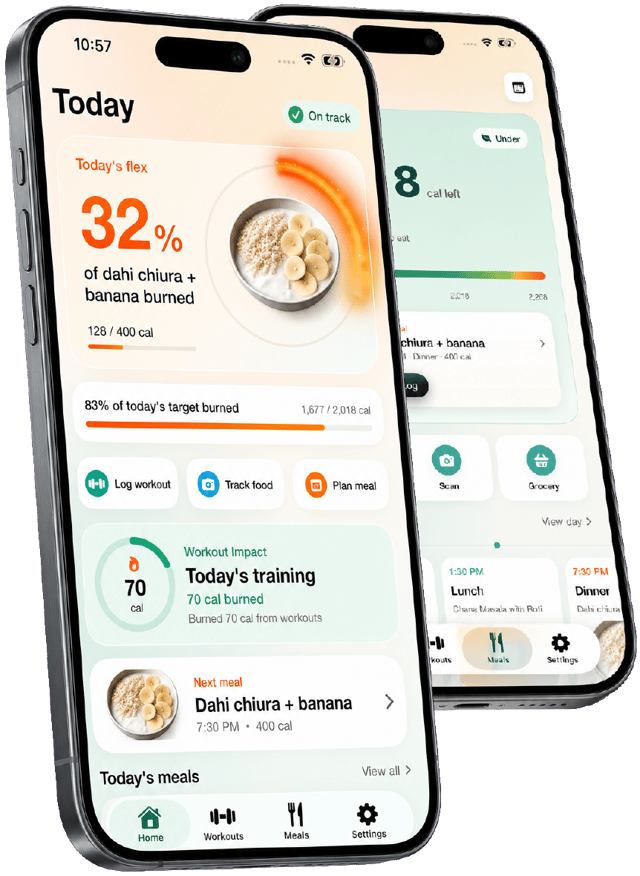
The burn bar shows what the long run actually cost
Log a long run and see the percentage of your day's food it burned — useful context for why appetite spikes hard after an 18-miler.
Practical guidance
Tips for marathon training
The habits that separate runners who make it to the start line healthy from those who don't.
- 01 Respect the 10% rule on weekly mileage
Jumping mileage too fast is the single most common cause of marathon training injuries — small, steady increases hold up better.
- 02 Practice fueling on every long run
Race-day nutrition should be rehearsed, not improvised — test gels, timing and hydration on long runs well before race day.
- 03 Don't skip the taper
Cutting volume in the final 2–3 weeks lets your legs absorb months of training — skipping it leaves you tired, not fitter, on race day.
- 04 Sleep scales with training load
Higher mileage weeks demand more recovery — treat sleep as part of the training plan, not an afterthought.
- 05 Carb-load in the final 2–3 days, not the final meal
Gradually increasing carbohydrate intake over the last few days fills glycogen stores more effectively than one large pasta dinner.
- 06 Replace lost sodium and fluids on long runs
Long runs in heat lose significant sodium through sweat — plan hydration and electrolytes, not just water.

Build the plan around your week
Build my workout plan Tell Burnplate your days, equipment and level and it builds a progressive workout plan, logs every session, and connects what you burn to what you eat.
Questions
Workout planner for marathon training: FAQ
How many miles a week do you need for marathon training?
Plans vary widely, from around 20–30 miles a week for first-time finishers to 50-plus for competitive runners. What matters more than the exact number is a gradual buildup, a weekly long run and enough easy-pace running to support the volume without injury.
What is a good training plan for running a marathon?
A 16–20 week plan built around one long run a week that gradually extends toward 18–20 miles, mostly easy-pace running, one quality session weekly, and a 2–3 week taper before race day is a well-supported structure for most runners.
How should I fuel during marathon training?
During heavy training weeks, carbohydrate needs rise — many runners do well around 5–7 g of carbs per kilogram of bodyweight daily. On long runs over 90 minutes, taking in 30–60 g of carbs per hour via gels or chews helps maintain pace and prevents the late-run bonk.
How long should the longest training run be before a marathon?
Most plans peak the long run between 18 and 20 miles, reached a few weeks before race day, then taper down. Running the full 26.2 in training isn't necessary and adds unneeded injury risk and recovery time.
What should I eat the week of a marathon?
Gradually increase carbohydrate intake over the final 2–3 days rather than loading up the night before — this fills glycogen stores more reliably. Keep meals familiar and easy to digest, and avoid trying new foods close to race day.
Can Burnplate build a marathon training plan?
Yes. Tell Burnplate your training days and level, and it builds a running plan around a weekly long run and progressive mileage, plus calorie and carb targets that scale with your training load.
