A 30-second sprint needs roughly 30–90 seconds of rest to be repeated at near-maximal effort. Cut the rest too short and every interval becomes moderate-intensity cardio in disguise — effective, but not HIIT.
Why it's different
Why HIIT needs structure, not just intensity
The term gets used loosely, but genuine high-intensity interval training depends on a specific pattern: hard efforts that are actually hard, and rest periods that are actually long enough to let the next interval be hard too.
1:1 to 1:3 common work-to-rest ratios — the harder the effort, the more rest it needs to stay genuinely high-intensity
85–95% the effort level true HIIT work intervals should reach for the benefits to differ from steady cardio
2–3×/week a sustainable HIIT frequency — more than that raises injury and burnout risk for most people
Two to three HIIT sessions a week is enough to drive real conditioning and metabolic improvements. Doing it daily usually means the intervals quietly get easier just to survive the volume, which defeats the purpose.
Very short, all-out efforts (10–20 seconds) build power and anaerobic capacity; longer efforts (60–120 seconds) build a different kind of conditioning closer to aerobic capacity. Rotating both keeps progress from stalling.
True high-intensity work creates more fatigue than a jog at the same duration. At least one full rest or easy day between HIIT sessions keeps quality high and injury risk down.
What it looks like
A sample HIIT workout plan for the week
Three sessions with different interval formats, spaced with recovery days so each one can be run at genuine high intensity.
Example week
3 Days/week20–25 min Session lengthBeginner–intermediate LevelNone required Equipment
Monday Short intervals 8× 20s all-out effort (sprint, burpees or bike) / 40s rest, plus 5 min warm-up and cool-down
Tuesday Easy recovery 20–30 min easy walk or light mobility work
Wednesday Longer intervals 6× 60s hard effort (row, bike or run) / 90s rest, plus warm-up and cool-down
Thursday Rest or easy Full rest or a gentle walk
Friday Mixed intervals 10× 30s all-out effort / 30s rest, bodyweight circuit (squat jumps, mountain climbers, push-ups)
How Burnplate handles it
How Burnplate handles HIIT training
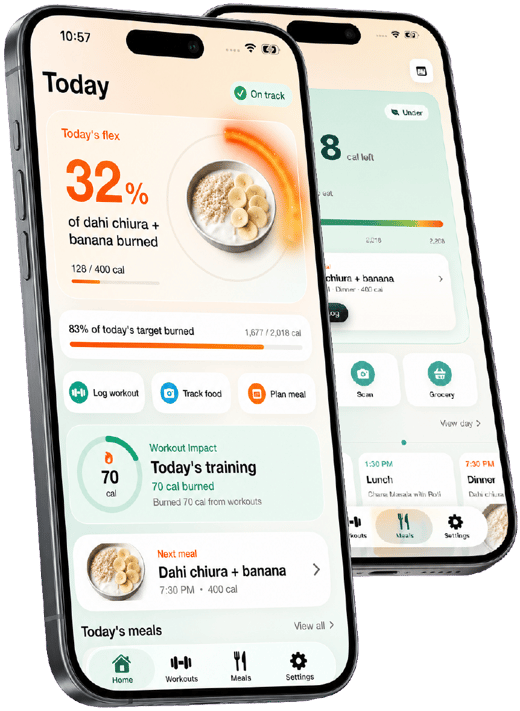
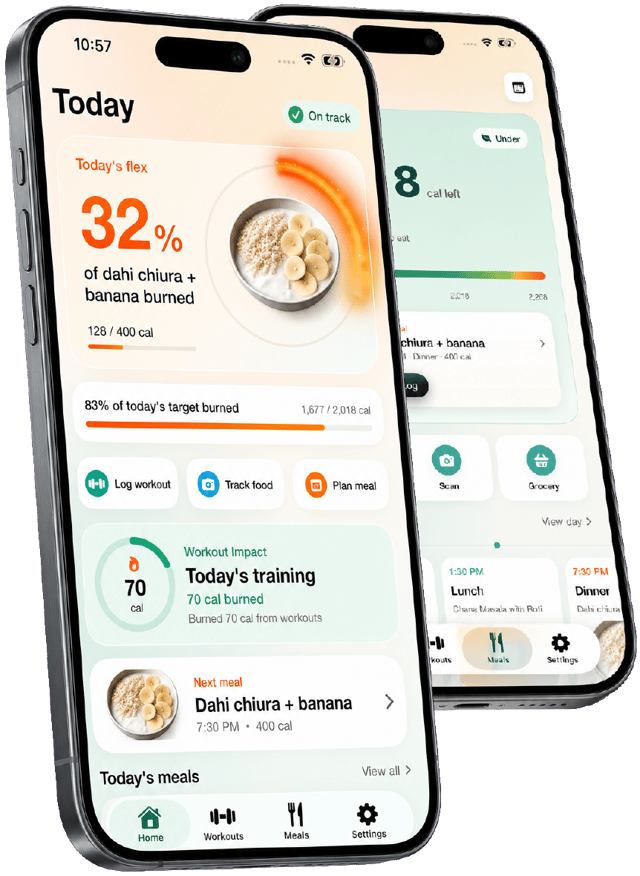
Burnplate builds interval sessions into a broader plan and connects the effort to your food without needing a separate app for cardio.
A plan that fits HIIT around your week
Tell Burnplate you want to train HIIT and how many days you have, and it builds a plan with rest days spaced so intervals stay genuinely high-intensity.
The burn bar reflects a short, hard session honestly
A 20-minute HIIT session can burn as much as a much longer moderate workout — Burnplate shows that against your day's food instead of undercounting a short session.
Session logging for interval workouts
Log a HIIT session and see it in your workout history alongside strength training, so a mixed week is tracked in one place.
Calorie targets that account for high-intensity work
Burnplate factors your training into your daily calorie and protein targets, so hard interval days aren't accidentally underfueled.
Practical guidance
Tips for getting more out of a HIIT workout plan
Practical guidance for keeping intervals genuinely high-intensity and sustainable.
- 01 Warm up properly before going all-out
5–8 minutes of gradually building movement prepares joints and muscles for near-maximal effort and reduces injury risk.
- 02 Rate your effort, don't just watch the clock
Real HIIT intervals should feel close to a 9 out of 10 effort — if the hardest interval of the session feels like a 6, the intensity needs to go up, not the duration.
- 03 Respect the rest period
Cutting rest short to 'work harder' usually just makes every interval weaker — the rest is part of what makes the work interval effective.
- 04 Pick low-impact options if joints are a concern
A bike, rower or swim can deliver the same interval structure as sprinting with far less impact stress.
- 05 Don't stack HIIT on top of a max-effort lifting day
Combining an all-out interval session with heavy squats or deadlifts the same day usually means one of the two suffers — separate them when possible.
- 06 Cool down instead of stopping abruptly
A few minutes of easy movement after the last interval helps heart rate come down gradually and reduces post-session dizziness.

Build the plan around your week
Build my workout plan Tell Burnplate your days, equipment and level and it builds a progressive workout plan, logs every session, and connects what you burn to what you eat.
Questions
Workout planner for HIIT: FAQ
What is a good HIIT workout plan for beginners?
Start with a 1:2 work-to-rest ratio — for example, 20 seconds of hard effort followed by 40 seconds of rest, repeated 6–8 times — twice a week. As conditioning improves, the ratio can shift toward more work and less rest.
How many days a week should I do HIIT?
Two to three sessions a week is the range most hiit workout planners recommend, with at least one rest or easy day between sessions. More than that often reduces intensity quality and raises injury risk.
What's the difference between a HIIT workout plan and a HIIT workout routine?
They describe the same thing — a hiit workout routine is simply the specific combination of exercises, intervals and rest periods used in a session, organized into a repeatable weekly plan.
Is HIIT better than steady-state cardio for fat loss?
HIIT tends to burn more calories per minute and can modestly boost calorie burn after the session ends, but total weekly calorie balance still matters most. Steady-state cardio is easier to recover from and sustain in higher volume, so many people benefit from combining both.
Can I do HIIT with no equipment?
Yes. Bodyweight movements like burpees, mountain climbers, squat jumps and high knees work well for interval training and require no equipment at all.
How long should a HIIT session be?
Most effective sessions run 15–25 minutes including warm-up and cool-down. Longer than that and true near-maximal effort is difficult to sustain across all the intervals.
