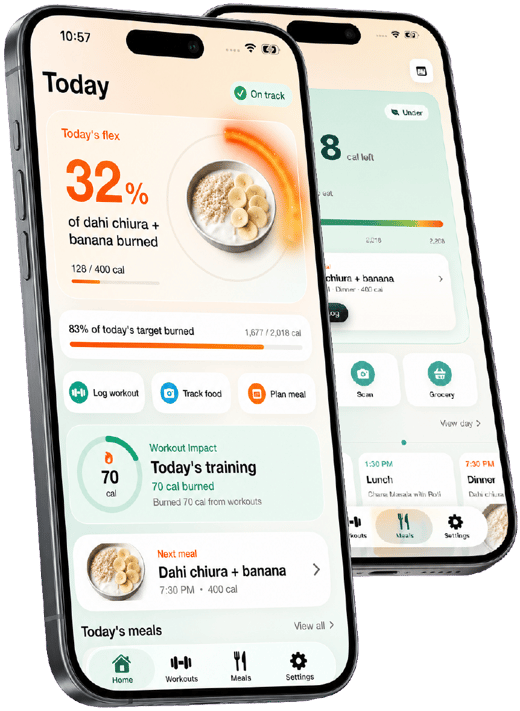

A substantial share of women with PCOS have some degree of insulin resistance, which affects how the body stores fat and responds to carbohydrate — a deficit that ignores this often works more slowly than expected.
Why it's different
Why PCOS needs a different calorie approach
PCOS isn't just a hormonal condition layered on top of normal calorie math — insulin resistance changes how the body responds to a deficit, which is why the standard playbook often underperforms.
5–10% body weight loss shown to help restore ovulation and improve insulin sensitivity in PCOS
25–30 g fiber a day recommended to help manage the insulin resistance common with PCOS
1.2 g/kg protein target many PCOS nutrition guidelines suggest for satiety and blood sugar control
Elevated insulin and androgens common in PCOS can blunt the typical results of a calorie deficit unless carb quality and meal composition are addressed alongside the total.
Very-low-calorie diets can raise stress hormones and worsen the hormonal imbalance already present in PCOS — a moderate, sustained deficit tends to outperform an aggressive one for this specific condition.
Even a 5% weight loss has been shown to help restore ovulation for some women with PCOS — the target doesn't need to be dramatic to matter.
What it looks like
A sample day built for PCOS
Built around roughly 1,650 calories — a moderate deficit with every meal pairing carbs against protein or fat to manage the insulin response.
Example day
Daily targets
Calories ~1,650 A moderate 300–400 kcal deficit; very-low-calorie diets are usually counterproductive for PCOS
Protein 1.2 g/kg Supports satiety and helps blunt the insulin response to meals
Fiber 28 g Helps manage the insulin resistance common with PCOS
Refined carbs limited Swapped for whole-food carbs to lower the glycemic load of meals
Weight-loss pace 0.5–1 lb/week A slower pace many PCOS-focused guidelines favor over aggressive cuts
A logged day
7:00 AM Veggie egg scramble, avocado, berriesLow glycemic load, protein-forward 400 kcal
10:30 AM Greek yogurt and walnutsProtein and fat, minimal insulin spike 200 kcal
12:30 PM Grilled chicken, lentils, roasted vegetablesHigh fiber, moderate carbs 440 kcal
3:30 PM Hummus and vegetablesFiber-forward snack 170 kcal
6:30 PM Salmon, quinoa, greens, olive oilBalanced, anti-inflammatory-leaning dinner 450 kcal
How Burnplate handles it
How Burnplate supports a PCOS-focused plan
Burnplate isn't a PCOS treatment tool, but it's built to support the approach that tends to work best: a moderate deficit with carb quality tracked, not just totals.
A deficit sized to avoid backfiring
Calorie targets are calculated from your body, goal and activity toward a moderate deficit by default, rather than an extreme cut that can work against PCOS.
Protein and fiber tracked, not just calories
Macro targets show protein and give visibility into a day's composition, not just the calorie total, which matters more for PCOS than for a typical weight-loss goal.
Photo logging on hard hormonal days
Snap a plate instead of a manual entry — logging that keeps up on the days when energy and motivation swing with the cycle.
Swap a meal, keep the carb quality
The AI meal plan lets you swap a meal you don't want while keeping that meal's carbs and calories in range, so the day's composition holds even when the plan changes.
Practical guidance
Practical tips for tracking with PCOS
Changes with the most support behind them for the insulin-resistance side of PCOS, not generic weight-loss advice.
- 01 Skip the very-low-calorie diet
Extreme restriction can raise stress hormones and work against the hormonal balance PCOS is already disrupting — moderate and sustained outperforms aggressive and short.
- 02 Pair carbs with protein or fat
This single habit does more for the insulin response in PCOS than almost any other single change to the calorie total.
- 03 Add strength training for insulin
Resistance training improves insulin sensitivity through a mechanism separate from weight loss, making it especially useful alongside a PCOS-focused deficit.
- 04 Prioritize fiber before cutting more
Fiber slows glucose absorption and supports satiety on fewer calories — often more effective than simply eating less.
- 05 Track consistently through cycle changes
Appetite, water retention and energy can shift meaningfully across a cycle with PCOS — expect the data to be noisier than a textbook example.
- 06 Loop in your doctor before big changes
PCOS presents differently person to person — a doctor or dietitian can tailor targets in a way a general calculator can't.

Track it with a photo, not a search bar
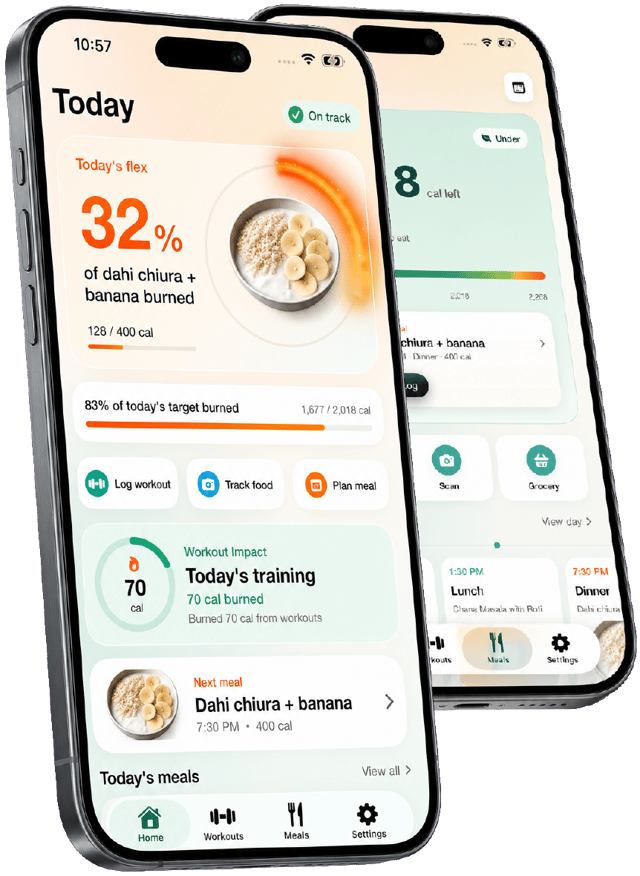
Start tracking free Burnplate sets your calorie and macro targets, logs meals from a photo, and shows how much of each meal your workouts and steps have burned off.
Questions
Calorie tracker for PCOS: FAQ
How many calories should someone with PCOS eat?
It depends on body size, activity and goals, but a moderate deficit of 300-400 calories below maintenance — often landing around 1,500-1,800 calories for many women — tends to work better than an aggressive cut. Very-low-calorie diets are generally discouraged with PCOS because they can worsen hormonal imbalance.
Is weight loss harder with PCOS?
It can be, mainly because insulin resistance — present in a substantial share of women with PCOS — changes how the body responds to a calorie deficit, particularly an aggressive one. A moderate deficit paired with carb-protein pairing and strength training tends to outperform standard weight-loss approaches for this specific condition.
Does a calorie tracker for PCOS actually help?
It can, especially one that tracks fiber and protein alongside calories, since carb quality matters as much as the total for managing PCOS-related insulin resistance. It's a tracking tool, not a treatment — pair it with guidance from a doctor or dietitian familiar with PCOS.
What's the best diet for PCOS?
There's no single required diet, but most PCOS-focused nutrition guidance favors a moderate calorie deficit, higher fiber, consistent protein, and pairing carbs with protein or fat to manage the insulin response. Extreme or very-low-carb diets aren't necessary for everyone and can be hard to sustain.
How much weight loss helps PCOS symptoms?
Even a 5-10% reduction in body weight has been associated with improved insulin sensitivity and restored ovulation for some women with PCOS. The target is meant to be achievable, not dramatic — a modest, sustained loss tends to outperform a rapid one.
Can Burnplate account for insulin resistance?
Burnplate can't diagnose or measure insulin resistance directly, but it sets a moderate calorie deficit by default and tracks protein and fiber alongside calories, supporting the carb-pairing approach that PCOS nutrition guidance generally recommends.
