
A growing 14-year-old, an active parent, and a grandparent watching their weight can all eat the same chicken-and-rice dinner — they just need different portion sizes on the plate. Tracking has to work with that reality instead of forcing five separate menus.
Why it's different
Why family calorie tracking isn't one number
Most calorie apps assume a single user with a single target. A household of four to six people, each with a different age, size, activity level and goal, needs the same meal to scale differently for everyone eating it.
4–6 different daily calorie targets can sit around one dinner table — a growing teen and a parent need very different numbers
~25% smaller portion is often enough to fit a lighter eater's target off the exact same family meal
1 app group space keeps a parent and a teen logging the same household meals without duplicate setup
Calorie targets for children and teens should support normal growth, not create restriction. A family tracker should help a parent see whether a kid is eating enough of the right things, not put a growing child on the same calorie deficit as an adult trying to lose weight.
The person planning dinner is usually shopping and cooking for the whole house in one pass. A calorie tool that only thinks in single servings makes that person do extra math every single night to translate a family recipe into individual portions.
Families that can see each other's logged meals and activity — even loosely — tend to stick with tracking longer than someone doing it alone. A shared space turns tracking into a household habit instead of one person's private project.
What it looks like
A sample family dinner, four different plates
One meal, four portions. The parents are eating for maintenance and a modest deficit, the teenager is eating for growth, and the young child is eating for adequacy — all from the same pot.
Example day
Daily targets
Parent A ~1,900 kcal/day modest deficit; dinner portion sized to leave room for lunch already logged
Parent B ~2,400 kcal/day maintenance; larger dinner portion plus a post-dinner walk logged separately
Teen (15) ~2,600 kcal/day growth range; largest portion at the table, plus an after-school snack
Child (8) ~1,600 kcal/day adequacy-focused; smaller portion, same food, no restriction language used
A logged day
6:15 PM Chicken thighs, roasted potatoes, green beansParent A's portion — one thigh, half cup potatoes, full veg 580 kcal
6:15 PM Same meal, larger portionParent B's plate — two thighs, more potatoes 740 kcal
6:15 PM Same meal, teen-sized portionthe biggest plate at the table, by design 820 kcal
6:15 PM Same meal, kid-sized portionsmaller portion of the exact same food, not a separate 'kid meal' 460 kcal
8:00 PM Fruit + yogurt, shared dessertlogged once per person from the same serving bowl 150 kcal
How Burnplate handles it
How Burnplate tracks a whole household
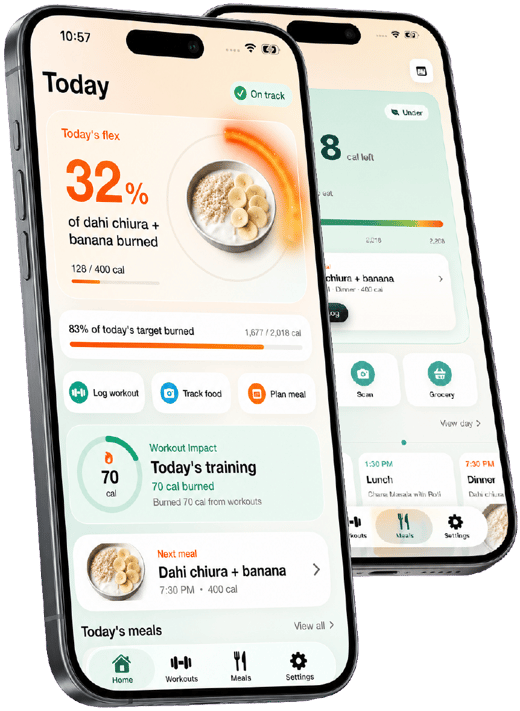
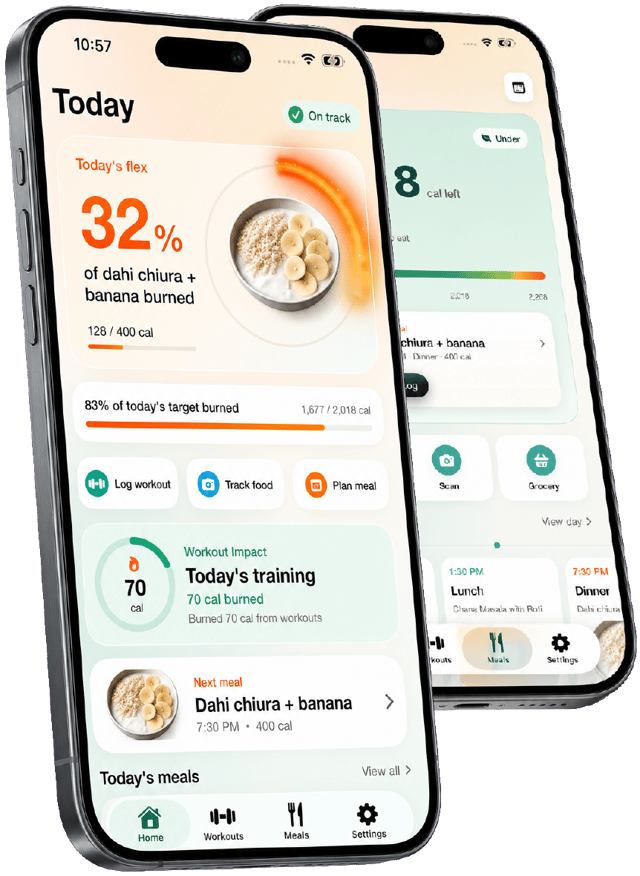
Burnplate's groups feature puts family members in one shared account space, so tracking a household doesn't mean juggling separate apps or separate logins.
A photo logs one plate at a time, per person
Whoever's eating snaps their own portion of the family meal; Burnplate estimates the food and lets each person confirm their own serving size, even when everyone ate from the same dish.
Targets set per family member, not per household
Each person in the group gets their own calorie and macro targets built from their body, age and goal — a parent's deficit and a teenager's growth range never get mixed up.
Groups keep everyone's tracking in one space
Family or friends can share an account space, so a parent can see the household's tracking at a glance without each person setting up a separate app from scratch.
The burn bar makes family activity visible
A weekend bike ride or a kids' soccer game logged by the family shows up as burned calories against the day's meals — a simple way to connect the family's activity to the family's food.
Practical guidance
Tips for tracking calories as a family
Ways to make tracking a household habit instead of one person's extra chore.
- 01 Cook one meal, portion it differently
Plan dinner as a single recipe and size the servings per person rather than cooking separate meals for separate goals.
- 02 Never put a child on a calorie deficit
Kids and teens should track for awareness and adequacy, not restriction — talk to a pediatrician before changing a child's intake.
- 03 Let each person log their own plate
Self-logging, even for older kids, builds a habit that lasts longer than a parent estimating everyone's portions.
- 04 Use the group space, not five separate apps
One shared account space means groceries, recipes and targets stay visible to the household instead of scattered across logins.
- 05 Plan the busy weeknights first
The nights with the least time are when takeout and oversized portions happen — have a fast, photo-loggable go-to meal ready.
- 06 Make activity a family log, not a chore
A logged bike ride or backyard game counts the same as a gym session — treat family activity as real activity.

Track it with a photo, not a search bar
Start tracking free Burnplate sets your calorie and macro targets, logs meals from a photo, and shows how much of each meal your workouts and steps have burned off.
Questions
Calorie tracker for families: FAQ
How does a calorie tracker for families work when everyone eats different amounts?
The meal stays the same; the portion and the logged amount change per person. Burnplate lets each family member log their own plate from the same dinner and tracks it against their own calorie and macro targets, so one recipe can serve a parent's deficit and a teen's growth range at once.
Is a calorie counter for family use safe for kids?
Used carefully, yes — the goal for a child or teen should be awareness of eating enough of the right foods, never a calorie deficit. Talk to a pediatrician before using any tracker with a young child, and keep the framing around adequacy and variety rather than restriction.
Can my whole family use one Burnplate account?
Family or friends can share an account space through Burnplate's groups feature, so each person keeps their own targets and logged meals while staying visible to the household. It removes the need for separate logins just to track a shared kitchen.
How do I log a family meal when everyone ate different portions?
Each person photographs and confirms their own plate, even when it came from the same pot. Burnplate estimates the food from the photo and lets each family member adjust their own portion size, so one dinner becomes several accurate, individual log entries.
What should a family's calorie targets be based on?
Each person's target should come from their own body size, age, activity level and goal — there's no single household number. Burnplate calculates individual targets for each family member, so a growing teenager and a parent working on maintenance are never held to the same figure.
How do I track calories for a picky eater or a growing teen?
Focus less on hitting an exact number and more on whether meals are varied and adequate. A teenager's range should support growth, and a picky eater's log is more useful for spotting missing food groups than for chasing a precise calorie total.
