
The first trimester requires essentially no extra calories over your pre-pregnancy baseline, according to ACOG guidance — the meaningful increases don't start until the second trimester.
Why it's different
Why pregnancy calorie needs aren't what people assume
The extra calorie need in pregnancy is real, specific and smaller than the "eating for two" phrase implies — and it arrives on a schedule, not from day one.
+0 extra calories needed in the first trimester over your pre-pregnancy baseline
+340 extra calories per day in the second trimester, per ACOG guidance
+450 extra calories per day in the third trimester, per ACOG guidance
Folate, iron, choline and DHA all have elevated requirements in pregnancy independent of the calorie total — hitting the calorie number without these still leaves gaps that matter for fetal development.
Recommended total weight gain during pregnancy varies by pre-pregnancy BMI, per IOM guidelines — there's no single healthy number that applies to everyone.
Intentional calorie restriction or dieting during pregnancy isn't recommended, even for someone hoping to manage weight gain — the approach is adding thoughtfully, not cutting.
What it looks like
A sample day in the second trimester
Built around a pre-pregnancy maintenance estimate of roughly 2,000 calories, plus the second-trimester addition of 340 calories.
Example day
Daily targets
Calories, 2nd trimester +340 Added to your pre-pregnancy maintenance estimate, per ACOG
Calories, 3rd trimester +450 Added to your pre-pregnancy maintenance estimate, per ACOG
Protein 1.1 g/kg Slightly above standard adult guidance to support fetal growth
Folate 600 mcg Critical for neural tube development — often covered by a prenatal supplement
Iron 27 mg Blood volume expands roughly 50% during pregnancy
DHA 200 mg+ Supports fetal brain development; found in fish and algae-based supplements
A logged day
7:30 AM Oatmeal, walnuts, berries, milkFiber and calcium to start 420 kcal
10:00 AM Greek yogurt and an orangeAn extra protein touchpoint 210 kcal
12:30 PM Salmon, quinoa, spinach saladDHA and iron-rich greens 520 kcal
3:00 PM Hummus, whole-grain crackers, carrots, fruitSteady energy into the afternoon 320 kcal
6:30 PM Lean beef, sweet potato, broccoliIron and folate at dinner 560 kcal
8:30 PM Cheese and whole-grain crackersExtra calcium before bed 210 kcal
How Burnplate handles it
How Burnplate fits a pregnancy
Burnplate isn't a prenatal-care tool and doesn't replace your OB or midwife's guidance. It helps you see what you're actually eating against the targets they set.
Targets that adjust as you go
Set your own calorie goal and Burnplate calculates a macro target from your body and activity — you can adjust it as your trimester and appetite change.
Photo logging for the nausea days
Snap a plate instead of typing a search when cooking or planning feels like too much — logging stays fast on the hard days, not just the easy ones.
See protein and iron-rich foods too
Macro targets show protein alongside calories, making it easier to notice a day that's light on the nutrients pregnancy needs most.
A shared space if a partner's cooking too
Groups let a partner see and log meals in the same account space — useful when someone else is doing a lot of the meal planning.
Practical guidance
Practical tips for tracking during pregnancy
Ways to use a calorie counter during pregnancy that support the pregnancy instead of fighting it.
- 01 Eat by hunger in the first trimester
With essentially no extra calorie need yet, appetite and nausea are better guides than a number for the first trimester.
- 02 Front-load protein and iron at meals
Both requirements rise meaningfully — building meals around a protein and iron source first makes hitting them easier than adding them as an afterthought.
- 03 Small, frequent meals fight nausea
Spreading intake across five or six smaller meals is often easier to keep down than three large ones, especially early on.
- 04 Track for awareness, not restriction
The goal of logging in pregnancy is visibility into whether nutrient needs are being met — not managing weight down.
- 05 Ask about supplements early
Folate, iron and DHA needs are often hard to fully close with food alone — a prenatal vitamin is standard for a reason.
- 06 Weight-gain ranges depend on your BMI
The recommended total gain isn't one number for everyone — your OB can tell you the range that applies to you.

Track it with a photo, not a search bar
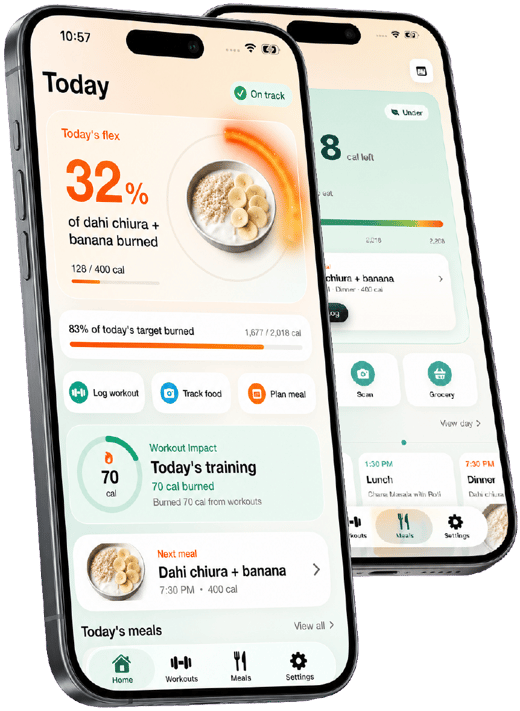
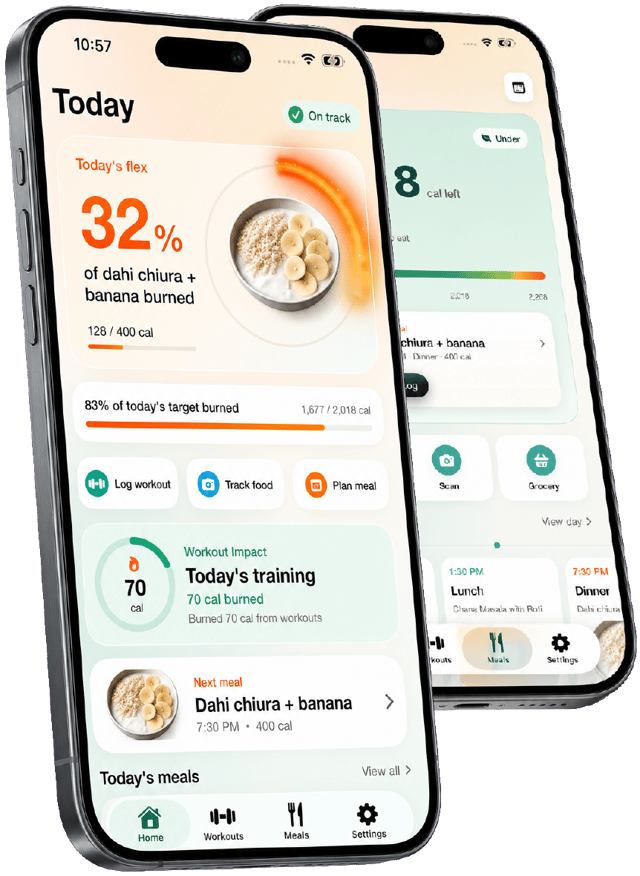
Start tracking free Burnplate sets your calorie and macro targets, logs meals from a photo, and shows how much of each meal your workouts and steps have burned off.
Questions
Calorie tracker for pregnancy: FAQ
How many extra calories do I need when pregnant?
Roughly none in the first trimester, about 340 extra per day in the second trimester, and about 450 extra per day in the third, according to ACOG guidance, all added on top of your pre-pregnancy maintenance calories. These are averages — your OB may adjust them based on your starting weight, activity and how the pregnancy is progressing.
Is it true you eat for two during pregnancy?
Not really — the phrase overstates the first trimester, where extra calorie needs are essentially zero, and even the third-trimester increase of about 450 calories is closer to one extra snack than a second full diet. The bigger shift is in what you're eating, not simply how much.
Can a calorie calculator for pregnant women be accurate?
It can give a reasonable starting estimate based on your pre-pregnancy weight, activity level and trimester, but it can't account for individual factors like multiples, existing conditions or how the pregnancy is progressing. Your OB or midwife's guidance should take priority over any calculator's output.
What nutrients matter most during pregnancy?
Folate, iron, choline, DHA and calcium all have elevated needs during pregnancy, largely independent of the calorie total. A prenatal vitamin typically covers gaps that food alone can be hard to close, especially for folate and DHA.
Is it safe to track calories while pregnant?
Tracking for awareness — to check that intake and key nutrients are on target — is generally fine and can help catch under-eating, which is more common than over-eating in pregnancy. Tracking with the intent to restrict or lose weight during pregnancy isn't recommended without direct medical guidance.
Does Burnplate calculate pregnancy-specific targets?
You can set your own calorie goal to reflect the trimester-based additions your OB recommends, and Burnplate calculates a macro target from there. It doesn't generate a clinical prenatal nutrition plan — that guidance should come from your care team.
