
Eating as much as possible builds fat as fast as muscle. A moderate surplus of roughly 250-500 calories a day, combined with progressive resistance training, builds muscle efficiently without an unnecessary amount of added fat to cut later.
Why it's different
Why bodybuilding needs precision, not just tracking
Most calorie tracking just needs to be roughly right. Bodybuilding is different: the whole point of a bulk or a cut is to hit a specific, deliberate surplus or deficit, and being off by a wide margin either wastes months of a bulk on fat gain or costs muscle during a cut.
1.6–2.2g protein per kg bodyweight is the range that best supports muscle retention and growth in resistance-trained lifters
250–500 calorie surplus per day is enough to build muscle efficiently without excess fat gain during a bulk
0.5–1% bodyweight lost per week is a sustainable cutting rate that preserves muscle better than faster fat loss
Cutting too aggressively pushes the body to burn muscle along with fat for energy. A moderate deficit — usually losing 0.5-1% of bodyweight per week — combined with high protein and continued heavy lifting preserves far more muscle than a crash diet.
Whether bulking or cutting, protein in the 1.6-2.2 g/kg range is what actually signals the body to build and retain muscle. Calories can move with the goal; protein generally shouldn't drop below this range in either phase.
Two people eating the same calories with different protein-carb-fat splits can get very different results from the same training program. Bodybuilding is one of the few goals where tracking macros, not just a single calorie total, actually changes the outcome.
What it looks like
A sample day: lean bulk, training day
Built around a moderate 350-calorie surplus with protein held firmly in the 1.8 g/kg range. The goal is steady, controlled weight gain, not maximum calories.
Example day
Daily targets
Calories ~3,050 roughly 350 kcal above an estimated maintenance of 2,700 — a controlled bulk, not an open surplus
Protein ~160 g 1.8 g/kg for an 88 kg lifter, held constant whether the phase is bulking or cutting
Carbs ~340 g fuels heavy training sessions and supports the surplus without relying only on fat
Fat ~90 g fills the remaining calories after protein and carbs are set, supporting hormone production
Fiber 30g+ kept high even in a calorie surplus for digestion and general health
A logged day
7:00 AM Eggs, oats, whey shakehigh-protein start that sets up the rest of the day's target 620 kcal
10:30 AM Cottage cheese + fruit + almondsa planned surplus snack, not an impulse one 380 kcal
1:00 PM Chicken, rice, broccoli, olive oilthe day's largest whole-food meal, built around the protein target 780 kcal
4:30 PM Rice cakes + peanut butter, pre-workoutfast carbs to fuel a heavy lifting session 340 kcal
6:00 PM Weight session: 75 min, compound liftstraining itself doesn't need to be eaten around precisely — the day's surplus already covers it logged
7:30 PM Steak, sweet potato, asparagusprotein and carbs both stay high post-training 690 kcal
9:30 PM Casein shake + peanut butterslow-digesting protein before an overnight fast 240 kcal
How Burnplate handles it
How Burnplate tracks a bulk or cut
Burnplate is built to hit a specific number, not just log food in general — which is what a real bulk or cut phase requires.
Calorie and macro targets set to your exact phase
Tell Burnplate you're bulking, cutting or maintaining and it sets a calorie target with the surplus or deficit sized to that goal, along with a protein target that stays high through either phase.
Photo logging for high-frequency eating
Bodybuilding diets often mean 4-6 meals a day — snap each plate and Burnplate logs it in seconds instead of turning tracking into its own second job.
Macros tracked alongside calories, not instead of them
Protein, carbs and fat are all tracked against their own targets, so hitting the calorie number without hitting protein — a common way a bulk or cut goes wrong — gets caught immediately.
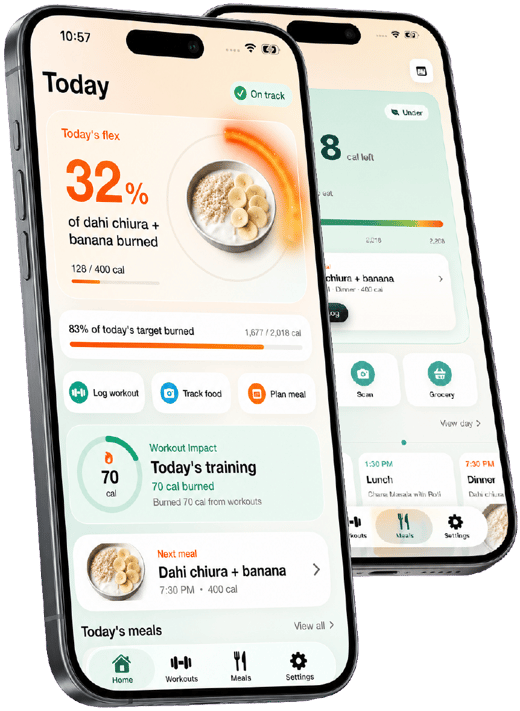
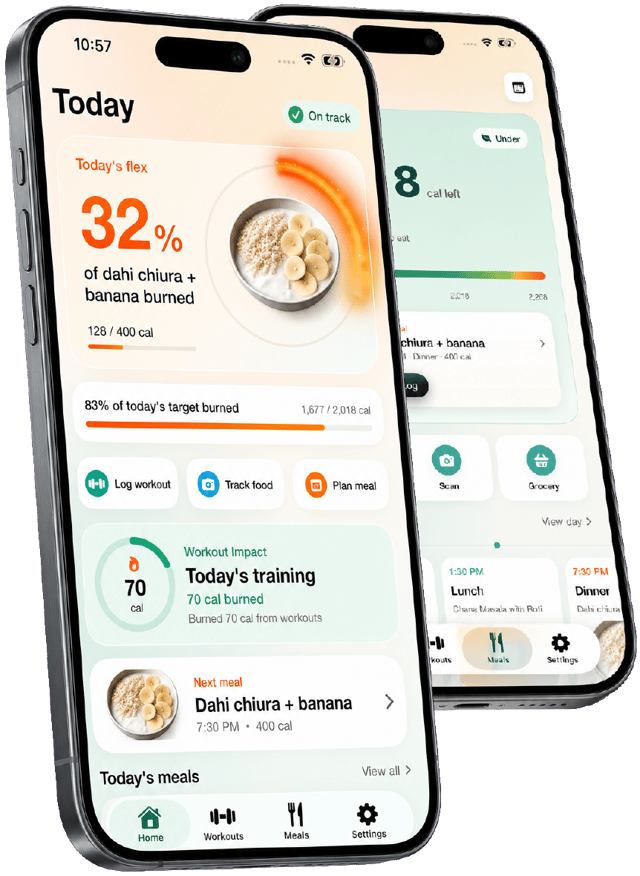
The burn bar shows what training added back
Log a lifting session and see it reflected against the day's target, useful for knowing whether a hard leg day justifies the bigger dinner that follows it.
Practical guidance
Tips for tracking through a bulk or cut
Habits that keep a bulk from turning into a fat-gain phase and a cut from costing muscle.
- 01 Weigh in weekly, not daily
Day-to-day weight swings with water and food volume — a weekly average is a far more honest read on whether the surplus or deficit is working.
- 02 Adjust calories every 2–3 weeks, not daily
If the scale isn't moving as expected after a couple of weeks, adjust calories by 100-150 rather than reacting to a single day's number.
- 03 Never let protein slide during a cut
Protein is the macro that protects muscle in a deficit — if something has to give when calories are tight, it should be carbs or fat, not protein.
- 04 Keep lifting heavy through both phases
The training stimulus, not just the diet, is what tells the body to keep or build muscle — a cut without continued heavy lifting loses more muscle than one with it.
- 05 Track macros, not just total calories
Two days at the same calorie total with different protein levels can produce very different results over a training block — log the full macro breakdown.
- 06 Plan a diet break during long cuts
A week or two at maintenance calories during an extended cut can help preserve training performance and adherence without meaningfully slowing overall progress.

Track it with a photo, not a search bar
Start tracking free Burnplate sets your calorie and macro targets, logs meals from a photo, and shows how much of each meal your workouts and steps have burned off.
Questions
Calorie tracker for bodybuilding: FAQ
How many calories should I eat to bulk?
A moderate surplus of roughly 250-500 calories above maintenance is generally enough to build muscle efficiently without excess fat gain. Burnplate calculates your maintenance from your body and activity level, then sizes the surplus to your specific bulking goal.
How many calories should I eat to cut for bodybuilding?
A moderate deficit that produces roughly 0.5-1% of bodyweight loss per week tends to preserve muscle far better than an aggressive crash diet. For most lifters that's a 300-600 calorie daily deficit, adjusted based on how the scale and strength numbers respond.
How much protein do I need for bodybuilding?
Most evidence-based guidance points to 1.6-2.2 g of protein per kg of bodyweight per day for resistance-trained lifters, regardless of whether you're bulking or cutting. Going higher within that range generally doesn't add benefit; dropping below it risks losing muscle, especially in a deficit.
Is a calorie counter for bodybuilding different from a normal calorie tracker?
The core logging is the same, but bodybuilding needs tighter targets — a specific surplus or deficit range and a protein floor that doesn't move — plus full macro tracking, not just a calorie total. Burnplate sets all three from your bulking, cutting or maintenance goal.
How do I know if my bulk is too aggressive?
If weekly weight gain is consistently well above roughly 0.5% of bodyweight, or waist measurements are climbing noticeably faster than strength numbers, the surplus is likely too large. Dialing calories back by 100-200 usually corrects it without stalling muscle gain.
Should I count calories on rest days when bodybuilding?
Yes — a bulk or cut is a daily calorie strategy, not something that pauses on rest days. Total weekly intake still needs to land in the planned surplus or deficit range, and consistent tracking on rest days is often where bulks and cuts quietly go off track.
