
The body can only build muscle so fast — even with ideal training, most people gain a maximum of about 1–2 lb of actual muscle a month. A surplus larger than 250–500 calories a day mostly overshoots that ceiling and adds fat instead of muscle.
Why it's different
Why a muscle-gain plan is more than 'eat more'
Muscle is built from a training stimulus plus the raw materials to repair and grow from it. Get the surplus too small and you undertrain recovery; get it too big and most of the gain is fat, not muscle.
1.6-2.2g protein per kg of body weight is the range shown to maximize muscle protein synthesis
250-500 extra calories a day above maintenance builds muscle without excess fat gain
0.25-0.4g protein per kg per meal is roughly the amount that maximally triggers muscle building
Muscle protein synthesis responds to protein arriving in doses roughly every 3–4 hours, not one large serving at dinner. Spreading 4–5 protein-containing meals across the day keeps that synthesis switched on for more of it.
Glycogen — the carbs stored in muscle — is what powers a hard set of squats or a heavy final rep. Under-fueling carbs around training sessions blunts performance, which over months means a weaker stimulus for growth.
Muscle is built over months of repeated surplus days and repeated training sessions. A meal plan that's easy to repeat protects the streak far better than a constantly changing one.
What it looks like
A sample day on a muscle-gain meal plan
Built around a 300 kcal surplus for an adult with roughly 2,400 maintenance calories — about 2,700 calories a day with protein spread across five feedings.
Example day on the plan
~2,700 calories160 g+ protein300 g+ carbs5 meals/day
7:00 AM Eggs, oats & fruit3 whole eggs + 2 egg whites, ½ cup oats, banana 560 kcal
10:30 AM Protein shake + almonds1 scoop protein powder, 1 cup milk, 15 almonds 340 kcal
1:00 PM Chicken, rice & veg180 g chicken breast, 1 cup rice, mixed vegetables, olive oil 620 kcal
4:30 PM (pre-workout) Rice cakes + honey + yogurt3 rice cakes, 1 tbsp honey, ¾ cup Greek yogurt 380 kcal
7:30 PM Beef, potatoes & salad180 g lean beef, 1 large baked potato, side salad 620 kcal
9:30 PM Cottage cheese + peanut butter1 cup cottage cheese, 1 tbsp peanut butter 220 kcal
Smart swaps
One large dinner Same food split into two sittingsSpreads protein synthesis triggers across the day instead of one large spike.
Skipping the pre-workout meal A carb + light protein snackKeeps glycogen topped up so your last few reps don't fall apart from low fuel.
Diet soda to fill calories An extra serving of rice or fruitPuts the surplus toward muscle-building carbs instead of empty volume.
Protein bars as a meal replacement Whole food where possible, bars as backupWhole meals bring micronutrients and fullness that bars alone don't provide.
How Burnplate handles it
How Burnplate builds your muscle-gain plan
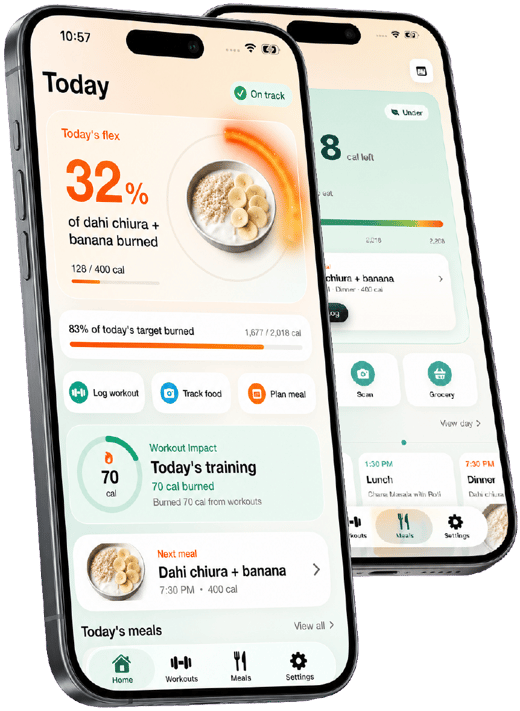
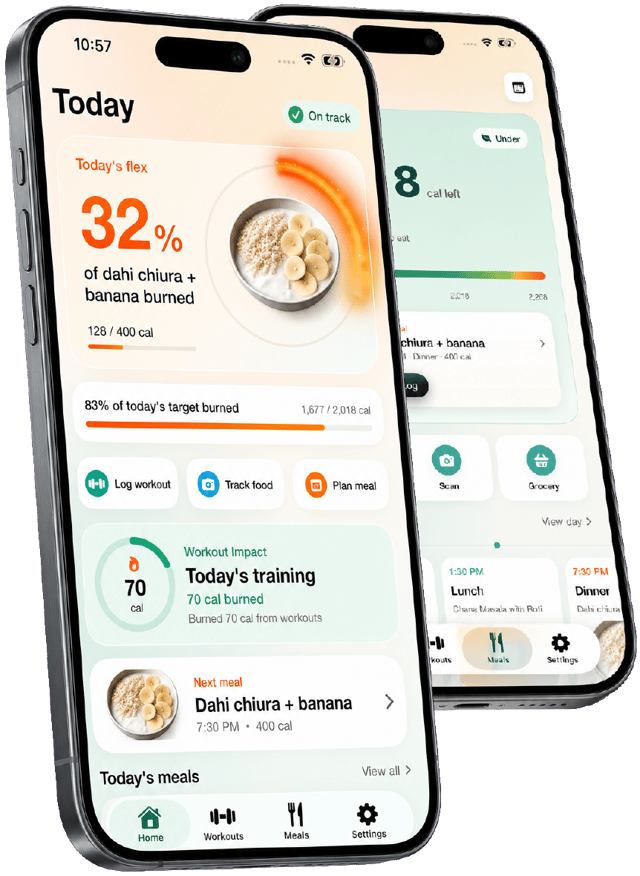
Burnplate sizes the surplus, hits the protein target and ties the plan to your training days.
Surplus and protein set from your body
Burnplate calculates your maintenance calories and adds a modest surplus, then sets a protein target in the 1.6–2.2 g/kg range so gains lean toward muscle.
A 7-day plan with a grocery list
The AI meal plan builds a full week of meals that hit your calorie and protein numbers, food preferences included, with one consolidated grocery list.
Workout plan built around your training
Burnplate's workout builder creates a progressive lifting plan around your days per week and equipment, and logs your sets and reps alongside the meal plan.
Swap meals, keep the surplus intact
Not feeling the beef and potatoes? Swap it and Burnplate keeps the meal's calories and protein in range so the day's surplus still lands where it should.
Practical guidance
Meal-planning tips for building muscle
The training gets the credit, but these are the eating habits that actually let it show up on the scale as muscle.
- 01 Weigh in weekly and adjust
Gaining more than about 1 lb a week for more than a few weeks usually means the surplus is bigger than it needs to be.
- 02 Protein first, then fill with carbs
Hit your protein target before worrying about the rest of the day — it's the nutrient most likely to be missed.
- 03 Eat carbs close to training
A carb-containing meal 1-3 hours before lifting and another within a couple hours after supports performance and recovery.
- 04 Don't fear liquid calories here
Unlike a cutting phase, smoothies and shakes are a useful way to hit a high calorie target without constant large meals.
- 05 Sleep is part of the plan
Most muscle repair happens during sleep — 7-9 hours matters as much as any single meal for whether the surplus turns into muscle.
- 06 Give it 3-4 weeks before changing
Muscle gain is slow to show on the scale; give a surplus a few weeks of consistent training before deciding to adjust it.

Get the week planned in one tap
Build my meal plan Burnplate builds a 7-day meal plan around your calories, protein and food preferences, writes the grocery list, and lets you swap any meal you don't feel like.
Questions
Meal planner for muscle gain: FAQ
How many calories should I eat for muscle gain?
Roughly 250–500 calories a day above your maintenance level, which is the surplus range shown to support muscle growth without excess fat gain. Burnplate calculates your maintenance calories from your body and activity, then sets a surplus in that range as your starting target.
How much protein do I need to build muscle?
Most research points to 1.6–2.2 g of protein per kg of body weight per day for people actively training for muscle gain. Spreading that across 4–5 meals, each with roughly 0.25–0.4 g/kg, appears to use it more effectively than one or two large servings.
Can I build muscle without a calorie surplus?
It's possible in some cases — beginners, people returning after a break, or those at a higher body fat percentage can build some muscle at maintenance or even a small deficit. For most trained individuals, though, a modest surplus makes muscle gain noticeably more reliable.
What is a 7 day meal plan for muscle gain built around?
A week of meals that hit a consistent daily calorie surplus and protein target, with carbs positioned around training sessions for performance. Burnplate generates one automatically from your numbers, including a grocery list, and lets you swap any meal while keeping the day's targets intact.
How fast can I actually gain muscle?
Under good conditions, roughly 1–2 lb of true muscle a month for beginners, slowing to a fraction of that for more experienced lifters. Weight gain faster than this on a surplus is more likely fat and water than muscle — that's why the surplus size matters.
Does Burnplate include a workout plan for muscle gain?
Yes. Burnplate's workout planner builds a progressive resistance-training plan around your days per week, equipment and level, and logs your sets and reps alongside the meal plan so both sides of muscle gain are covered.
