Modern diets heavy in vegetable oils skew this ratio toward omega-6, which is pro-inflammatory in excess. Adding fatty fish, walnuts and flax brings in omega-3s that help rebalance it, rather than eliminating omega-6 entirely.
Why it's different
Why an anti-inflammatory diet is different
Most diet plans target weight or a single nutrient. An anti-inflammatory pattern targets a biological process — chronic low-grade inflammation — that's influenced by several dietary factors working together rather than any one ingredient.
2x/week fatty fish is a common target for omega-3 intake tied to lower inflammatory markers
25–30 g fiber a day feeds the gut bacteria that produce anti-inflammatory short-chain fatty acids
<10% of calories from added sugar is a widely used ceiling — refined sugar is one of the more consistent dietary inflammation triggers
Berries, leafy greens, olive oil and spices like turmeric and ginger carry plant compounds linked to lower inflammatory markers in research. Eating a wide range of colorful produce covers this more reliably than any single supplement.
Diets high in added sugar, refined starch and ultra-processed food are among the most consistent dietary drivers of elevated inflammatory markers across studies — more so than most individual foods people worry about.
Fiber feeds gut bacteria that produce short-chain fatty acids with anti-inflammatory effects. A low-fiber diet, even without excess sugar, is associated with a less favorable inflammatory profile.
What it looks like
A sample day on an anti-inflammatory meal plan
Around 1,900 calories built on fish, olive oil, colorful produce and whole grains, with minimal added sugar and no fried or ultra-processed food.
Example day on the plan
~1,900 calories28 g+ fiber<25 g added sugardaily omega-3 source
7:30 AM Oats with walnuts and berries½ cup oats, 1 tbsp walnuts, ¾ cup mixed berries, cinnamon 400 kcal
10:30 AM Turmeric-ginger tea and an orangeTurmeric tea, 1 orange 80 kcal
12:30 PM Salmon, quinoa and greens bowl130 g salmon, ½ cup quinoa, spinach, olive oil, lemon 500 kcal
3:30 PM Hummus and colorful vegetables3 tbsp hummus, carrots, bell pepper, cucumber 200 kcal
6:30 PM Chicken and vegetable stir-fry130 g chicken, broccoli, peppers, garlic, ginger, olive oil, brown rice 540 kcal
8:30 PM Dark chocolate and a handful of berries1 oz dark chocolate (70%+), ½ cup berries 170 kcal
Smart swaps
Vegetable oil frying Olive oil, baking or grillingCuts down on excess omega-6 and the oxidized fats produced by high-heat frying.
Sugary cereal or pastry Oats with fruit and nutsRemoves a major added-sugar source while adding fiber and polyphenols in the same slot.
White bread and refined pasta Whole grains like quinoa, brown rice or whole wheatRefined starches spike blood sugar faster, which is itself linked to more inflammatory signaling.
Processed deli meat Grilled chicken, fish or legumesProcessed meats are consistently associated with higher inflammatory markers compared to fresh protein sources.
How Burnplate handles it
How Burnplate plans an anti-inflammatory week
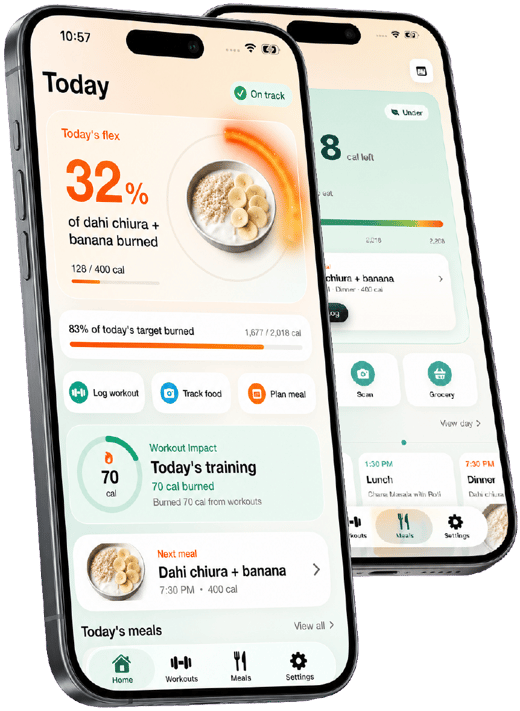
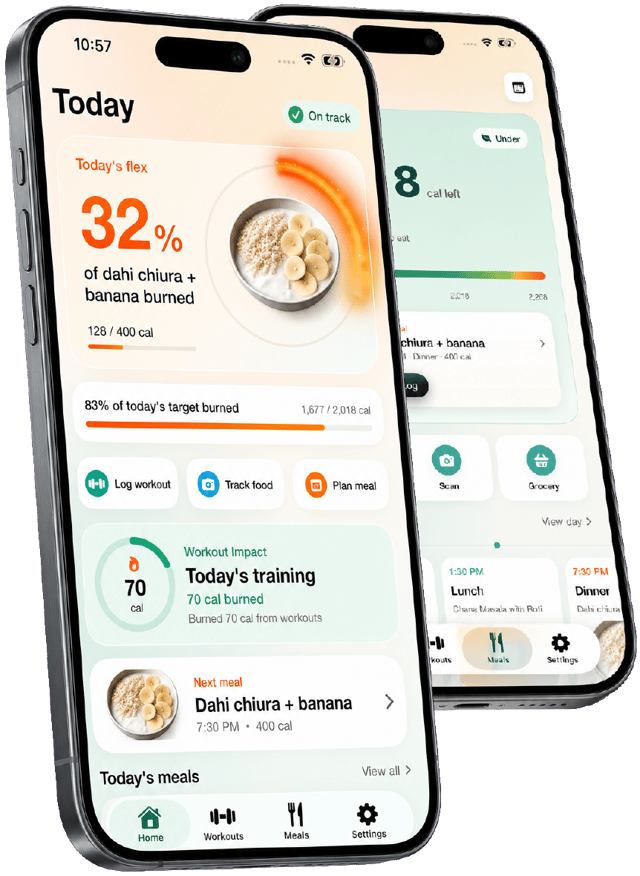
Burnplate isn't a medical device and doesn't diagnose or treat inflammatory conditions. What it does is turn an anti-inflammatory pattern into a week of real meals so eating this way doesn't require becoming a nutrition researcher.
A 7-day plan weighted toward whole, colorful food
Tell Burnplate your calorie target and preferences and it builds a week around fish, olive oil, vegetables and whole grains rather than processed defaults.
Grocery list that makes the swap easy
Every plan comes with a consolidated shopping list, so fresh produce and fish are already on hand instead of a processed option being the path of least resistance.
Photo logging catches processed food creep
Snap a meal or a label and Burnplate estimates the calories and macros, making it easier to notice how much added sugar or refined starch is actually showing up across a week.
Swap any meal, keep the day's targets
Not in the mood for stir-fry? Swap it and Burnplate keeps calories and protein in range while the anti-inflammatory pattern stays intact.
Practical guidance
Practical tips for eating anti-inflammatory
Habits that shift the overall pattern without turning every meal into a research project.
- 01 Make fish a standing habit, not an occasional treat
Two servings a week of salmon, sardines, mackerel or trout is enough to meaningfully shift omega-3 intake.
- 02 Cook with olive oil as the default
Swapping vegetable oil for olive oil in daily cooking is one of the simplest, most consistent anti-inflammatory changes.
- 03 Aim for color at every meal
Different pigments in produce carry different polyphenols — variety matters more than any single fruit or vegetable.
- 04 Cut added sugar before cutting fat
Refined sugar and refined starch have more consistent links to inflammation than dietary fat does — start there.
- 05 Use spices with a purpose
Turmeric, ginger and garlic have research behind their anti-inflammatory compounds and are easy to add to food you're already cooking.
- 06 Don't skip fiber to cut carbs
Whole grains, legumes and vegetables feed the gut bacteria tied to lower inflammation — cutting all carbs isn't the same as cutting refined ones.

Get the week planned in one tap
Build my meal plan Burnplate builds a 7-day meal plan around your calories, protein and food preferences, writes the grocery list, and lets you swap any meal you don't feel like.
Questions
Meal planner for an anti-inflammatory diet: FAQ
What is an anti-inflammatory diet plan?
It's an eating pattern that emphasizes fatty fish, olive oil, colorful fruits and vegetables, whole grains and fiber, while limiting processed food, refined sugar and fried food. It's closer to a Mediterranean-style pattern than a strict elimination diet.
What foods should I eat on an anti-inflammatory diet?
Fatty fish like salmon and sardines, olive oil, berries, leafy greens, nuts, legumes, whole grains and spices like turmeric and ginger are the core foods. The goal is variety and color rather than any single superfood doing all the work.
What foods cause inflammation?
Added sugar, refined starches like white bread, fried food, processed and cured meats, and excess vegetable oil consumption have the most consistent links to elevated inflammatory markers across research. Occasional servings aren't the concern — a diet built mostly around them is.
Can an anti-inflammatory diet help with joint pain?
Many people report less joint discomfort on an anti-inflammatory pattern, and the omega-3s in fatty fish have research behind reducing inflammatory markers relevant to joint conditions. It's a supportive approach, not a replacement for medical treatment of diagnosed conditions like arthritis.
Is the anti-inflammatory diet the same as keto or paleo?
No. It's closer to a Mediterranean-style pattern and doesn't require cutting carbs or grains — whole grains and legumes are encouraged for their fiber. The focus is fat quality, sugar reduction and food quality rather than a specific macro ratio.
Can Burnplate build an anti-inflammatory meal plan?
Burnplate builds a 7-day plan around your calorie target that you can steer toward fish, olive oil, produce and whole grains, with a grocery list and easy swaps. It isn't a medical device and doesn't diagnose or treat inflammatory conditions.
