
1,200 calories often represents a meaningful deficit even at maintenance for a smaller or less active adult, but can be an extreme deficit for a larger or more active person — sometimes too extreme to sustain safely.
Why it's different
Why 1,200 calories isn't right for everyone
1,200 calories is a genuinely low intake for most adult men and many active women — it's closer to what a smaller-bodied, sedentary adult might use for a deficit than a general-purpose number. Understanding who it fits matters as much as what to eat on it.
90 g+ protein a day is the priority, since 1,200 calories leaves little margin for anything else
25 g+ fiber a day from vegetables, legumes and whole grains to stay full on a small budget
4-5 small meals a day tends to work better than 3 at this calorie level, for hunger control
With this little room, a meal built around refined carbs or added sugar crowds out the protein, fiber and micronutrients the day needs. Every calorie has to contribute something — protein, fiber or a meaningful vitamin or mineral.
The gap between 1,200 calories and what many adults are used to eating is large enough that hunger, not motivation, is usually what ends the attempt. Protein and fiber at every meal are what make it survivable.
Very low-calorie plans carry more risk of muscle loss, fatigue and nutrient gaps the longer they run. Most guidance treats 1,200 calories as a phase to reassess after a few weeks, not a long-term target.
What it looks like
A sample day on a 1,200 calorie meal plan
Every meal carries protein and fiber so the day stays as satisfying as 1,200 calories can reasonably be.
Example day on the plan
1,200 calories90 g+ protein25 g+ fiberunder 15 g added sugar
7:30 AM Egg white scramble3 egg whites + 1 whole egg, spinach, tomato 180 kcal
10:30 AM Greek yogurt¾ cup plain nonfat Greek yogurt, cinnamon 120 kcal
1:00 PM Chicken & veggie bowl120 g grilled chicken, big portion roasted vegetables, ½ cup rice 380 kcal
4:00 PM Apple + small handful almonds1 small apple, 10 almonds 170 kcal
7:00 PM White fish & big salad130 g white fish, large mixed salad, light vinaigrette 350 kcal
Smart swaps
Bread or crackers as filler Extra vegetables for volumeAdds bulk and fullness without spending the limited calorie budget.
Regular salad dressing Vinegar-based or light dressingSaves 100+ calories that can go toward protein instead.
Fruit juice Whole fruitSame fruit, far more fiber and fullness, for fewer effective calories.
Larger starch portion Larger protein and vegetable portionAt this calorie level, protein and fiber do more for fullness than starch does.
How Burnplate handles it
How Burnplate handles a 1,200 calorie target
Burnplate builds the plan around nutrient density and tells you honestly if 1,200 fits your numbers.
Targets calculated, not assumed
Burnplate calculates your calorie needs from your body, goal and activity level, so you can see whether 1,200 represents a reasonable deficit for you specifically or an overly aggressive one.
A 7-day plan built for nutrient density
The AI meal plan prioritizes protein and fiber-dense meals at this calorie level, with a consolidated grocery list so a tight budget doesn't also mean a complicated week.
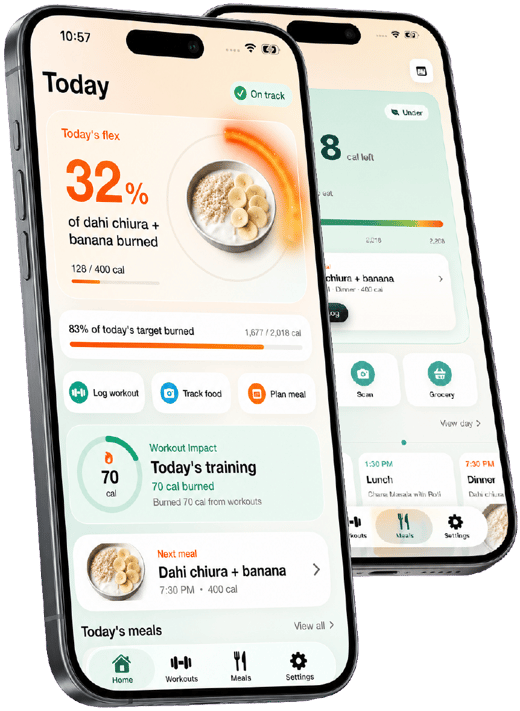
Photo logging keeps every calorie counted
At 1,200 calories, untracked bites and tastes matter more than usual — snapping a photo to log meals keeps the small budget accurate.
Daily balance shows exactly what's left
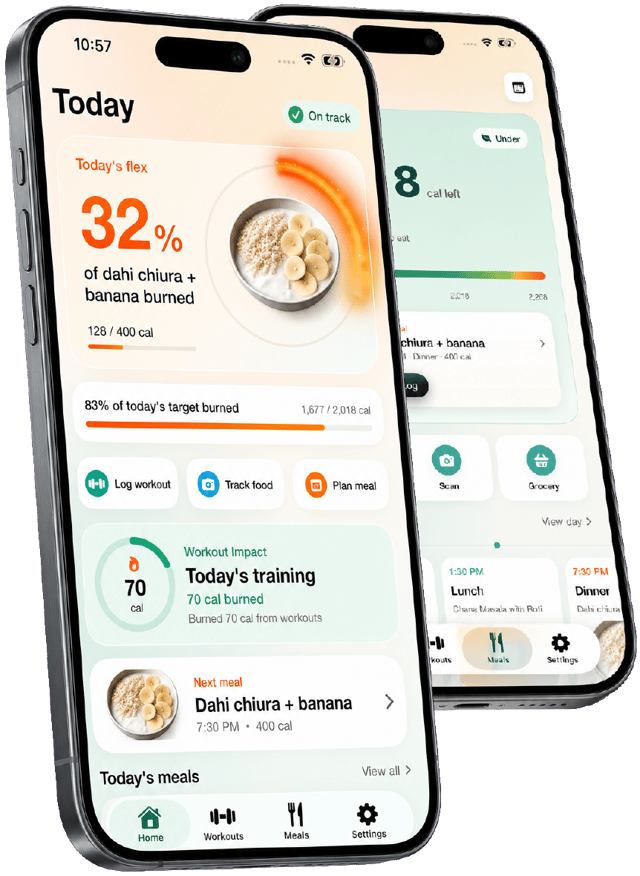
The home screen shows calories and protein remaining for the day, which matters most when the margin for error is small.
Practical guidance
Tips for making 1,200 calories work
If 1,200 calories fits your numbers, these habits make the day more sustainable.
- 01 Protein first, every meal
Build each meal around a protein source before adding anything else — it's the nutrient most likely to fall short.
- 02 Use volume to your advantage
Non-starchy vegetables add almost no calories but a lot of physical fullness — lean on them heavily.
- 03 Skip liquid calories entirely
At this budget, a 150-calorie drink is over 10% of the day gone without adding any fullness.
- 04 Reassess after 2-3 weeks
If energy, hunger or workouts are suffering, 1,200 may be too aggressive for you — check your calculated target.
- 05 Lift or do resistance work if possible
Some activity helps protect muscle at a low intake, even a couple of short sessions a week.
- 06 Don't run this indefinitely
Treat 1,200 calories as a phase, not a permanent plan, and revisit your target as your weight or goals change.

Get the week planned in one tap
Build my meal plan Burnplate builds a 7-day meal plan around your calories, protein and food preferences, writes the grocery list, and lets you swap any meal you don't feel like.
Questions
Meal planner for 1,200 calories a day: FAQ
Is 1,200 calories a day too low?
It depends on the person — 1,200 calories can be a reasonable deficit for a smaller, less active adult, but is an aggressive or even inappropriate deficit for a larger or more active one. Burnplate calculates your actual calorie needs so you can see whether 1,200 fits your numbers before using it.
What should a 1200 calorie meal plan include?
Every meal should carry protein and fiber, since there's little room for calories that don't contribute nutritionally. A typical day includes lean protein at each meal, plenty of non-starchy vegetables, and modest portions of whole grains or starch.
Can I get enough protein on 1,200 calories?
Yes, with planning — a target of 90g+ protein a day is achievable at 1,200 calories if protein is prioritized at every meal, typically using lean sources like chicken, fish, egg whites and Greek yogurt that deliver protein without a large calorie cost.
Is a 1200 calorie diet safe long-term?
Most guidance treats 1,200 calories as a short-term phase rather than a permanent plan, since sustained very-low intakes raise the risk of muscle loss, fatigue and nutrient gaps. Reassessing after a few weeks, especially as weight drops, is the safer approach.
Who should not follow a 1200 calorie meal plan?
Larger-bodied adults, very active people, pregnant or breastfeeding individuals, and anyone with a calculated calorie need well above 1,200 shouldn't use it as a default — it would represent too large a deficit. It's meant for people whose calculated needs are genuinely close to this number.
Does Burnplate build a 1200 calorie meal plan?
Burnplate can build a 7-day plan around a 1,200 calorie target with a grocery list included, but it also shows your personally calculated calorie needs first, so you're using 1,200 because it fits your numbers, not just because it's a commonly searched figure.
