Only about a quarter of sodium intake comes from the salt shaker. The rest is baked into bread, deli meat, canned soup, sauces and restaurant food — which is why a heart healthy plan is really a cooking-more plan, not a no-salt plan.
Why it's different
Why a heart healthy meal plan is different
Weight-loss plans optimize calories. A heart healthy plan has to manage four things at once — sodium, saturated fat, fiber and fat quality — because they act on blood pressure and cholesterol through different pathways, and none of them alone moves the whole picture.
<2,300 mg sodium per day is the general ceiling; 1,500 mg is tighter guidance if you have high blood pressure
<6% of daily calories from saturated fat is the AHA target — about 13 g on a 2,000 kcal diet
25–30 g fiber a day, mostly soluble, helps pull LDL cholesterol down over weeks
Swapping butter and fatty red meat for olive oil, nuts and fish lowers LDL cholesterol even at a similar total fat intake. It's the type of fat — saturated versus unsaturated — that moves the number, not just the gram count.
Soluble fiber from oats, beans, apples and barley binds cholesterol in the gut and carries it out. Most adults get well under the 25–30 g target most days, which is one reason LDL stays stubborn even on an otherwise decent diet.
Large long-term studies consistently favor whole dietary patterns — Mediterranean and DASH-style eating — over chasing one nutrient in isolation. A heart healthy plan borrows from both: more plants and fish, less processed and red meat.
What it looks like
A sample day on a heart healthy meal plan
Around 1,900 calories, sodium held near 1,800 mg, saturated fat kept low with olive oil and fish standing in for butter and red meat.
Example day on the plan
~1,900 calories<1,800 mg sodium<13 g saturated fat28 g+ fiber
7:00 AM Oats with walnuts and berries½ cup oats, 1 tbsp walnuts, ½ cup blueberries, cinnamon, unsalted 380 kcal
10:00 AM Orange and almonds1 orange, 15 unsalted almonds 170 kcal
12:30 PM Big salad with beans and olive oilMixed greens, ½ cup chickpeas, cucumber, 1 tbsp olive oil, lemon 420 kcal
3:30 PM Hummus and vegetables3 tbsp hummus, carrots, bell pepper strips 180 kcal
6:30 PM Baked salmon, quinoa, roasted vegetables140 g salmon, ½ cup quinoa, broccoli and carrots, herbs not salt 560 kcal
8:30 PM Plain Greek yogurt with berries¾ cup plain Greek yogurt, ¼ cup raspberries 150 kcal
Smart swaps
Deli sandwich Grilled chicken or bean salad on whole grainDeli meat alone can carry 500–800 mg of sodium per sandwich before any sauce.
Canned soup Homemade or low-sodium canned + fresh vegetablesA regular canned soup can hit half a day's sodium target in one bowl.
Butter on toast Avocado or olive oil-based spreadSwaps saturated fat for unsaturated without losing the satisfying mouthfeel.
Red meat 4–5x/week Fish twice a week, poultry and beans the restFatty fish supplies omega-3s directly tied to lower triglycerides and heart event risk.
How Burnplate handles it
How Burnplate plans a heart healthy week
Burnplate isn't a medical device and doesn't replace your doctor's targets for blood pressure or cholesterol. What it does is turn a heart healthy pattern into a week of meals you don't have to research from scratch.
A 7-day plan built around your calories and preferences
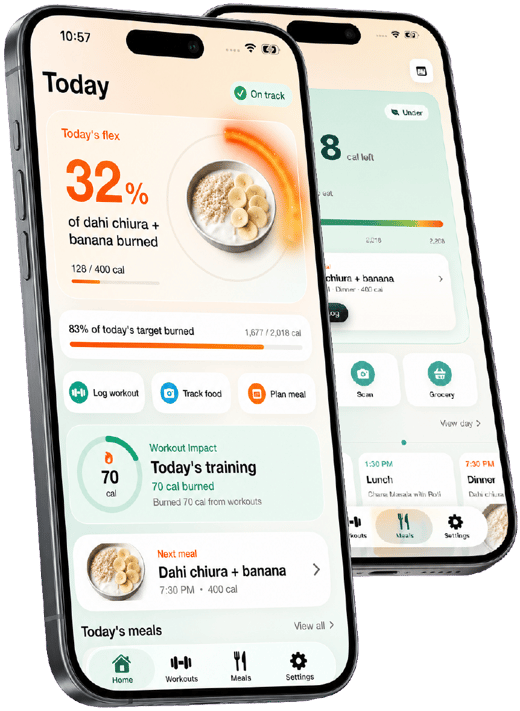
Tell Burnplate your calorie target and it builds a week weighted toward vegetables, fish, legumes and whole grains, with a grocery list that follows.
Photo logging keeps sodium honest
Snap a plate or a packaged label and Burnplate estimates the calories and macros, so restaurant meals and sauces don't quietly blow the day's sodium budget unnoticed.
Swap any meal, keep the day on track
Not in the mood for salmon? Swap it and Burnplate holds the day's calories and protein in range so the rest of the plan doesn't have to shift.
See activity connect to the day
Log a walk or a workout and Burnplate shows how much of a meal it offset — a visible nudge toward the daily movement that also helps blood pressure.
Practical guidance
Practical tips for eating heart healthy
Small habits that move sodium, fat quality and fiber without turning every meal into a project.
- 01 Cook more, sauce less
Restaurant and packaged sauces are the single biggest hidden sodium source. Herbs, citrus and vinegar add flavor without the salt load.
- 02 Read the sodium line, not just calories
A can of soup or a frozen meal can carry 700–1,200 mg of sodium in one serving — check before you decide it fits your day.
- 03 Make fish a standing appointment
Pick two nights a week for salmon, sardines, trout or mackerel and treat it as non-negotiable, not an occasional extra.
- 04 Build fiber at breakfast
Oats, berries and a spoon of ground flax at breakfast covers a third of the daily fiber target before lunch even starts.
- 05 Swap the cooking fat, not just the snacks
Olive oil instead of butter, in the pan every day, moves saturated fat intake more than skipping dessert once a week.
- 06 Watch liquid calories and sodium together
Sports drinks, some sparkling waters and bottled sauces carry more sodium than people expect — plain water stays the default.

Get the week planned in one tap
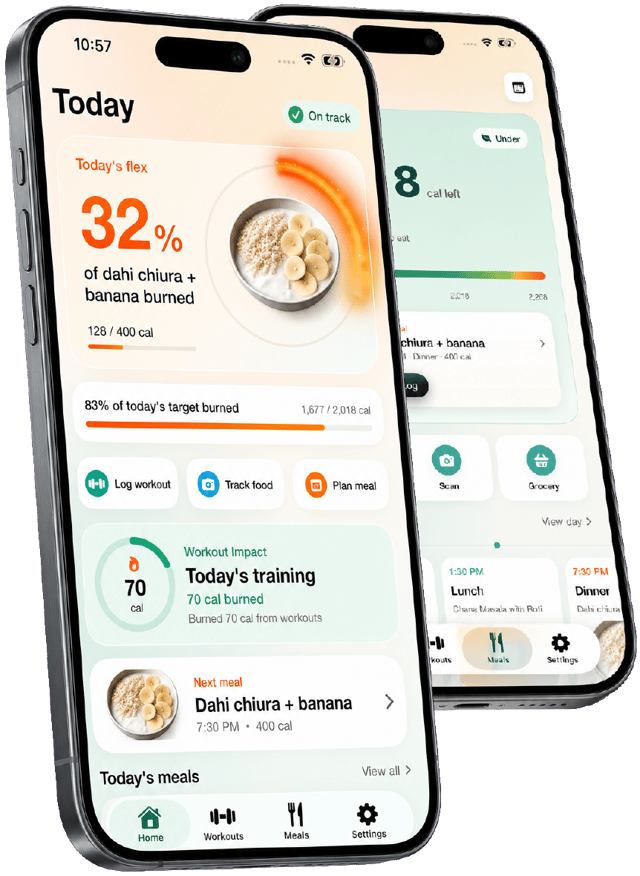
Build my meal plan Burnplate builds a 7-day meal plan around your calories, protein and food preferences, writes the grocery list, and lets you swap any meal you don't feel like.
Questions
Meal planner for heart health: FAQ
What does a heart healthy diet plan actually limit?
Mainly three things: sodium (aim under 2,300 mg a day, less if you have hypertension), saturated fat (under 6% of calories, roughly 13 g on a 2,000 kcal diet), and added sugar. It doesn't require eliminating fat, carbs or any single food group.
How much sodium should I eat a day for heart health?
The general ceiling is 2,300 mg a day — about a teaspoon of salt including everything in packaged and restaurant food, not just the shaker. If you have high blood pressure, many guidelines suggest closer to 1,500 mg. Most of that reduction comes from cooking more and relying less on processed food.
Is the Mediterranean diet the same as a heart healthy meal plan?
They overlap heavily — both emphasize olive oil, fish, vegetables, legumes and whole grains over red meat and processed food. A heart healthy plan is a bit more specific about sodium and saturated fat ceilings, but following a Mediterranean-style pattern gets most people there.
What foods should I limit for heart health?
Processed and cured meats, full-fat dairy and butter in large amounts, fried food, sugary drinks and heavily salted packaged food are the main targets. None need to be eliminated entirely — the goal is making them occasional rather than the daily default.
Can losing weight improve heart health even without other changes?
Yes. Losing 5–10% of body weight typically lowers blood pressure and improves triglycerides and LDL cholesterol on its own, independent of which specific foods you cut. Combining a modest calorie deficit with a heart healthy food pattern compounds both effects.
Does Burnplate track sodium and saturated fat?
Burnplate logs calories, protein, carbs and fat from photos or search, and its meal plans lean toward heart healthy ingredients by default. It isn't a medical device and doesn't replace guidance from your doctor on blood pressure or cholesterol targets.
