Turnout gear and an SCBA pack add 45–75 lb before a task even starts. Squats, carries and presses trained with some of that same relative load transfer far better than training only at bodyweight.
Why it's different
Why firefighter fitness is its own category
A firefighter's job doesn't look like a gym workout — it looks like carrying, dragging and climbing under load with no time to warm up. Training has to prepare for that specific demand, not just general fitness.
45–75 lb typical added weight of full turnout gear and SCBA that strength training should account for
3×/week a realistic strength frequency that fits around 24-hour shift rotations
8–12 min a common target for interval-style conditioning that mimics an actual fire response
Dragging hose, forcing entry and gripping tools for extended periods all depend on grip endurance, which fades faster than most other muscle groups under fatigue if it isn't trained directly.
A response can mean a sprint up stairs followed by minutes of sustained heavy work. Interval-style conditioning that mixes short maximal efforts with sustained moderate work matches that pattern better than a steady jog.
24-hour shifts followed by days off don't fit a standard weekly split. A firefighter workout plan needs a structure that works whether you're training at the station or at home.
What it looks like
A sample week for firefighter fitness
Strength, grip and interval conditioning spread across a week that can flex around a 24-hour shift schedule.
Example week
3–4 Days/week40–50 min Session lengthBeginner–intermediate LevelStation gym or home Equipment
Day 1 Loaded strength Weighted vest squat 4×8 · Sled or prowler push 4×20m · Pull-up 4×6 · Farmer carry 3×40m
Day 2 Interval conditioning Stair climb intervals 8× (1 min hard, 2 min easy) · Battle rope 4×30s
Day 3 Off or light Easy walk, mobility work, or full rest depending on shift
Day 4 Strength + grip Deadlift 4×6 · Overhead press 3×8 · Dead hang 3× max time · Plank drag or carry 3×40m
Day 5 Job-specific circuit Hose drag simulation, tire flip or sled push, stair climb with weighted pack — 20–25 min circuit
How Burnplate handles it
How Burnplate handles firefighter training
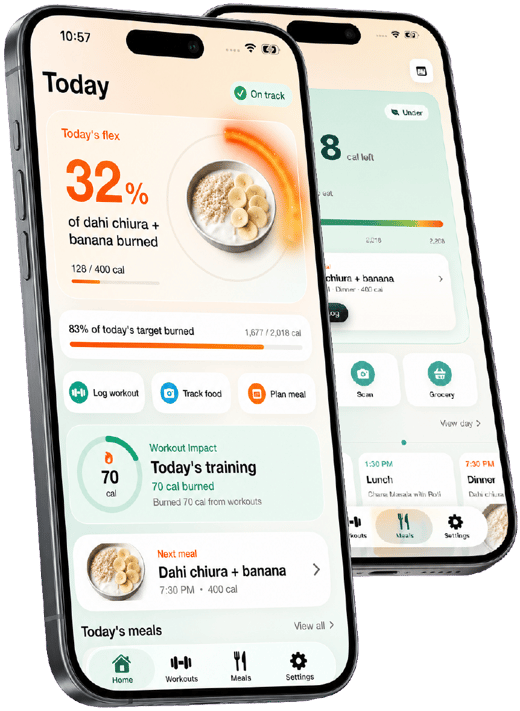
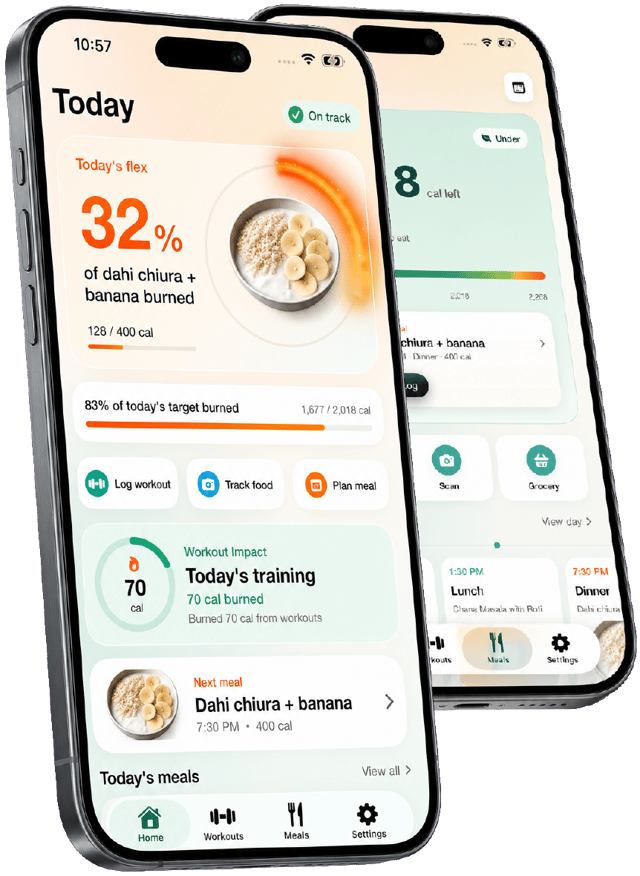
Burnplate builds around shift schedules and tracks the mix of strength and conditioning the job actually demands.
A plan that flexes around shift days
Tell Burnplate which days you're on shift and it builds a plan that fits around them, rather than assuming a standard Monday-to-Friday week.
Session logging for strength and conditioning alike
Log a heavy strength day or an interval conditioning circuit the same way, so your training history reflects the full range of what the job demands.
Calorie targets that match demanding shifts
Physically demanding shifts and heavy training days both raise calorie needs. Burnplate adjusts your daily target so you're not underfueling before a shift.
The burn bar reflects real shift activity
Steps and activity from an active shift count toward your day, so the burn bar shows an honest picture instead of only counting gym time.
Practical guidance
Tips for training around the firefighter schedule
Practical guidance for building strength and conditioning without fighting a 24-hour shift rotation.
- 01 Train grip directly, not as an afterthought
Dead hangs, farmer carries and thick-grip work build the grip endurance that hose drags and forcible entry depend on.
- 02 Practice loaded movement, not just loaded lifting
Carrying, dragging and climbing under a weighted vest or pack builds job-specific strength that a barbell alone doesn't fully cover.
- 03 Keep a short station-gym session ready
A 20-minute circuit of bodyweight and light equipment work covers the basics on shift days when a full session isn't realistic.
- 04 Recover deliberately after a hard call
A physically demanding response is itself a training stress — treat the following training session as optional or lighter, not mandatory.
- 05 Rotate conditioning intensity across the week
Alternating a hard interval day with an easier one prevents accumulated fatigue from blunting strength sessions.
- 06 Hydrate and fuel before predictable high-demand shifts
Eating and hydrating well ahead of a shift you know will be demanding supports performance far more than trying to catch up afterward.

Build the plan around your week
Build my workout plan Tell Burnplate your days, equipment and level and it builds a progressive workout plan, logs every session, and connects what you burn to what you eat.
Questions
Workout planner for firefighters: FAQ
What's a good firefighter workout for building job-specific strength?
A mix of loaded squats, carries, drags and pulling movements trained with added weight — a vest or sled — builds strength that transfers to working in full gear. Straight bodyweight training alone misses the loaded-carry demand of the job.
How important is grip strength for firefighters?
Very. Dragging hose, forcing entry and holding tools for extended periods all depend on grip endurance, which is easy to overlook in a standard strength program built around bigger lifts alone.
What conditioning should firefighters do?
Interval-style conditioning — short bursts of hard effort followed by recovery, repeated over 8–12 minutes — mirrors the stop-start intensity of an actual response better than steady-state cardio alone.
How do I train around 24-hour shifts?
Plan heavier strength and longer conditioning sessions for days off, and keep on-shift training shorter and simpler — a 20–30 minute station-gym circuit maintains consistency without requiring a full workout.
Do firefighters need to train with weighted vests?
It's not required, but training some strength and conditioning work under added load helps prepare the body for the 45–75 lb of turnout gear and SCBA carried on calls, and it's a reasonable progression once base strength is established.
How many days a week should a firefighter train?
Three to four days a week covering strength, grip and conditioning is realistic for most shift schedules, with intensity and session length adjusted around on-shift versus off-shift days.
