
Skeletal muscle absorbs most of the glucose from a meal. Building and using muscle through resistance training improves how well the body handles carbs, often before any change shows up on the scale.
Why it's different
Why insulin resistance needs its own approach
Insulin resistance can show up well before any blood sugar test flags it, and it responds to a slightly different set of levers than a diabetes diagnosis does — muscle and meal frequency matter as much as what's on the plate.
2×/week+ resistance training is linked with meaningfully better insulin sensitivity, independent of weight change
25-38 g fiber a day is the range shown to improve insulin-sensitivity markers in most adults
3-4 hrs between meals lets insulin levels fall between eating windows instead of staying elevated all day
Frequent small snacks all day, even low-calorie ones, can keep insulin from ever dropping between meals. More complete, less frequent meals give it room to fall.
Fat around the abdominal organs is more metabolically active than fat elsewhere and more strongly linked to insulin resistance, which is why waist measurements often track it better than weight alone.
Fiber, protein and fat slow digestion and blunt the insulin response to the same carb load, so pairing a carb with those usually beats cutting it entirely.
What it looks like
A sample day for insulin resistance
Four complete meals with protein and fiber at each, spaced a few hours apart, instead of frequent small snacks that keep insulin elevated all day.
Example day on the plan
set to your goal calories1.2-1.6 g/kg protein / day30 g+ fiber / day3-4 hours meal spacing
7:00 AM Eggs, avocado and greens on toast2 eggs, ¼ avocado, sauteed spinach, whole-grain toast 460 kcal
12:00 PM Steak or tempeh salad with chickpeasmixed greens, chickpeas, olive oil dressing 540 kcal
3:30 PM Greek yogurt with walnuts and berries¾ cup Greek yogurt, small handful walnuts, berries 260 kcal
6:30 PM Salmon, broccoli and farro5 oz salmon, roasted broccoli, ½ cup farro 500 kcal
Smart swaps
Snacking throughout the afternoon One complete afternoon snack with proteinKeeps insulin from staying elevated all day from repeated small hits
White bread or bagels Whole-grain or sprouted breadSlower digestion means a smaller, slower insulin response to the same meal
Cardio only Adding two resistance sessions a weekMuscle built through strength training absorbs more glucose at rest, not just during exercise
Fruit juice or smoothies Whole fruitKeeps the fiber intact, which slows sugar absorption and blunts the insulin spike
How Burnplate handles it
How Burnplate supports an insulin-resistance plan
Diet and training both move insulin sensitivity, so Burnplate keeps both visible on the same screen instead of tracking food alone.
Protein and calorie targets built around your body
Burnplate sets a personalized calorie and protein target from your stats and goal, supporting the higher protein intake that helps with insulin sensitivity.
A 7-day plan with fewer, fuller meals
The AI meal plan builds complete meals around your preferences instead of a grazing pattern, with a grocery list attached.
A workout plan that includes strength
The workout builder creates a progressive plan around your days per week and equipment, so resistance training becomes routine rather than an afterthought.
See training and food together
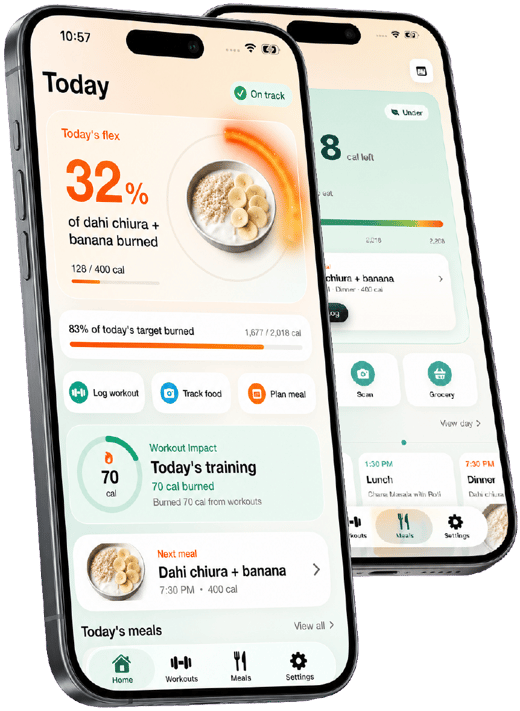
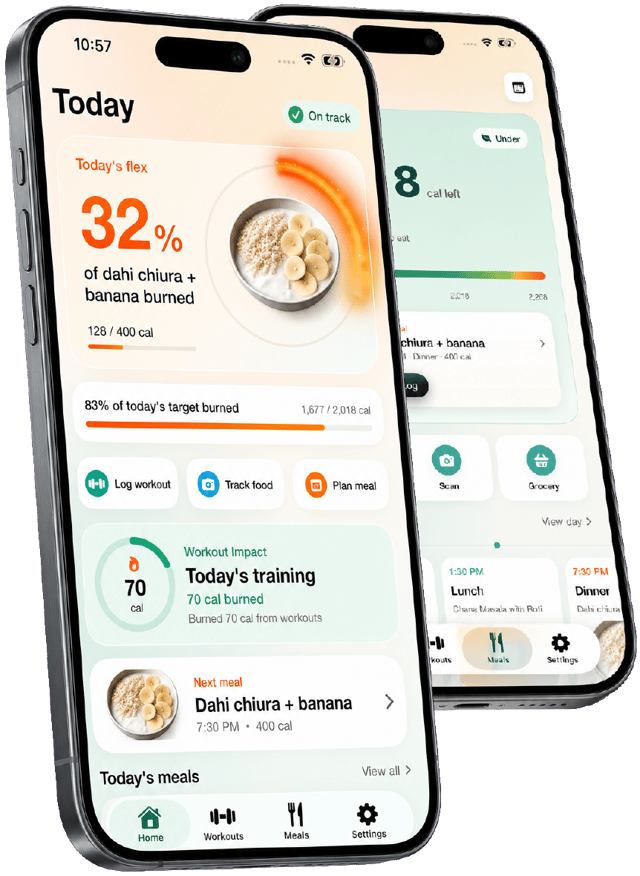
The burn bar connects a strength session or walk to the day's meals, making the exercise side of insulin sensitivity as visible as the food side.
Practical guidance
Tips that help with insulin resistance
Small habits that support both sides of the equation: meal structure and muscle.
- 01 Add two strength sessions a week
Even short sessions targeting major muscle groups measurably improve how the body clears glucose.
- 02 Stop grazing between meals
Give 3-4 hours between eating so insulin has room to drop before the next meal.
- 03 Walk after your largest meal
A 10-15 minute walk after eating lowers the glucose and insulin response to that meal.
- 04 Prioritize protein at breakfast
A protein-forward first meal reduces hunger and snacking later in the day for most people.
- 05 Watch waist size, not just weight
Waist circumference tracks visceral fat more directly than the scale and is a useful side metric to watch.
- 06 Treat sleep as part of the plan
Even a few nights of short sleep measurably worsens insulin sensitivity in healthy adults.

Get the week planned in one tap
Build my meal plan Burnplate builds a 7-day meal plan around your calories, protein and food preferences, writes the grocery list, and lets you swap any meal you don't feel like.
Questions
Meal planner for insulin resistance: FAQ
What is the best diet for insulin resistance?
No single named diet is required — patterns that consistently help include more fiber, more protein, fewer refined carbs and less frequent snacking. Mediterranean-style eating is the most-studied version of this approach.
What should a meal plan for insulin resistance look like?
Fewer, more complete meals with a protein and fiber source at each, spaced a few hours apart, rather than constant small snacks that keep insulin elevated.
Can insulin resistance be reversed?
For many people, yes — combining resistance training, adequate protein and fiber, and modest weight loss if relevant can meaningfully improve insulin sensitivity, sometimes within weeks of consistent training.
Does exercise matter more than diet for insulin resistance?
They work together — resistance training improves how muscle uses glucose independent of diet, while diet changes reduce how much insulin a meal demands in the first place. Neither replaces the other.
Is intermittent fasting good for insulin resistance?
It can help some people, mainly by naturally reducing grazing and snack frequency, but it isn't required — the same benefit comes from spacing regular meals a few hours apart without a formal fasting window.
How do I know if I have insulin resistance?
It's typically diagnosed through blood tests your doctor orders, such as fasting insulin or glucose, HOMA-IR, or an A1c test — not something to self-diagnose from symptoms alone.
