Scaling down isn't just halving — a can of beans or a bunch of herbs doesn't divide cleanly, which most meal plans don't account for.
Why it's different
Why cooking for one needs its own plan
A meal plan built for a household doesn't just need dividing by four. Ingredients don't scale down cleanly, motivation to cook drops without an audience, and food waste — not effort — is usually the real cost of cooking solo.
1 serving every recipe and grocery list scaled to a single portion, not a family of four
30 min typical prep time worth repeating for solo meals cooked a few times a week
3–4 meals the number most solo cooks rotate through weekly to avoid decision fatigue and waste
A bag of spinach or a bunch of cilantro bought for one recipe and used once is where solo cooking budgets actually leak.
Eating the same 3–4 solid meals on repeat is far more sustainable solo than cooking something new every night, and it makes hitting consistent calorie and protein targets easier.
Cooking for yourself lacks the built-in accountability of cooking for a family; a plan that removes decisions removes the main source of friction.
What it looks like
A sample day cooking for one
Around 2,000 calories built from three repeatable meals plus a snack, with ingredients chosen to get used up across the week, not left to rot.
Example day on the plan
~2,000 Calories100–110 g Protein3 repeatable Recipes1/week Grocery trips
7:30 AM Egg and vegetable scrambleEggs, half a bell pepper, spinach 420 kcal
12:30 PM Big grain bowlRice, chickpeas, roasted vegetables, tahini 560 kcal
3:30 PM Greek yogurt and nutsPlain Greek yogurt, a handful of almonds 260 kcal
7:00 PM Sheet-pan chicken and vegetablesChicken thighs, potatoes, broccoli, olive oil 760 kcal
Smart swaps
Fresh herbs or veg bought for one recipe Frozen versions or a smaller pre-cut packFrozen garlic, ginger, herbs and vegetables portion out for one without the rest going bad in the crisper drawer
A new recipe most nights One sheet-pan or one-pot meal, doubled and repeatedCooking once and eating the results twice cuts both prep time and the dish pile
A full recipe's worth of rice or pasta Cooking the base in bulk, portioning for 3–4 mealsGrains and roasted vegetables hold well for days, so batching just the base saves the most time
Takeout on nights you don't feel like cooking A frozen backup meal built to your own targetsKeeps one no-effort option ready that still fits the day's numbers instead of derailing it
How Burnplate handles it
How Burnplate plans a week for one
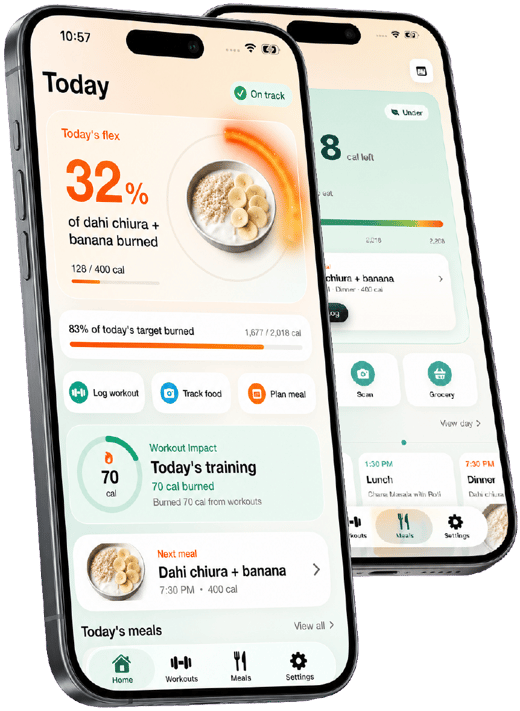
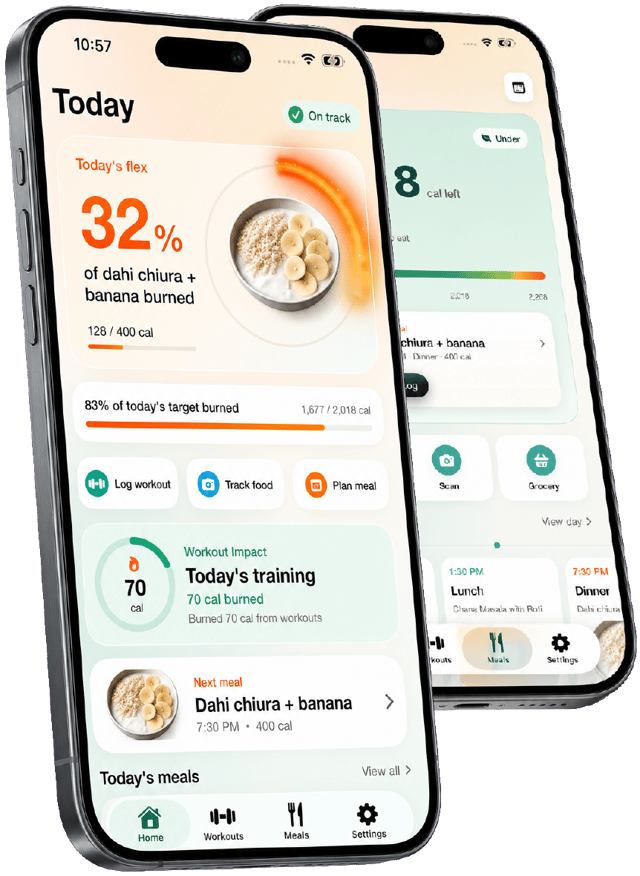
Burnplate scales the whole plan to one person, not a household you're not feeding.
Grocery lists sized for one, not four
The AI meal plan builds a week's list around your own targets, so you're not buying family-sized quantities you'll never finish.
Photo logging that's fast for solo meals
Snap and confirm a plate — no need to manually weigh out a single-serving recipe.
A 7-day plan built around repeatable meals
Swap any single meal and Burnplate keeps the day's calories and protein in range, so a small rotation still adds up correctly.
See what a solo workout burned
The burn bar connects a home workout or a walk to the day's food without needing anyone else's numbers mixed in.
Practical guidance
Meal-planning tips for cooking solo
Habits that cut both prep time and food waste for a household of one.
- 01 Pick 3–4 meals and repeat them
Rotating a small set of proven meals beats reinventing dinner nightly, both for time and for hitting targets.
- 02 Batch the base, not the whole meal
Cook a big tray of roasted vegetables or a pot of grains once, then combine differently through the week.
- 03 Buy frozen for small-quantity items
Garlic, ginger, herbs, berries and some vegetables portion out for one far better frozen.
- 04 Keep one no-effort backup meal ready
A frozen or shelf-stable option built to your targets prevents a rough day from turning into takeout by default.
- 05 Freeze what doesn't scale down well
Soups, chilis and casseroles usually taste the same reheated and solve two dinners for one cooking session.
- 06 Shop with the week already decided
Solo grocery trips without a plan are where both waste and impulse spending happen.

Get the week planned in one tap
Build my meal plan Burnplate builds a 7-day meal plan around your calories, protein and food preferences, writes the grocery list, and lets you swap any meal you don't feel like.
Questions
Meal planner for one person: FAQ
How do you meal plan for just one person?
Pick 3 to 4 repeatable meals for the week instead of a new recipe every night, build a grocery list from those specific meals, and batch-cook shared components like grains or roasted vegetables that combine differently across meals.
How do you avoid food waste cooking for one?
Buy small-quantity ingredients like herbs and aromatics frozen instead of fresh, repeat a short rotation of meals so ingredients get fully used, and freeze half of anything — soups, chilis, casseroles — that doesn't scale down cleanly.
Can a meal planner app scale recipes down to one serving?
Burnplate's AI meal plan builds around your own calorie and protein targets rather than a fixed household size, and its grocery list reflects a single person's week rather than a family-sized shopping trip.
What's a realistic weekly grocery list for one person?
A short list built around 3 to 4 repeatable meals — a protein source, a grain or starch, a couple of vegetables, and snacks — usually covers a week without leftover ingredients going unused.
Is meal prepping worth it for just one person?
Yes, especially batching a base component like grains, roasted vegetables or a protein rather than fully separate meals. It cuts weeknight prep time without requiring the large-batch cooking session a family meal prep would.
How many different meals should I plan for a week alone?
Most solo cooks do well with 3 to 4 repeatable meals rather than 7 different ones. Fewer recipes means less food waste, a shorter grocery list, and less decision fatigue on a weeknight.
