Glute max drives hip extension, glute medius and minimus handle abduction and rotation. A complete plan trains extension (hip thrusts, deadlifts), abduction (lateral band walks, hip abduction) and single-leg stability together, not just one.
Why it's different
Why glute training needs more than squats and band walks
The glutes are three muscles with different jobs, and a plan that only trains one movement pattern only reaches part of that.
10–15 reps per set is a common hypertrophy-focused range for glute-specific exercises
2–3×/week training frequency for glutes fits well within a normal lower-body training split
3–4 exercises per session targeting extension, abduction and single-leg work covers the full muscle group
Research measuring muscle activation consistently shows hip thrust variations produce very high glute engagement — often higher than squats alone — which is why they're typically the centerpiece of a dedicated glute program.
Light band work has a role as a warm-up, but building the muscle over time comes from progressively adding weight to real, loadable exercises — the same principle that drives growth anywhere else in the body.
The glutes stabilize the pelvis and hips during walking, running and lifting. Underdeveloped glutes are commonly linked to lower back strain and knee tracking issues, so this training pays off well beyond how the muscle looks.
What it looks like
A sample glute-focused week
Two dedicated sessions covering hip extension, abduction and unilateral work, built around progressively loading the hip thrust.
Example week
2–3 Days/week35–45 min Session lengthAny LevelDumbbells, bands or gym Equipment
Monday Glutes A Hip thrust 4x10 · Romanian deadlift 3x10 · Cable or band kickback 3x12/side · Lateral band walk 3x15 steps
Tuesday Rest or cardio 20–30 min easy cardio or full rest
Wednesday Glutes B Bulgarian split squat 3x10/leg · Sumo squat 3x10 · Hip abduction machine or band 3x15 · Glute bridge march 3x10
Thursday Rest Full rest
Friday Glutes A or full-body repeat Hip thrust 4x10 · Step-up 3x10/leg · Cable kickback 3x12/side · Lateral band walk 3x15 steps
Saturday Optional cardio 20–30 min bike, walk or incline treadmill
Sunday Rest Full rest
How Burnplate handles it
How Burnplate supports glute training
Burnplate programs the exercise variety a complete glute plan needs and tracks the load that actually builds it.
A plan covering all three glute muscles
Burnplate's workout builder includes hip-extension, abduction and unilateral exercises in your glute-focused sessions, matched to your equipment, rather than defaulting to squats alone.
Hip thrust load tracked session to session
Workout history logs your hip thrust and other glute-exercise weights over time, so you can see the load actually climbing rather than guessing.
Calorie and protein targets for the training volume
Burnplate sets calorie and protein targets from your body and goal, supporting the recovery that regular glute-focused training sessions require.
The burn bar shows each session's payoff
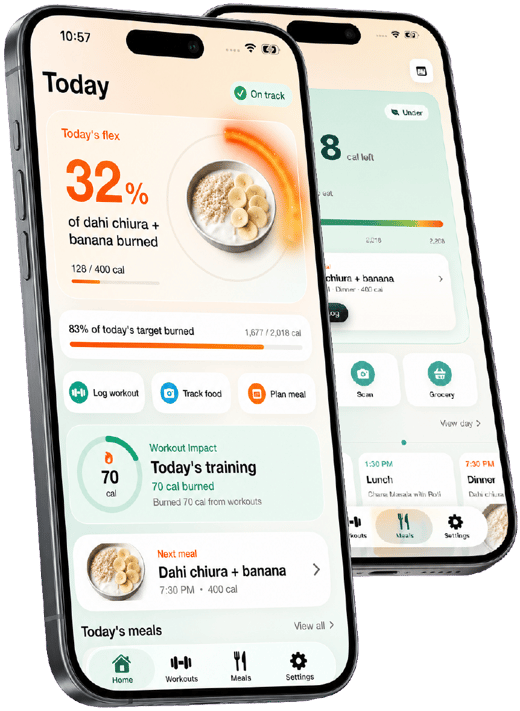
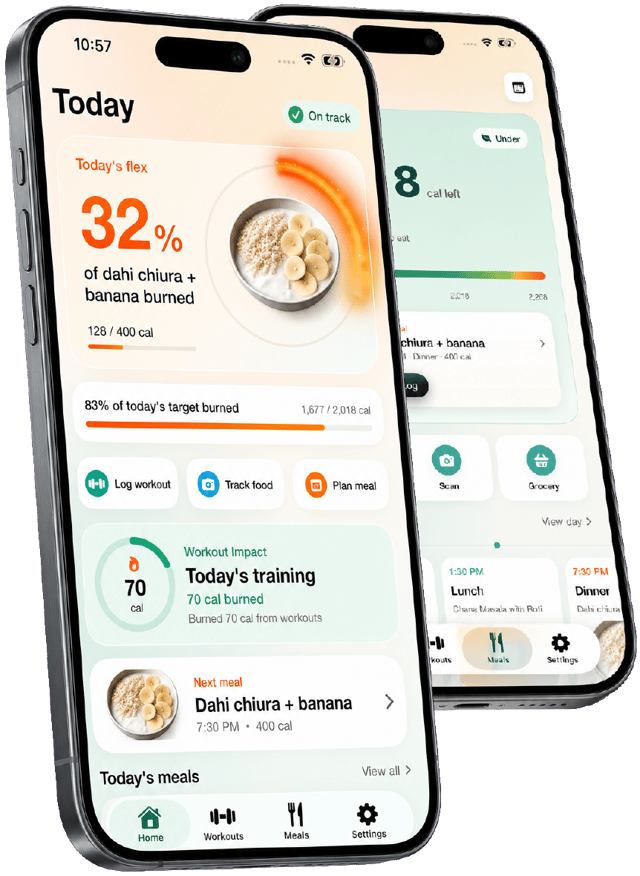
After a glute session, Burnplate shows what percentage of a meal that workout burned off, connecting the training to what's on your plate.
Practical guidance
Tips for training glutes effectively
What separates steady glute growth from a lot of band walks with little to show for it.
- 01 Prioritize hip thrusts over squats alone
Hip thrusts consistently show higher glute activation than squats — make them the centerpiece, not an afterthought.
- 02 Don't rely on bands as the main stimulus
Light resistance bands are useful for warming up and activation, but real growth needs progressively heavier, loadable exercises.
- 03 Chase progressive overload, not burnout
Adding weight or reps over time beats chasing a "burn" feeling with the same light load every session.
- 04 Train all three angles
Hip extension, abduction and single-leg work each reach a slightly different part of the glute complex — include all three across the week.
- 05 Rest 48 hours between heavy sessions
The glutes recover like any other major muscle group — back-to-back heavy sessions limit how much you can progress.
- 06 Support growth with enough protein
Like any muscle-building goal, adequate protein intake is part of what turns the training into visible results.

Build the plan around your week
Build my workout plan Tell Burnplate your days, equipment and level and it builds a progressive workout plan, logs every session, and connects what you burn to what you eat.
Questions
Workout planner for glutes: FAQ
What is the best exercise for glutes?
Hip thrusts and their variations consistently show strong glute muscle activation in research and are typically the centerpiece of a dedicated glute program, supported by hip-hinge movements like Romanian deadlifts and abduction work for the smaller glute muscles.
How often should you train glutes to grow them?
Two to three sessions a week, allowing at least 48 hours of recovery between heavy sessions, is a solid frequency for glute growth — similar to the recovery needs of other major muscle groups.
Do squats alone build glutes?
Squats train the glutes to some degree, especially at greater depth, but hip-extension-focused exercises like hip thrusts and Romanian deadlifts generally produce higher glute activation. A plan combining both trains the muscle more completely than squats alone.
How long does it take to see glute growth?
With consistent progressive loading two to three times a week, most people notice strength improvements within a few weeks and visible size changes over roughly 8–12 weeks, similar to muscle-building timelines elsewhere in the body.
Can you build glutes at home?
Yes, with dumbbells, resistance bands or even bodyweight variations of hip thrusts, step-ups and split squats. Progress may be more limited long-term without heavier loading options, but meaningful growth is achievable at home, especially early on.
