
Any calorie deficit puts some pressure on muscle tissue, and the risk climbs as the deficit gets larger. A smaller 300-500 kcal deficit, rather than an aggressive one, is what most sports-nutrition guidance recommends for people trying to stay lean and strong.
Why it's different
Why cutting needs a different plan than 'just eat less'
A generic weight-loss deficit optimizes for the fastest safe fat loss. A cutting phase for someone who's been training has an extra constraint: protect the muscle that took months to build, and keep enough performance to finish the training block strong.
300-500 kcal daily deficit is smaller than a typical weight-loss cut, to limit muscle loss
2.0-2.4g protein per kg of body weight — higher than bulking, since a deficit risks muscle loss
1-2% of body weight/week is a cutting pace lifters can sustain without losing strength
Higher protein — often 2.0-2.4 g/kg, above typical bulking levels — is one of the most consistent findings in the research on preserving muscle during a deficit. It's the single biggest lever a cutting meal plan has.
Dropping training volume and intensity during a cut removes the signal that tells your body to keep the muscle. Keeping lifts heavy, even as reps or sets are trimmed for recovery, matters more than most people expect.
A higher-calorie day every 1-2 weeks, or a full diet break every 6-10 weeks, can restore training performance and mental energy without meaningfully slowing the cut's overall progress.
What it looks like
A sample day on a cutting meal plan
For a lifter with roughly 2,600 maintenance calories, a 400 kcal deficit lands the day around 2,200 calories, with protein pushed high to protect muscle through the cut.
Example day on the plan
~2,200 calories175 g+ protein180 g+ carbs30 g+ fiber
7:00 AM Egg whites, oats & berries5 egg whites + 1 whole egg, ½ cup oats, berries 380 kcal
11:00 AM Protein shake1 scoop protein powder, water or almond milk 150 kcal
1:00 PM Chicken & big veg bowl180 g chicken breast, mixed roasted vegetables, ½ cup rice 480 kcal
4:30 PM (pre-lift) Rice cakes + turkey2 rice cakes, 60 g sliced turkey 220 kcal
7:30 PM Lean beef & salad160 g lean beef, big mixed salad, olive oil dressing 480 kcal
9:00 PM Cottage cheese1 cup cottage cheese 180 kcal
Smart swaps
Two large meals Five or six smaller onesKeeps protein synthesis triggered throughout the day and makes hunger easier to manage.
Carbs spread evenly Carbs concentrated pre/post-liftPreserves training performance where it matters most while the rest of the day stays lean.
Cutting fat too aggressively Fat around 20-25% of caloriesVery low fat during a cut can affect hormones and doesn't meaningfully speed fat loss.
No planned refeed One higher-calorie day every 1-2 weeksRestores glycogen and energy for training without derailing the week's overall deficit.
How Burnplate handles it
How Burnplate manages a cutting phase
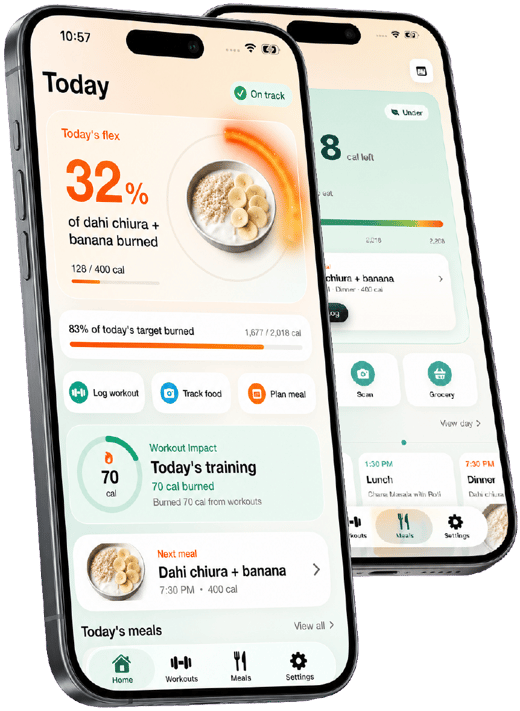
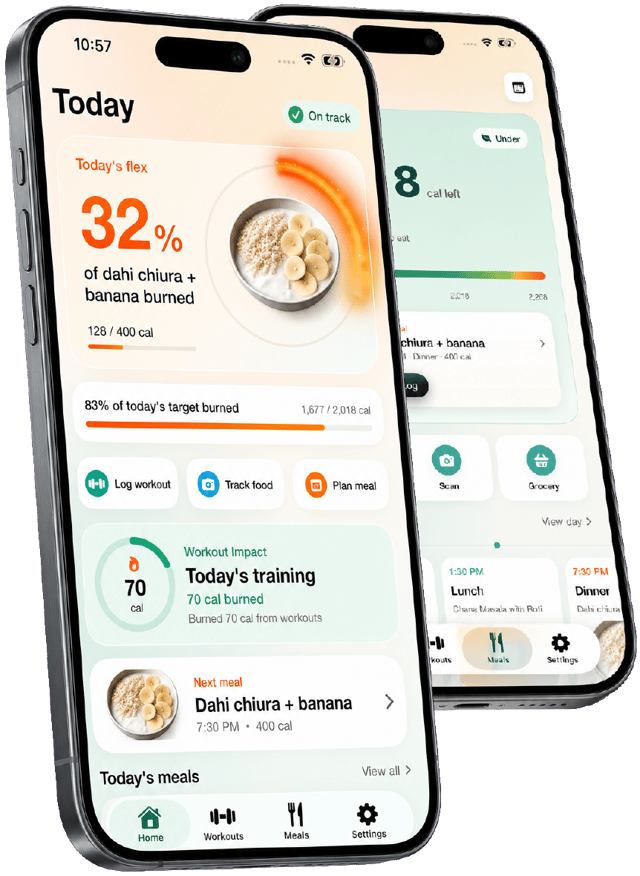
Burnplate sets a muscle-protective deficit and keeps the meal plan tied to your training week.
A deficit sized to protect muscle
Burnplate calculates maintenance calories from your stats and sets a moderate 300-500 kcal deficit rather than an aggressive one, aiming for a sustainable weekly loss rate.
Protein target raised for cutting
Burnplate sets your protein target higher than a bulking phase would use, in the 2.0-2.4 g/kg range research associates with preserving muscle in a deficit.
A 7-day plan with training-day carbs
The AI meal plan builds a week of meals hitting your calorie and protein targets, with a consolidated grocery list, and you can swap meals while keeping the day's numbers in range.
Workout log keeps performance visible
Logging sets and reps through the cut shows whether strength is holding — the clearest sign the deficit is sized correctly and muscle is being preserved.
Practical guidance
Cutting meal-planning tips that protect strength
The details that separate a cut where you keep your muscle from one where you just get smaller.
- 01 Don't cut training volume too fast
Trim slightly if recovery demands it, but keep training intensity high to signal your body to keep the muscle.
- 02 Prioritize protein over everything else
If a day falls short on calories, protect protein first — it's what a cutting deficit is most likely to cost you.
- 03 Plan a refeed or diet break
A higher-calorie day every 1-2 weeks, or a full week at maintenance every couple of months, protects long-term adherence.
- 04 Track strength, not just the scale
Losing weight while your main lifts hold steady is a better sign of a well-run cut than the scale number alone.
- 05 Keep fiber high to manage hunger
30+ grams of fiber a day, from vegetables and whole grains, helps a smaller deficit feel more sustainable.
- 06 Sleep protects the cut, not just food
Poor sleep increases hunger and makes muscle loss more likely at any given deficit size.

Get the week planned in one tap
Build my meal plan Burnplate builds a 7-day meal plan around your calories, protein and food preferences, writes the grocery list, and lets you swap any meal you don't feel like.
Questions
Meal planner for cutting: FAQ
What is the best meal plan for cutting?
One built on a moderate 300-500 kcal deficit with protein raised to 2.0-2.4 g/kg of body weight, and carbs concentrated around training sessions to protect performance. This combination is what allows fat loss while keeping as much muscle as possible.
How is a cutting meal plan different from a weight-loss meal plan?
A cutting plan uses a smaller deficit and noticeably higher protein than a typical weight-loss plan, because the priority is preserving muscle built during training, not just losing weight as fast as possible. Training intensity is also kept higher through the cut.
How much protein do I need while cutting?
Aim for 2.0-2.4 g per kg of body weight, higher than the 1.6-2.2 g/kg typical for a bulk or maintenance. The extra protein is one of the most effective tools for limiting muscle loss while you're in a calorie deficit.
Will I lose strength while cutting?
Some strength dip is common, especially late in an aggressive cut, but a moderate deficit with high protein and maintained training intensity usually preserves most of your strength. A sudden, large strength drop is often a sign the deficit is too aggressive.
How fast should I cut weight?
Around 1-2% of body weight per week is a pace most trained lifters can sustain without a significant strength or muscle loss. Faster cuts are possible short-term but raise the risk of losing muscle along with fat.
Does Burnplate build a cutting meal plan automatically?
Yes. Burnplate calculates a muscle-protective deficit and a higher protein target from your stats and goal, builds a 7-day meal plan around them with a grocery list, and pairs it with your workout log so you can track strength through the cut.
