Every pound of bodyweight adds force through the knees and hips with each step. Starting with seated, supported or water-based movement avoids overloading joints before they've had time to adapt.
Why it's different
Why beginners carrying extra weight need a different starting point
A plan built for an average-weight beginner often assumes joint tolerance and cardiovascular capacity that isn't there yet. Starting lower and building consistency first — before intensity — is what makes a plan stick.
10–15 min a realistic starting session length that most beginners can sustain and build from
150 min/week the general activity target most plans build toward over 2–3 months, not week one
1.2–1.6 g/kg protein per kilogram of a reasonable target bodyweight supports muscle retention during weight loss
It's common to want to do more than the heart and lungs are currently conditioned for. Starting with short, low-intensity sessions prevents the burnout and breathlessness that make people quit in the first two weeks.
Building muscle improves the body's ability to burn calories at rest and makes daily movement easier — it's not just a tool for people who are already lean.
A program that's too ambitious for the first month gets abandoned. A program that starts small and adds 5–10% per week is unglamorous, but it's the one people are still doing three months later.
What it looks like
A sample first-month week
A three-day starting routine built around short sessions, seated or supported options, and low impact.
Example week
3 Days/week15–20 min Session lengthBeginner LevelSturdy chair, optional light dumbbells Equipment
Monday Seated and supported strength Seated chair squat (sit-to-stand) 3×8 · Seated row (band) 3×10 · Wall push-up 3×8 · Seated march 3×15 per side
Tuesday Rest or gentle walk 5–10 minute walk at a comfortable pace
Wednesday Low impact cardio Stationary bike or pool walking, 10–15 min at an easy, talkable pace
Thursday Rest Full rest day
Friday Full-body supported strength Chair squat 3×8 · Standing hip abduction (chair support) 3×10 · Wall push-up 3×8 · Seated leg extension 3×10
Saturday Optional walk 5–10 minutes, entirely optional based on how the week felt
Sunday Rest Full recovery day
How Burnplate handles it
How Burnplate supports an obese beginner's plan
Burnplate meets you at your actual starting point and adjusts the plan as you're ready for more.
A plan built around your current level, not an average
Tell Burnplate your days per week, equipment and level honestly, and it builds sessions sized to where you're starting, not where a generic plan assumes.
Calorie and protein targets set from your body
Burnplate calculates calorie and macro targets from your body, goal and activity, so the eating side supports steady, sustainable loss alongside the training.
A photo calorie counter that removes the friction
Snap a photo of a meal, confirm what it found, adjust the portion — logging food becomes fast enough to actually keep doing, which matters more than any single workout.
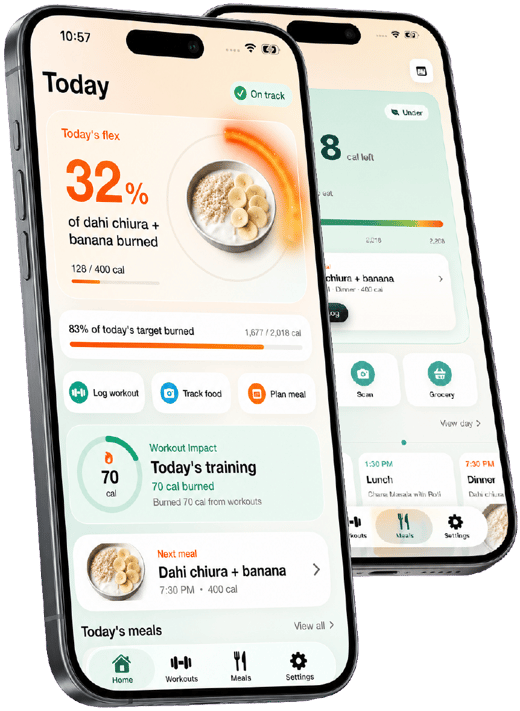
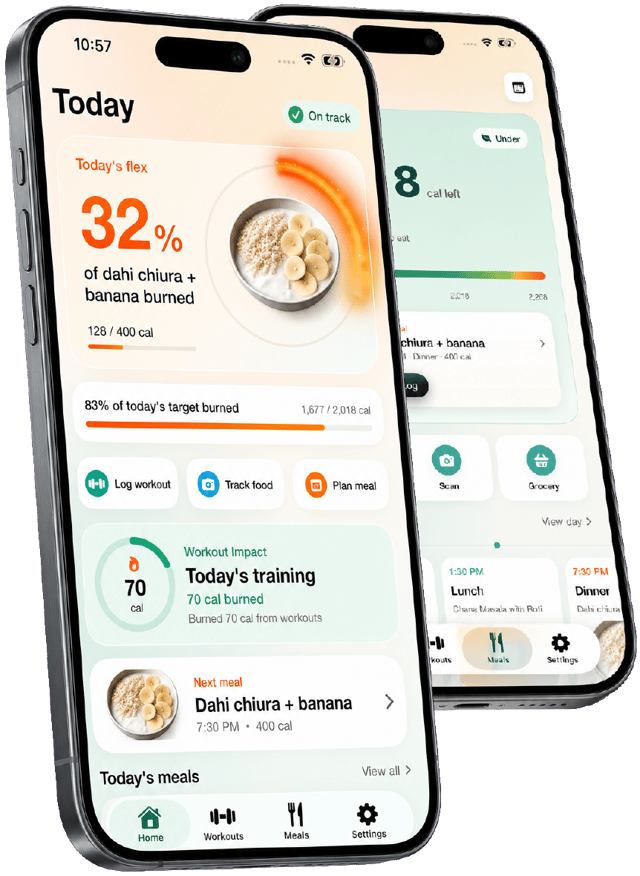
The burn bar shows every session counted
Even a 15-minute walk or a short strength session shows up as a real percentage of the day's food burned — visible proof that the smaller effort is still working.
Practical guidance
Tips for starting a workout plan carrying extra weight
Practical habits that make the first month more likely to turn into a lasting routine.
- 01 Pick a start point you'd laugh at for being too easy
If a session feels almost too simple, it's probably close to right for week one — you can always add more.
- 02 Prioritize consistency over calorie burn early on
Three easy sessions completed beat one hard session that leads to a week off from soreness or discouragement.
- 03 Use seated or supported versions without hesitation
A chair squat or seated row builds real strength — there's no less-than about starting with support.
- 04 Track food alongside movement from day one
Weight loss is driven mostly by the calorie balance; even light training paired with consistent logging outperforms hard workouts with no food awareness.
- 05 Expect week two to feel harder than week one
Initial motivation often dips around day 10–14 — planning for it (not just hoping to power through) helps.
- 06 Get medical clearance if you have other health conditions
A quick check-in with a doctor before starting is worthwhile if you have joint pain, heart conditions or haven't exercised in years.

Build the plan around your week
Build my workout plan Tell Burnplate your days, equipment and level and it builds a progressive workout plan, logs every session, and connects what you burn to what you eat.
Questions
Workout planner for obese beginners: FAQ
What is a good workout plan for obese beginners?
A good starting plan uses short sessions (10–20 minutes), low-impact or seated exercises, and three days a week rather than daily training. The goal in month one is building a habit that survives, not maximizing calorie burn in any single workout.
How should an obese beginner start exercising?
Start with low-impact options like walking, stationary cycling, pool exercise or seated strength moves, at a pace where you could hold a conversation. Add duration before intensity, and expect to spend the first few weeks simply building the habit of showing up.
Is walking enough exercise to lose weight?
Walking alone can support weight loss, especially combined with a calorie deficit, but adding two to three short strength sessions a week helps preserve muscle during weight loss and makes daily activities easier over time.
How many calories should I eat while starting a workout plan?
That depends on your body, goal and activity level — there's no universal number. A moderate deficit (roughly 300–500 kcal below maintenance) is a common, sustainable starting point; a bigger deficit isn't necessarily better and is harder to stick with.
What if joint pain makes exercise hard when starting out?
Low-impact options — swimming, stationary cycling, seated strength exercises — put much less stress through the joints than walking or standing exercises while still building fitness. If pain persists, a doctor or physical therapist can help identify a safe starting point.
Can Burnplate build a workout plan for an obese beginner?
Yes. Tell Burnplate your days per week, equipment and current level, and it builds sessions sized to your actual starting point, plus calorie and protein targets from your body and goal to support the eating side.
