
Unlike keto, there's no specific carb ceiling you need to cross for low carb to work. Whether you land at 60 g or 120 g a day, you're still getting the core benefits — steadier blood sugar and appetite — without keto's stricter math.
Why it's different
Why a low-carb meal plan is different
Low carb sits in a useful middle ground: restrictive enough to change how hungry and steady you feel through the day, flexible enough that it doesn't require tracking net carbs to the gram or worrying about falling out of ketosis.
50–130 g carbs a day is the general low-carb range — well below the typical 225-325 g on a standard diet, without keto's stricter ceiling
25–30% of calories from protein is common on low-carb plans, higher than a standard diet's roughly 15–20%
3–4 hrs of steadier energy and appetite many people report between meals once refined carbs are reduced
Low-carb plans typically shift the calories cut from carbs into protein rather than fat. Protein is the most satiating macronutrient, which is a big part of why low-carb eating tends to reduce hunger without deliberate calorie counting.
Unlike keto, low carb comfortably includes fruit, legumes, and modest portions of whole grains — foods valuable for fiber and micronutrients that a stricter carb ceiling would exclude.
You don't need to reach ketosis to benefit — reducing refined carbs and spacing out the rest is enough to blunt the glucose spikes and crashes that drive mid-afternoon hunger and energy dips for many people.
What it looks like
A sample day on a low-carb meal plan
Around 1,900 calories near 90 g of carbs for the day, with protein raised and refined carbs replaced by whole, fiber-rich sources.
Example day on the plan
~1,900 calories~90 g carbs135 g protein25 g+ fiber
7:30 AM Veggie omelette with a side of berries3 eggs, spinach, peppers, ½ cup berries 400 kcal
10:30 AM Greek yogurt with almonds¾ cup Greek yogurt, 12 almonds 260 kcal
12:30 PM Chicken and vegetable salad150 g chicken, mixed greens, cucumber, olive oil, ¼ cup chickpeas 500 kcal
3:30 PM Cottage cheese and cucumber½ cup cottage cheese, sliced cucumber 150 kcal
6:30 PM Steak with roasted vegetables and a small sweet potato160 g steak, broccoli, ½ small sweet potato 560 kcal
8:30 PM A square of dark chocolate1 oz dark chocolate (70%+) 150 kcal
Smart swaps
White rice or pasta Cauliflower rice, or a smaller portion of regular riceCuts carbs meaningfully while keeping the meal's structure, without eliminating grains entirely like keto would.
Sweetened breakfast options Eggs, Greek yogurt or cottage cheeseProtein-first breakfasts reduce mid-morning hunger far more than a carb-heavy start to the day.
Fruit juice Whole fruit in a moderate portionWhole fruit's fiber slows the sugar absorption that juice delivers all at once.
Bread with every meal Bread at one meal, vegetables at the othersLow carb doesn't mean no bread — it means budgeting carbs across the day rather than defaulting to them at every meal.
How Burnplate handles it
How Burnplate plans a low-carb week
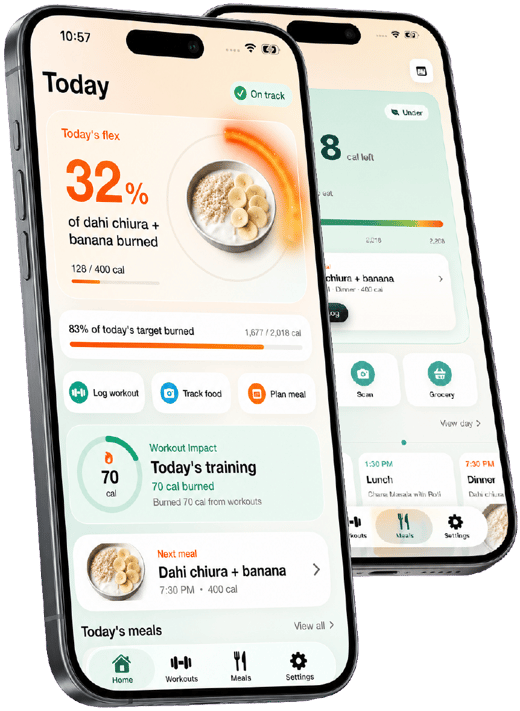
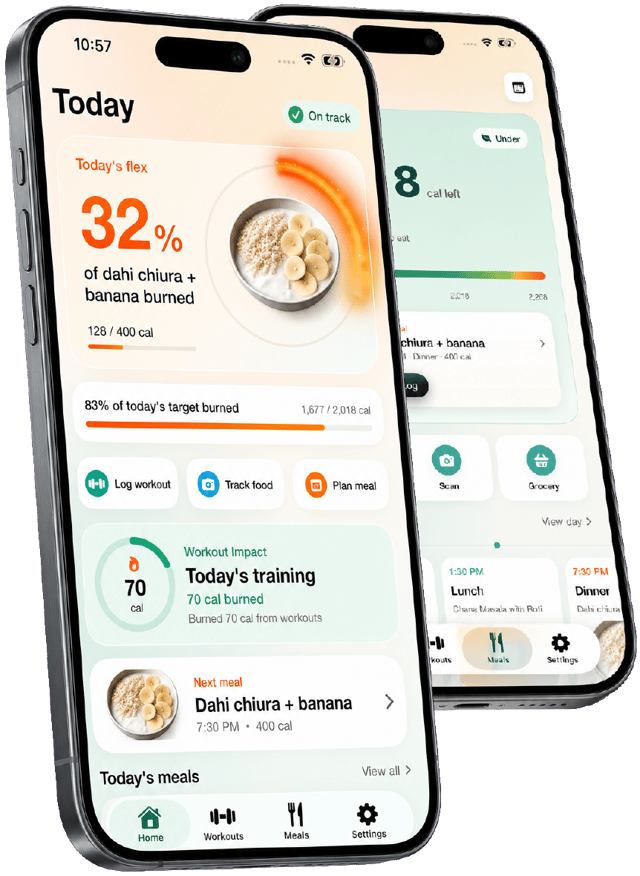
Burnplate isn't a medical device — it just makes a flexible low-carb target easy to hit without tracking net carbs to the gram the way keto requires.
Macro targets set to a low-carb ratio
Burnplate calculates your calories, protein, carbs and fat from your body and goal, and can weight the split toward higher protein and lower carbs without pushing you into strict keto territory.
A 7-day plan with real flexibility
Tell Burnplate you're eating low carb and it builds a week of meals that include fruit, legumes and modest whole grains alongside lean protein and vegetables, plus a grocery list.
Photo logging without the exact-gram pressure
Snap a meal and Burnplate estimates the carbs — useful for staying in your range without needing to weigh every ingredient the way stricter carb plans require.
Swap any meal, keep the day in range
Not in the mood for steak? Swap it and Burnplate keeps the day's carbs and protein in range, so the plan flexes with you instead of the other way around.
Practical guidance
Practical tips for eating low carb
Habits that make low carb sustainable long-term, not just for the first two weeks.
- 01 Cut refined carbs before cutting all carbs
White bread, sugary drinks and pastries are the highest-impact cuts — fruit and legumes can usually stay.
- 02 Anchor each meal with protein
Starting with a protein source and building the rest of the plate around it naturally keeps carbs in a moderate range without counting anything.
- 03 Pick a number in the range and stick with it for a few weeks
50 g and 130 g feel very different day to day — settle on where in the range works for your hunger and energy before adjusting further.
- 04 Don't fear fruit
Whole fruit fits comfortably in most low-carb ranges and adds fiber and micronutrients that stricter plans miss.
- 05 Watch liquid carbs closely
Juice, soda and sweetened coffee drinks are the easiest way to blow through a daily carb target without noticing.
- 06 Reassess after a month, not after three days
Energy and hunger often take one to two weeks to stabilize on a new carb range — judge it after that adjustment period, not immediately.

Get the week planned in one tap
Build my meal plan Burnplate builds a 7-day meal plan around your calories, protein and food preferences, writes the grocery list, and lets you swap any meal you don't feel like.
Questions
Meal planner for low carb: FAQ
How many carbs should I eat on a low-carb meal plan?
Most low-carb plans fall between 50 and 130 g of carbs a day, well below a typical diet's 225–325 g but more flexible than keto's stricter 20–50 g ceiling. Where you land in that range depends on your goals, activity level and how you feel.
What's the difference between low carb and keto?
Keto requires staying under roughly 50 g net carbs a day to reach ketosis, with fat providing most calories. Low carb is a broader range (50–130 g) that doesn't require reaching ketosis, and comfortably includes fruit, legumes and modest whole grains that keto excludes.
Can I eat fruit on a low-carb diet?
Yes, in moderate portions. Whole fruit's fiber slows sugar absorption compared to juice, and a piece of fruit fits easily within most low-carb ranges. It's more restricted on keto, where carb ceilings are much tighter.
Will a low-carb diet help me lose weight?
Low-carb eating often leads to weight loss, largely because higher protein and reduced refined carbs both improve satiety and make it easier to eat in a calorie deficit without consciously restricting. The deficit still has to exist — low carb makes it easier to sustain, not automatic.
Is low carb sustainable long-term?
For many people, more so than keto, because the wider carb range allows for more variety and flexibility in social situations and daily life. Sustainability comes down to finding where in the 50–130 g range you can comfortably stay.
Can Burnplate build a low-carb meal plan for me?
Yes — Burnplate sets macro targets weighted toward higher protein and lower carbs, builds a 7-day plan with flexible carb sources like fruit and legumes included, and tracks carbs from photos so you can stay in your chosen range without weighing every meal.
