The muscles crossing the knee stabilize it under load. Weak quads and glutes let the knee absorb more force directly; strengthening them redistributes that load away from the joint itself.
Why it's different
Why bad knees need a specific approach
A generic leg day assumes a healthy, pain-free knee. A plan for bad knees works the same muscles from angles and ranges that don't provoke the joint, while still building the strength that protects it long term.
0–90° typical pain-free range many knee routines start within before gradually extending depth
2–3×/week strength sessions is a common range for building the muscle that supports a sensitive knee
1.2–1.6 g/kg protein per kilogram of bodyweight that supports the muscle rebuilding around the joint
Many knee irritations flare in deep flexion — the bottom of a lunge or a deep squat. Training through a partial, pain-free range builds strength without repeatedly provoking the sore spot.
A controlled, heavy leg press can be fine for a knee that hates running or jumping. It's often the repetitive pounding, not resistance training itself, that a bad knee reacts to.
Frequent, moderate sessions that don't cause a flare-up build more strength over months than occasional intense ones that trigger a week of backing off.
What it looks like
A sample week for bad knees
A three-day strength routine that builds the muscles around the knee without deep flexion or impact.
Example week
3 Days/week30–40 min Session lengthBeginner to intermediate LevelDumbbells, resistance band, chair or bench Equipment
Monday Quad and glute focus Wall sit 3×20s · Glute bridge 3×15 · Seated leg extension (light) 3×15 · Standing hip abduction (band) 3×15
Tuesday Rest or low impact cardio Stationary bike (light resistance) or pool walking, 20–25 min
Wednesday Partial-range strength Box step-up (low box) 3×10 · Half squat to chair 3×12 · Hamstring curl (band) 3×15 · Calf raise 3×15
Thursday Rest Gentle stretching or full rest
Friday Full-body with knee-safe legs Leg press (moderate depth) 3×12 · Dumbbell row 3×12 · Side-lying leg raise 3×15 · Plank 3×30s
Saturday Optional low impact cardio Swimming or bike, 20–30 min easy
Sunday Rest Full recovery day
How Burnplate handles it
How Burnplate builds a plan for bad knees
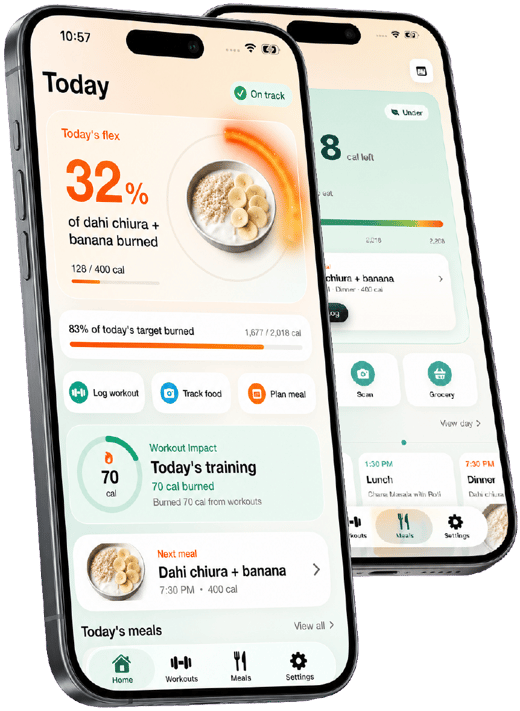
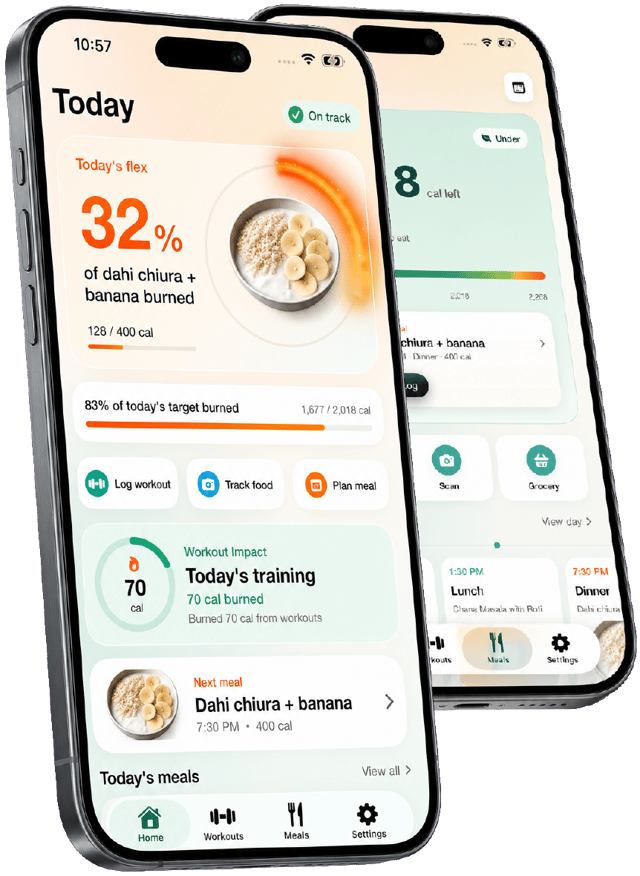
Burnplate builds around your equipment and level, then logs sessions so you can see strength build without guessing.
A plan built around your equipment and level
Tell Burnplate what you have access to and how you're feeling, and it builds a knee-conscious strength plan around your days per week.
Session logging to track what's working
Log each session's sets and reps, so you can see whether load or range is progressing over the weeks without needing to guess.
Calorie and protein targets that support recovery
Burnplate sets protein targets from your body and goal — useful here since muscle rebuilding around a joint depends on adequate protein intake.
The burn bar shows low-impact sessions still count
A careful strength session or a bike ride still burns real calories — the burn bar shows how much of your day's food it covered.
Practical guidance
Tips for training with bad knees
Practical habits that keep a knee-friendly plan safe and effective.
- 01 Warm up longer than usual
Five to ten minutes of easy movement before loading the knee reduces stiffness and lowers irritation risk.
- 02 Avoid deep lunges and jumping early on
These are the most common triggers — reintroduce them later and gradually, if at all, once strength improves.
- 03 Use a mirror or check your knee tracking
Keeping the knee roughly over the foot (not caving inward) during squats and step-ups reduces joint stress.
- 04 Ice after a session if it's sore
Fifteen to twenty minutes of ice after training can calm a knee that's reacting, without meaning you need to stop training.
- 05 Build the hips, not just the knee
Weak hip muscles often contribute to knee pain — hip abduction and glute work indirectly protect the knee.
- 06 See a physical therapist for persistent pain
If pain doesn't improve over several weeks of careful training, a PT can identify what's actually driving it.

Build the plan around your week
Build my workout plan Tell Burnplate your days, equipment and level and it builds a progressive workout plan, logs every session, and connects what you burn to what you eat.
Questions
Workout planner for bad knees: FAQ
What exercises are safe for bad knees?
Wall sits, glute bridges, seated leg extensions with light resistance, step-ups on a low box and stationary cycling are generally well tolerated. The common thread is controlled movement through a comfortable range without impact or deep flexion.
What exercises should I avoid with bad knees?
Deep squats and lunges, running, jumping and any move that provokes sharp pain at the bottom of a deep bend are the usual ones to avoid or modify. Pain that lingers well after a session is also a sign to scale back that movement.
Can you still build muscle with bad knees?
Yes. Strength training within a comfortable range of motion, using controlled tempo and appropriate load, builds muscle just as effectively as full-range training for most people. The muscle built around the knee often helps reduce pain over time.
Is walking good for bad knees?
For most people, yes — walking is low impact and can strengthen the muscles around the knee without the pounding of running. If walking itself causes pain, that's worth discussing with a doctor or physical therapist before continuing.
How long does it take to strengthen a bad knee?
Many people notice less pain within 4–6 weeks of consistent, appropriate strength training, though full improvement often takes longer. Consistency across several sessions a week matters more than the intensity of any single workout.
Can Burnplate create a workout plan for bad knees?
Yes. Tell Burnplate your equipment, level and days per week, and it builds a strength plan that avoids deep flexion and impact, then logs your sessions so you can track progress over time.
