
Most students know roughly what healthy eating looks like; the barrier is fitting food into a schedule built around classes and shifts, not a lack of information.
Why it's different
Why a college meal plan is different
Most nutrition advice assumes a full kitchen, a flexible schedule and no real budget constraint. None of those hold for most college students, so the plan has to fit the actual constraints, not an idealized one.
$50–75/wk realistic grocery budget range for a student eating mostly self-prepared meals
15 min typical prep window many student meals need to fit between classes or shifts
25–30 g protein per meal target that keeps a dining-hall tray or dorm meal actually filling
A dorm setup — microwave, mini-fridge, maybe a shared kitchen — changes what's realistic far more than it does for someone with a full kitchen at home.
An all-you-can-eat dining hall is a buffet with no built-in tracking, which makes it easier to lose track of both portions and what's actually on the tray.
Protein and produce are usually the first things cut on a tight student budget, even though they're the two things most worth protecting.
What it looks like
A sample day between dorm, dining hall and class
Around 2,100 calories mixing a dining-hall meal with two dorm-room meals, built to stay filling and cheap without a full kitchen.
Example day on the plan
~2,100 Calories100+ g ProteinUnder $12/day BudgetUnder 15 min/meal Prep time
8:00 AM Microwave oatmeal with proteinOats, protein powder, peanut butter 440 kcal
12:00 PM Dining hall lunchGrilled chicken, rice, salad bar vegetables 620 kcal
3:00 PM Yogurt cup and granola barA quick between-class snack 300 kcal
6:30 PM Dorm stir-fryPre-cooked rice, frozen vegetables, canned chicken and egg 540 kcal
9:00 PM Protein shake and fruitProtein powder, milk, a banana 240 kcal
Smart swaps
Ramen as a meal on its own Ramen plus an egg and frozen vegetablesSame base, same cost — roughly triples the protein and fiber for about 20 cents more
The dessert bar as a default A protein-forward entree first, then one dessert itemFilling up on protein and vegetables first leaves room to still enjoy dessert without it becoming the meal
Energy drinks to push through studying Coffee or tea plus a protein snackDelivers usable energy without the crash, and costs less over a semester
Skipping meals to save money Cheap, high-volume staples — rice, beans, eggs, frozen vegetablesSkipping tends to lead to a bigger, more expensive impulse order later; these staples cost pennies per serving
How Burnplate handles it
How Burnplate plans a college week
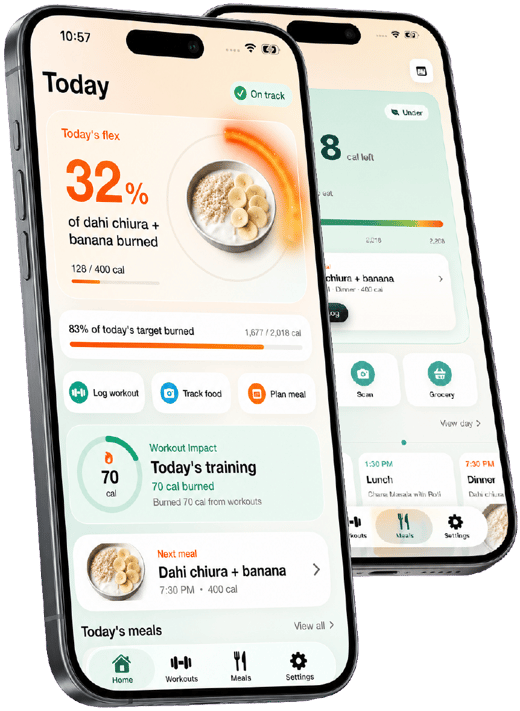
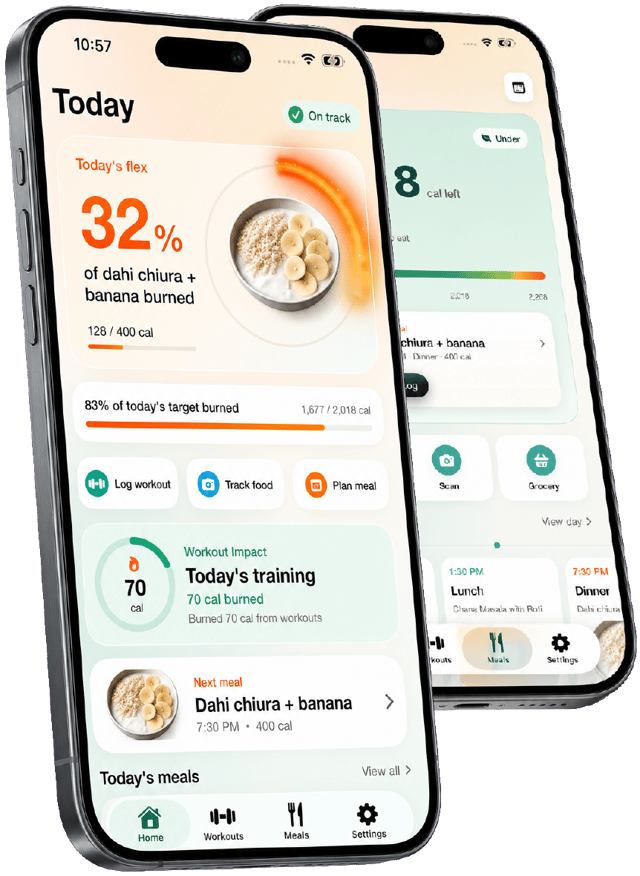
Burnplate fits a student's actual schedule and budget instead of assuming a full kitchen and free time.
Log a dining hall tray as fast as a home meal
Snap it, confirm the portions, done — no need to weigh food off a buffet line.
Targets that fit a student's real schedule
Calorie and protein goals are calculated from your body and activity, not a generic number that ignores a physically active or sedentary semester.
A 7-day plan built around a real budget
The AI meal plan and grocery list lean on cheap staples so a week of meals doesn't blow a student budget.
Log a workout between classes
Campus gym sessions or intramurals show up in the burn bar against the day's food.
Practical guidance
Meal-planning tips for college students
Habits that make eating well work with a tight budget, a small kitchen and a packed schedule.
- 01 Build meals around 5–6 cheap staples
Eggs, canned beans, frozen vegetables, rice, oats and canned chicken or tuna cover most meals at a low cost per serving.
- 02 Use the dining hall strategically
Protein and vegetables first, starches and dessert after — same tray, more staying power.
- 03 Keep one microwave meal ready
A go-to dorm meal removes the 9 PM decision that usually ends in a delivery order.
- 04 Batch cook if you get any kitchen access
A shared kitchen session once a week beats trying to cook daily around a class schedule.
- 05 Don't let studying replace meals
A quick protein snack during a study block prevents the crash that leads to bigger, less planned eating later.
- 06 Track a couple weeks to find your number
College schedules swing between sedentary study days and active ones; logging shows what you actually need.

Get the week planned in one tap
Build my meal plan Burnplate builds a 7-day meal plan around your calories, protein and food preferences, writes the grocery list, and lets you swap any meal you don't feel like.
Questions
Meal planner for college students: FAQ
How do college students eat healthy on a budget?
Lean on cheap, protein-heavy staples — eggs, beans, frozen vegetables, rice and oats — instead of pre-made or convenience food, and plan a short list of repeatable meals so grocery trips stay small and predictable.
What's a cheap, high-protein meal plan for college students look like?
A day built around eggs or protein powder in the morning, a dining hall or dorm meal with a clear protein source at lunch, and a simple stir-fry or grain bowl at dinner usually hits 100-plus grams of protein for well under $15 a day.
Can you track dining hall food in a meal planner app?
Yes — photo logging works the same for a dining hall tray as it does for a home-cooked meal. Snap the plate, confirm the portions, and it logs against your day the same way.
How many calories do college students need?
It depends on size, sex and activity level, but many college students need somewhere between 2,000 and 2,800 calories a day. Someone playing an intramural sport or walking a large campus daily needs more than a mostly sedentary schedule.
What food should I keep in a dorm room?
Shelf-stable staples like oats, peanut butter, canned beans and tuna, plus mini-fridge items like eggs, yogurt and frozen vegetables, cover most meals with just a microwave and no full kitchen.
How do you meal plan with no real kitchen?
Build meals around a microwave and mini-fridge: pre-cooked rice, canned proteins, frozen vegetables and eggs cover a surprising number of meals. Save anything that needs a stove for dining hall visits or a shared kitchen session.
