This is one of the most persistent myths in fitness. Research on youth resistance training has found it doesn't damage growth plates when supervised and performed with proper technique — the opposite is true, since it also builds bone density.
Why it's different
Why a teen's workout plan should look different from an adult's
A teenager's body is still growing, which changes what training should prioritize — not whether training is safe.
2–3×/week strength sessions weekly is a reasonable start for a teen new to resistance training
By age 20 roughly when peak bone mass is reached, making teen years key for building bone
12–15 reps a moderate rep range well suited to learning technique before adding significant weight
Peak bone mass is typically reached by the early twenties, and weight-bearing exercise during adolescence is one of the biggest contributors to lifetime bone health. Habits built now pay off decades later.
A teenager's coordination and movement patterns are still developing. Learning a squat, hinge, push and pull with light weight or bodyweight builds a foundation that heavy lifting without technique never does.
Growth spurts increase calorie and nutrient needs, sometimes noticeably from month to month. A teen workout plan works best alongside enough food to support both training and normal development — not a restrictive approach.
What it looks like
A sample week on a workout plan for teens
Full-body sessions built around bodyweight and light-to-moderate dumbbell work, with a strong technique focus and built-in recovery.
Example week
3 Days/week30–40 min Session lengthBeginner, technique-focused LevelBodyweight + light dumbbells Equipment
Monday Full body A Bodyweight squat 3×12 · Push-up 3×10 · Dumbbell row 3×12 · Plank 3×20s
Tuesday Rest or sport practice Regular sport or activity, or full rest
Wednesday Full body B Goblet squat 3×10 · Glute bridge 3×15 · Shoulder press 3×10 · Dead bug 3×10
Thursday Rest or sport practice Regular sport or activity, or full rest
Friday Full body A Bodyweight squat 3×12 · Push-up 3×10 · Dumbbell row 3×12 · Plank 3×20s
Saturday Active free time Sports, biking, or other activity for fun, not structured training
Sunday Rest Full rest
How Burnplate handles it
How Burnplate supports a teen workout plan
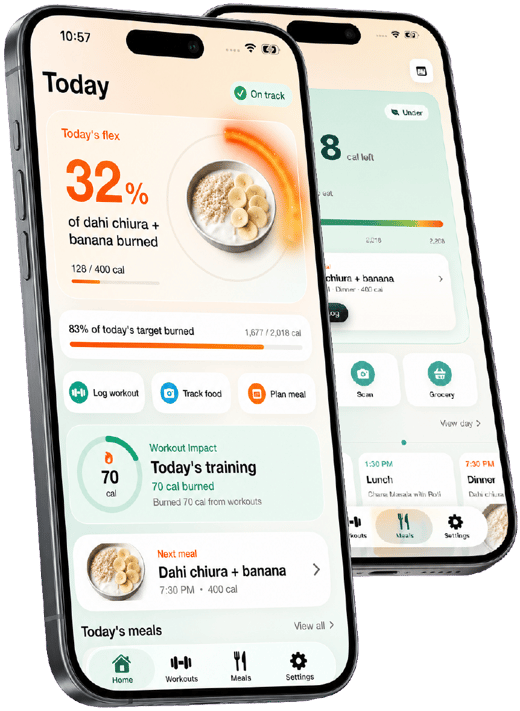
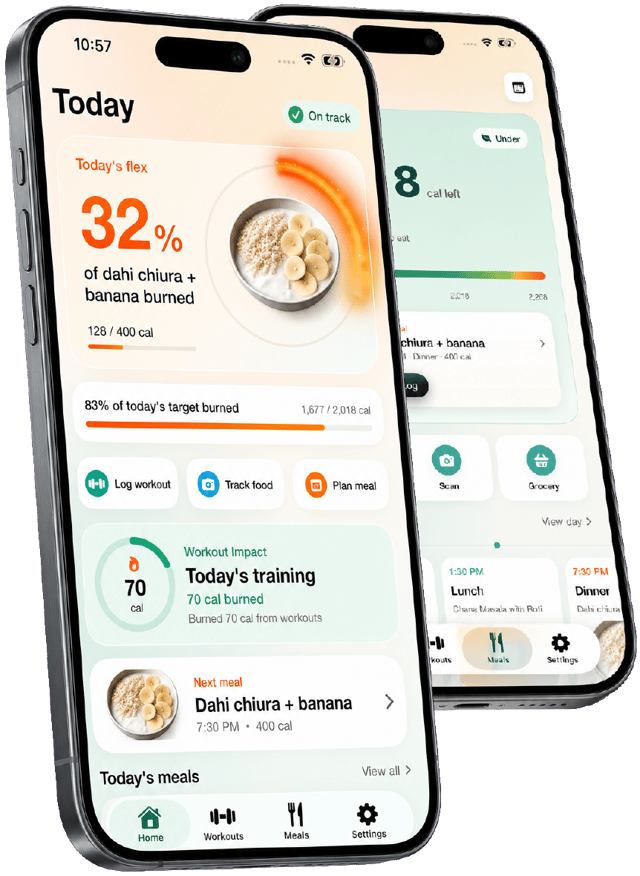
Burnplate builds an age-appropriate plan and keeps training and nutrition connected, ideally with a parent or coach involved.
A plan scaled to beginner level
Set the level to beginner and Burnplate's workout planner builds full-body sessions around fewer, simpler movements with adequate recovery between them.
Sessions logged to track progress safely
Logging each session keeps a clear history of weights and reps, useful for a parent or coach checking that progress is gradual, not rushed.
Calorie and protein targets for growth
Burnplate sets calorie and protein targets from body and activity level, supporting the higher nutritional needs of a growing, active teenager rather than a restrictive approach.
A simple photo calorie counter
Snapping a photo of a meal to log it is a fast, low-friction way for a teen to build a nutrition habit alongside a new training routine.
Practical guidance
Tips for a safe, effective teen workout plan
What keeps a teenager's first experience with strength training positive and productive.
- 01 Get qualified supervision early on
A coach, trainer or experienced adult checking technique in the first few months makes the biggest difference to safety.
- 02 Prioritize the big movement patterns
A squat, hinge, push, pull and core hold cover most of what a teen workout plan needs at the start.
- 03 Don't chase a max lift
Heavy, one-rep maxes aren't necessary for a developing lifter and add risk without meaningful benefit at this stage.
- 04 Make sure food matches activity level
Growing, active teens generally need more food, not less — restricting intake around a new training habit can backfire.
- 05 Keep sessions varied and engaging
Mixing in sports, bodyweight circuits or games keeps a teen motivated in a way a rigid adult-style program often doesn't.
- 06 Prioritize sleep as part of training
Teenagers need more sleep than adults, and growth and recovery both depend heavily on getting enough of it.

Build the plan around your week
Build my workout plan Tell Burnplate your days, equipment and level and it builds a progressive workout plan, logs every session, and connects what you burn to what you eat.
Questions
Workout planner for teenagers: FAQ
Is it safe for teens to lift weights?
Yes. Research on resistance training in adolescents has consistently found it safe and beneficial when supervised and performed with proper technique. It doesn't stunt growth — that's a persistent myth — and it can support bone density and coordination.
At what age can a teenager start a workout plan for teenagers?
Supervised resistance training is generally considered appropriate once a child can follow instructions and maintain good form, often around 7 to 8 years old for very light training, with more structured strength work typically starting in the young teen years.
How many days a week should a teen work out?
Two to three full-body sessions a week is a reasonable starting point, leaving room for sports, school and adequate recovery. More isn't automatically better at this age — consistency and technique matter more than volume.
Should a workout plan for teens include heavy lifting?
Not initially. Technique with light to moderate weight, done for moderate reps, builds a safer foundation than heavy loads. Gradual, supervised progression in weight over months is the appropriate pace for a developing lifter.
Do teenagers need more food when they start strength training?
Often yes, especially during a growth spurt. Growing, active teenagers generally need more calories and protein than a sedentary adult of the same size, and restricting food while adding a new training habit can affect both performance and normal development.
Can strength training help teenage athletes?
Yes — resistance training is widely used to build strength, reduce injury risk and support performance in teen athletes, alongside their sport-specific practice. It works best as a supplement to their sport, with supervision on technique early on.
