
It's a decades-old default that predates individualized calculators. Actual needs depend on height, weight, age and activity, and are often meaningfully higher than 1,200.
Why it's different
Why a women's meal plan needs its own math
Generic diet advice tends to assume a smaller, flatter version of a men's plan. Women have distinct iron needs, a menstrual cycle that shifts appetite, and a real risk of losing muscle during a deficit if protein isn't prioritized — none of which a flat calorie number accounts for.
18 mg daily iron target for women of reproductive age, about 60% more than men's 8 mg
25 g daily fiber target for adult women — most people get roughly half that
1.0 g/kg protein target many women do better on than the 0.8 g/kg minimum, especially losing weight
Menstruation means many women need close to double the iron intake of men, which most flat meal plans ignore entirely.
A weight-loss diet that's too low in protein loses more muscle per pound lost. Moving toward the higher end of the protein range helps preserve more of it.
The menstrual cycle can shift hunger and cravings across a month; a rigid plan that doesn't flex tends to break down around week three.
What it looks like
A sample day for weight loss without crashing
Around 1,600 calories with protein held high to protect muscle during the deficit, and iron worked into at least two meals.
Example day on the plan
~1,600 Calories95–105 g Protein25 g Fiber2×/day Iron sources
7:30 AM Egg scramble with spinach and toast2–3 eggs, spinach, a slice of whole-grain toast 380 kcal
11:00 AM Greek yogurt and berriesPlain Greek yogurt, mixed berries 200 kcal
1:00 PM Lentil and chicken saladChicken, lentils, mixed greens, olive oil dressing 440 kcal
3:30 PM Apple and string cheese1 apple, 1 string cheese 180 kcal
7:00 PM Beef stir-fry with vegetablesLean beef, mixed vegetables, small portion of rice 400 kcal
Smart swaps
A flat 1,200-calorie plan A target calculated from your body and goalMost women need well above 1,200 kcal to lose weight sustainably without stalling metabolism or losing muscle
Skipping meals to save calories Three protein-anchored mealsSkipping tends to lead to overeating later and doesn't protect muscle the way spaced-out protein does
A protein-free salad as 'the diet meal' The same salad plus 4–6 oz of proteinA protein-free salad rarely holds hunger past 90 minutes; adding protein is what actually makes it a full meal
Cutting carbs entirely Moderate carbs paired with protein and fiberVery-low-carb isn't required for weight loss and can hurt workout performance and mood for many women
How Burnplate handles it
How Burnplate plans a woman's week
Burnplate sets your numbers from your own body and goal, not a generic default aimed at nobody in particular.
Targets calculated from your body
Calorie and protein goals are set from your stats, goal and activity level instead of a generic number.
Photo logging for real, messy days
Fast logging for takeout, restaurant meals and the days a plan doesn't survive contact with real life.
A 7-day plan with a grocery list
The AI meal plan builds a week around your calorie and protein targets and food preferences, with one shopping list.
See training's effect on the day
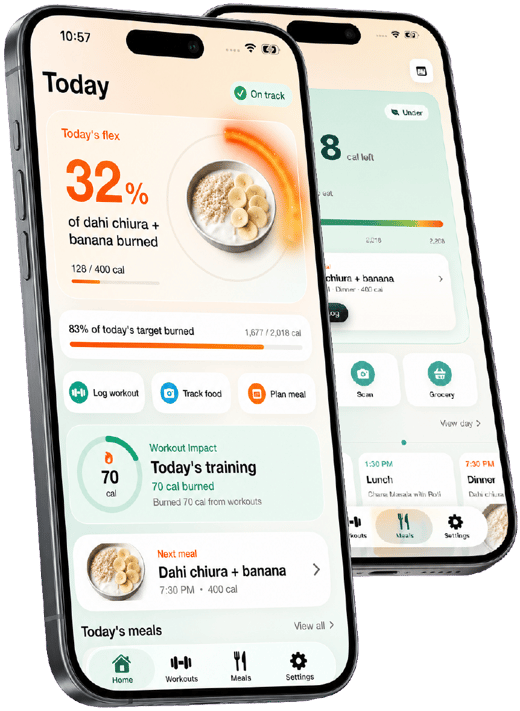
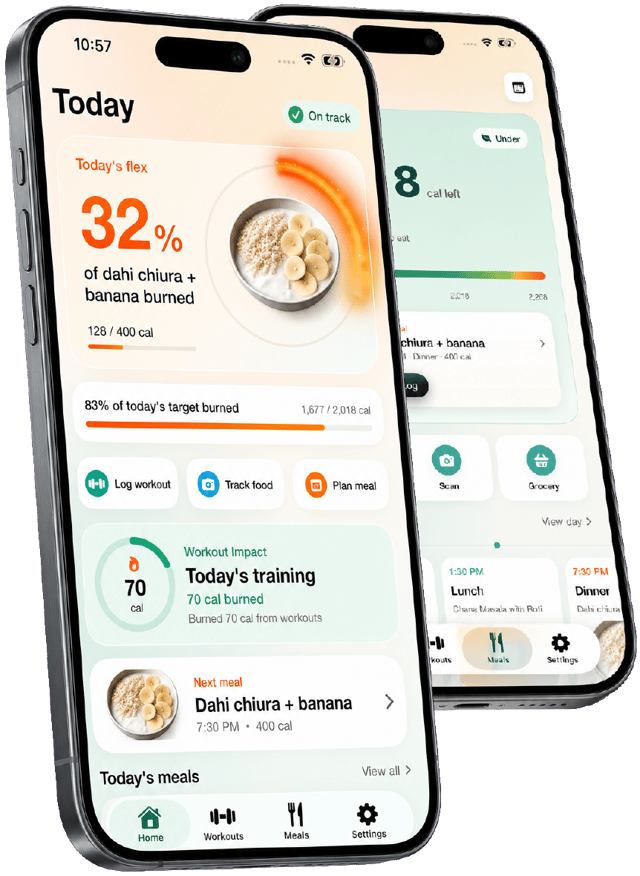
The burn bar shows how much a workout offset a meal — useful context without turning exercise into punishment for eating.
Practical guidance
Meal-planning tips for women
Habits that make a weight-loss or maintenance plan easier to sustain past the first few weeks.
- 01 Set your number from your body
A real deficit is usually 300–500 kcal below maintenance, not an arbitrary 1,200.
- 02 Put protein first, every meal
Aim for 25–35 g per meal to protect muscle and manage hunger through a deficit.
- 03 Plan around your cycle if it helps
Some women do better allowing slightly more food the week before their period rather than fighting it.
- 04 Pair iron-rich foods with vitamin C
This pairing improves absorption meaningfully from plant sources like beans and spinach.
- 05 Close the fiber gap deliberately
Most women fall short of 25 g a day; vegetables, beans and whole grains close it without much effort.
- 06 Add strength training during a deficit
Resistance training helps ensure more of the weight lost is fat, not muscle.

Get the week planned in one tap
Build my meal plan Burnplate builds a 7-day meal plan around your calories, protein and food preferences, writes the grocery list, and lets you swap any meal you don't feel like.
Questions
Meal planner for women: FAQ
How many calories should a woman eat to lose weight?
It depends on your current weight, activity level and goal, but most women need well above 1,200 calories to lose weight sustainably — a target 300 to 500 calories below your calculated maintenance level is a common, sustainable starting point.
Is 1,200 calories a safe target for a diet plan for women to lose weight?
For most adult women, 1,200 calories is too low and can lead to excessive hunger, muscle loss and a rebound in eating. It can be appropriate for a smaller, less active person under guidance, but it shouldn't be a default starting point.
How much protein do women need for weight loss?
Many women do better in the 1.0 to 1.2 gram per kilogram range during a deficit, above the general 0.8 g/kg minimum, since higher protein helps protect muscle and manage hunger while losing fat.
Why do women need more iron than men?
Menstrual blood loss means women of reproductive age need close to double the iron intake of men — around 18 mg a day versus 8 mg — to replace what's lost monthly and avoid iron-deficiency anemia.
Can a meal plan app calculate my calorie target for me?
Yes — Burnplate calculates calorie and macro targets from your height, weight, age, goal and activity level, rather than defaulting to a flat number, and builds a 7-day meal plan around them.
How much fiber should women eat daily?
About 25 grams a day is the common target for adult women, and most people get well under half that. Vegetables, fruit, beans and whole grains are the most reliable ways to close the gap.
