Diastasis recti (abdominal separation) is common after pregnancy and doesn't automatically close on its own timeline. Loading the core before it reconnects can worsen the gap, so postpartum plans start with breath-led activation, not crunches or planks.
Why it's different
Why a postpartum plan can't just pick up where you left off
Your body spent nine months adapting to pregnancy and then went through birth. A plan that jumps straight back to pre-pregnancy weights and volume skips the repair work that makes everything after it safe.
6–8 wks the typical minimum before any structured exercise, and later after a C-section — always with clearance
0.1–0.2 g/kg extra protein per kg beyond normal recommendations that's reasonable while breastfeeding, alongside overall intake
4–6 wks a common phase length for foundational core and pelvic floor work before adding real load
Whether delivery was vaginal or C-section, the pelvic floor carried significant load through pregnancy and birth. Jumping into running or heavy lifting before it's rehabbed is the most common cause of postpartum leaking and pressure symptoms.
A C-section is abdominal surgery — the incision and underlying tissue need longer before loaded core work or heavy carries. A straightforward vaginal delivery may clear for light activity sooner, but both need a provider's sign-off first.
Fragmented sleep and, if breastfeeding, higher calorie and fluid needs change how much training your body can actually absorb. Postpartum programming is intentionally conservative on volume in the early months.
What it looks like
A sample week — foundational phase (roughly weeks 6–10)
After clearance, this phase rebuilds breath, pelvic floor and core control before real loading resumes. It's intentionally light.
Example week
3–4 Days/week20–25 min Session lengthCleared, deconditioned LevelBodyweight, light bands Equipment
Monday Breath + core reconnect Diaphragmatic breathing 3×10 · Pelvic tilt 3×12 · Heel slide 3×10/side
Tuesday Walk 15–20 min easy stroller or solo walk
Wednesday Core + glutes Bird dog 3×8/side · Glute bridge 3×12 · Dead bug (modified) 3×8/side
Thursday Walk 15–20 min easy walk
Friday Full body, light Bodyweight squat 3×10 · Band row 3×12 · Wall push-up 3×10 · Standing march 3×10/side
Saturday Rest or gentle mobility Hip openers, thoracic rotations, easy stretching
Sunday Rest Full rest
How Burnplate handles it
How Burnplate supports postpartum training
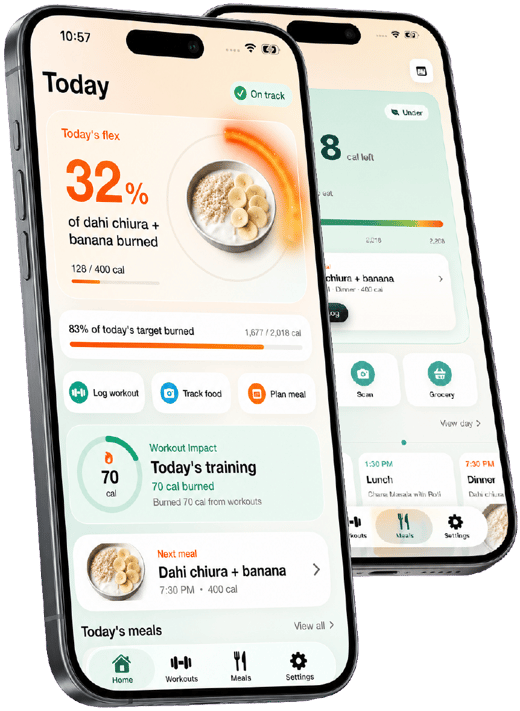
Burnplate isn't a medical or pelvic-floor rehab device and doesn't replace clearance from your provider or a pelvic floor therapist. It gives structure and tracking so you're not guessing at what comes next.
A plan that starts light and progresses with you
Burnplate's workout builder scales to your current level and equipment, so a foundational phase looks different from month six — the plan grows as you're cleared to add load.
Calories that reflect feeding, not just training
Your calorie and protein targets factor in your goal and activity; if you're breastfeeding, set that in your profile so targets aren't calculated as if you were simply losing weight.
Session logging that shows the trend
Log sets, reps and session length so you and your provider can see steady progress over weeks, which matters more than any single workout.
Photo logging for the days you're too tired to think
Snap a photo of what you're eating and confirm the estimate — useful on the newborn-fog days when detailed logging isn't realistic.
Practical guidance
Tips for an easier return to training
What actually helps in the first several months back, beyond the workouts themselves.
- 01 Get cleared before you start
Get sign-off from your OB, midwife or a pelvic floor physical therapist before structured exercise, especially after a C-section or a complicated delivery.
- 02 Watch for leaking or heaviness
Leaking, pelvic pressure or bulging during a move is a sign to scale back that exercise, not push through it — these usually respond well to rehab.
- 03 Don't diet and rebuild strength at once
An aggressive calorie deficit alongside a demanding training rebuild slows healing and, if breastfeeding, can affect supply. Let strength come back before chasing weight loss hard.
- 04 Protein at every meal
Tissue repair and, if breastfeeding, milk production both draw on protein — aim for a source at each meal rather than back-loading it at dinner.
- 05 Sleep-adjust your expectations
A broken-sleep week is not the week to add volume. Match effort to the sleep and energy you actually have, not the plan on paper.
- 06 Build in stroller or baby-adjacent walks
Walking is a full session in the early months and it's one of the easiest to fit around a baby's schedule.

Build the plan around your week
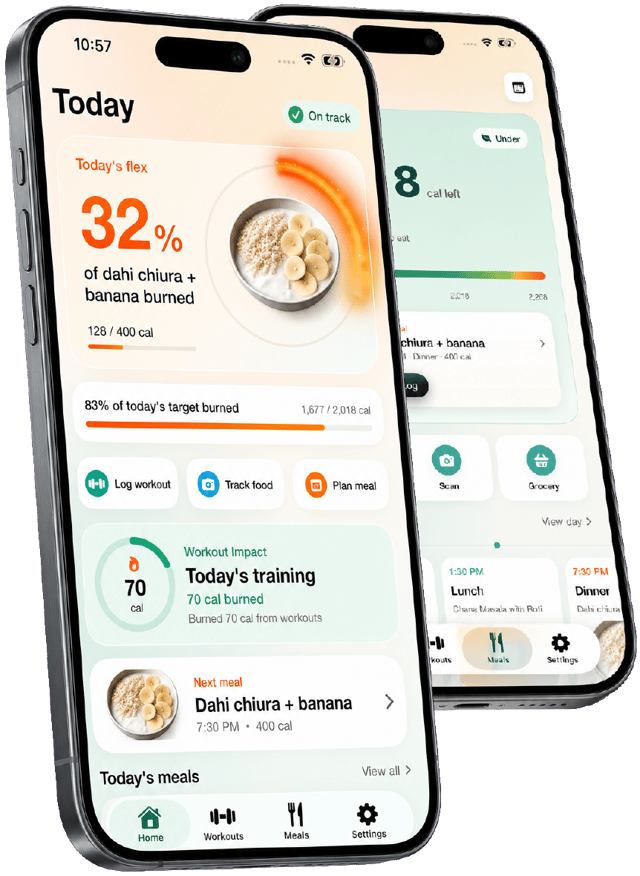
Build my workout plan Tell Burnplate your days, equipment and level and it builds a progressive workout plan, logs every session, and connects what you burn to what you eat.
Questions
Workout planner for postpartum recovery: FAQ
When can I start a postpartum workout plan?
Most providers clear light activity around 6 weeks after an uncomplicated vaginal delivery and later, often 8 weeks or more, after a C-section — but this varies by individual and delivery, so get your own clearance before starting structured exercise.
What is the best workout plan for postpartum recovery?
The most effective postpartum workout plan for postpartum recovery starts with breathing and pelvic floor reconnection, adds bodyweight core and glute work, then reintroduces loaded strength training before any running or jumping. Skipping straight to your old routine raises injury and pelvic-floor risk.
How soon can I do ab exercises after having a baby?
Gentle breath-led core work like pelvic tilts can often start once cleared for any activity, but loaded moves like planks or crunches should wait until diastasis recti has closed enough and a provider or pelvic floor therapist gives the go-ahead — often 8–12 weeks or later.
Is it safe to lose weight while breastfeeding?
Gradual weight loss (roughly 0.5 kg/1 lb per week or slower) is generally considered compatible with breastfeeding, but very low calorie intake can affect supply and energy. Extra protein and adequate overall calories matter more in this phase than an aggressive deficit.
Can Burnplate help with postpartum weight loss and training together?
Burnplate sets calorie and protein targets from your goal, body and activity, and builds a workout plan around your days and equipment, so training and nutrition move together. It's not a substitute for pelvic floor clearance or medical guidance on your specific recovery.
What are signs I'm doing too much too soon postpartum?
Leaking urine, a heavy or bulging feeling in the pelvic floor, increased bleeding after activity, or new abdominal doming are all signs to scale back and check in with your provider or a pelvic floor therapist. These are common and usually improve with the right rehab sequence.
