
Punching power comes from explosive, anaerobic strength work; the ability to keep landing hard punches in round eight comes from aerobic conditioning. A plan that only trains one leaves an obvious gap.
Why it's different
Why a boxer's workout routine is its own discipline
Boxing isn't just cardio with punches — it's an anaerobic power sport that has to be sustained aerobically for up to 12 rounds, layered on top of a weight class that constrains how you can fuel it.
3 min the round length most boxing conditioning and sparring work is built around
1.6–2.0 grams of protein per kg bodyweight many boxers need while building power and making weight
4–6x/wk training sessions a typical competitive boxing week combines across skill, strength and conditioning
A punch's force starts on the floor and travels through the hips and core before it ever reaches the fist — rotational and lower-body strength training is as much a boxing exercise as anything done with gloves on.
Cutting weight without a plan costs power output and recovery. A structured approach to calories and protein protects performance far better than simply eating less across the board.
Training in the same work-to-rest pattern as an actual fight — hard effort, brief rest, repeat — builds the specific conditioning boxing demands, more than steady-state cardio does alone.
What it looks like
A sample training week for boxers
A five-day week for an amateur or competitive boxer combining skill work, strength, power and round-based conditioning.
Example week
5 sessions Days/week45–75 min Session lengthAmateur to competitive LevelBag, gloves, basic weights Equipment
Monday Bag work + conditioning 6x3 min rounds bag work with 1 min rest between
Tuesday Strength Kettlebell swings or power cleans 3x5 · Squats 3x6 · Med-ball rotational throws 3x8
Wednesday Sparring or pad work 6–8x3 min rounds with a partner or coach
Thursday Roadwork + core 30 min interval running · rotational core circuit
Friday Strength + speed Bench or overhead press 3x6 · Box jumps 3x5 · Speed bag 3x3 min
Saturday Sparring or technical rounds 8x3 min rounds, technical focus
Sunday Rest or active recovery Mobility work and an easy walk
How Burnplate handles it
How Burnplate plans a boxer's week
Burnplate builds round-based training around your schedule and adjusts fueling for whether you're building or cutting weight.
A plan built around round-based training days
Tell Burnplate your days and level, and it structures strength, power and conditioning sessions around your skill and sparring schedule.
Every session logged, strength and rounds together
Log strength lifts and conditioning rounds, and Burnplate keeps a training history so power and endurance progress are both visible.
The burn bar after a sparring session
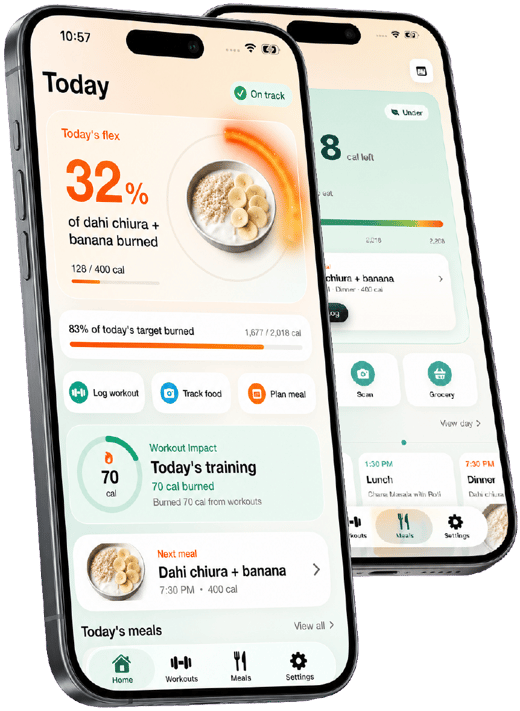
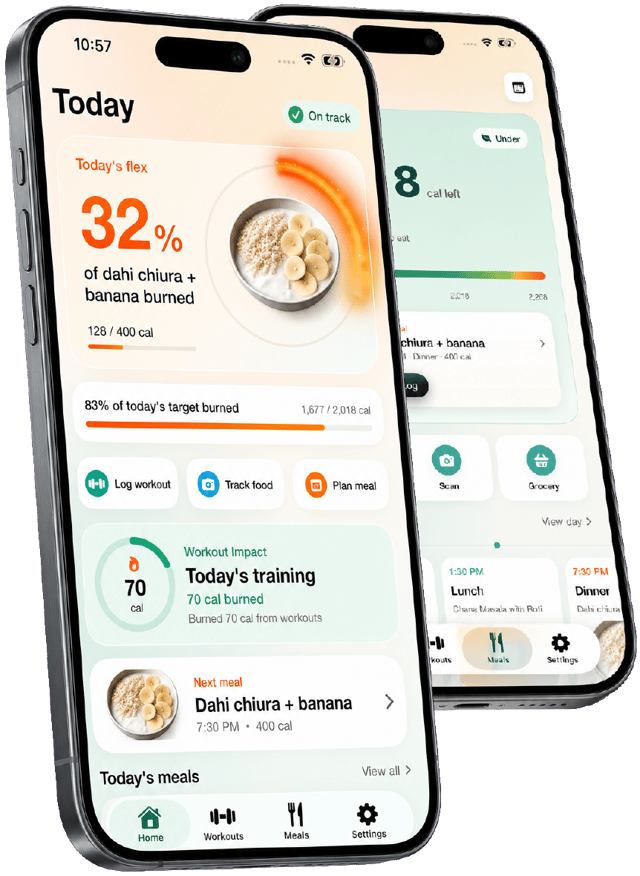
After a hard sparring or roadwork session, Burnplate shows how much of a meal you've burned off — useful context on a fight-camp schedule.
Calorie and protein targets that flex for weight
Your targets adjust for cutting or maintaining weight, keeping protein high enough to protect power output through a fight camp.
Practical guidance
Training tips for boxers
Habits that keep power and conditioning intact through a demanding fight-camp schedule.
- 01 Fuel before sparring days
A carb-forward meal a few hours before hard sparring or pad work keeps output high into the later rounds.
- 02 Spread protein across meals when cutting
Higher, evenly spread protein intake helps protect muscle and power output during a weight cut better than simple calorie restriction.
- 03 Prioritize sleep for reaction time
Reaction speed and decision-making under fatigue are both sensitive to short sleep — it's part of fight preparation, not separate from it.
- 04 Train legs — power starts on the floor
Squats, hip work and rotational power training feed directly into punching force; don't treat leg day as optional for a striker.
- 05 Don't skip shoulder and hip mobility
The repetitive rotational and overhead demands of boxing put real stress on the shoulders and hips without regular mobility work.
- 06 Hydrate carefully during a weight cut
Rapid water cuts close to weigh-in carry real performance and safety tradeoffs — plan hydration deliberately rather than improvising.

Build the plan around your week
Build my workout plan Tell Burnplate your days, equipment and level and it builds a progressive workout plan, logs every session, and connects what you burn to what you eat.
Questions
Workout planner for boxers: FAQ
What is a good workout routine for boxers?
A good workout routine for boxers combines skill work (bag, pads, sparring) with strength and power training 2-3 times a week and round-structured conditioning, so both punching power and 12-round endurance get trained.
How many calories do boxers burn training?
A hard hour of bag work, pad work or sparring commonly burns 600-900 calories, with roadwork and full training days adding substantially more depending on volume and intensity.
Do boxers need to lift weights?
Yes. Strength and power training — squats, hip hinges, rotational medicine-ball work — builds the force that travels through the body into a punch, and boxing skill work alone doesn't develop it.
How much protein do boxers need?
Many boxers do well around 1.6-2.0 grams of protein per kg bodyweight per day, especially useful for protecting muscle and power output during a weight cut ahead of a fight.
How many rounds should conditioning training include?
Building toward 6-12 rounds of continuous work, matching your fight's scheduled length, is a common conditioning target — training in the same 3-minutes-on, 1-minute-off structure as an actual bout.
